Amazon Product Photography: The Complete Seller’s Guide for 2026
Pure white backgrounds, AI-versus-real photography, mobile-first composition, infographic frames, and Amazon Rufus optimization — every Amazon listing photography insight a 2026 seller needs, distilled into one actionable read by the team at Ckstudio.
📅 Published 6 May 2026⏱ 12–15 min read✍ By Prince, Founder of Ckstudio🔄 Updated for 2026
A controlled studio environment is the foundation of every Amazon-compliant main image. Set, sweep, and lighting at the Ckstudio Delhi shoot floor.
In 2026, an Amazon listing lives or dies in the first 0.8 seconds of a shopper’s attention — and that attention is entirely captured by the product image. Algorithms have evolved, mobile traffic dominates, and Amazon’s Rufus AI assistant now reads images alongside text. For Indian sellers competing across Amazon, Flipkart, Myntra and Meesho, photography has shifted from a creative deliverable to a hard performance lever.
This is the complete Amazon product photography services 2026 playbook — drawn from Prince’s nine-plus years of Amazon imaging work at Ckstudio in Delhi. You’ll get ten actionable insights, the truth about AI-generated images, the mistakes that quietly tank conversion, and a checklist you can apply to your next shoot today. Read it through once, then bookmark the checklist for every new SKU you launch.
Key Takeaways
Amazon’s main image rules in 2026 still demand a pure white background (RGB 255,255,255), product filling 85%+ of the frame, and a 1600px+ longest side for zoom.
Listings that fill all seven image slots plus video consistently outperform partial-slot listings on click-through and conversion.
AI-generated images introduce material risk — distorted scale, false textures, listing suppression — and should not replace real product photography.
Mobile-first composition is now the rule, not the exception: 78%+ of Amazon India shoppers buy from a 6-inch screen.
Amazon’s Rufus AI now interprets visual cues, infographics and lifestyle context — meaning your imagery is part of your discoverability, not just your conversion.
Understanding Amazon Photography Fundamentals
Before any tip, ten or otherwise, every Amazon seller needs to internalise one principle: an Amazon image is not a piece of art — it is a retail-grade decision aid. Its job is to communicate trust, scale, material, and benefit before the shopper’s thumb moves.
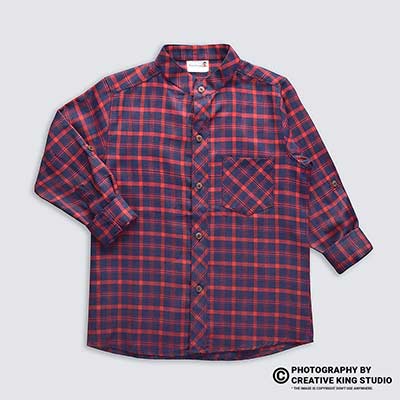
Amazon currently allows up to seven images and one video per ASIN. The image stack typically follows a hero-to-context arc — main image, infographic frames, lifestyle shot, scale reference, packaging, and finally a benefit-oriented closing frame. Sellers who treat each slot as a deliberate communication moment, rather than seven near-identical angles, see meaningfully better dwell time on the listing.
For Indian sellers operating across multiple platforms, it helps to think about the imagery as modular. The white-background main image works on Amazon and Meesho with little change, while a separate frame set is needed for the editorial style demanded by Myntra. A multi-platform shoot plan is far more cost-efficient than re-shooting the same SKU four times.
Why Amazon Photography Matters More in 2026
Three forces have made photography the highest-leverage variable on an Amazon listing this year. First, image-based AI discovery: Rufus and competing assistants now parse imagery to summarise listings in conversational answers — your photos are now part of how shoppers find you. Second, mobile-first traffic: small thumbnails compress visual information, so contrast, framing and text legibility decide whether a shopper taps in. Third, quality-score tightening: Amazon’s listing health scoring rewards high-resolution, multi-angle, infographic-rich listings with better organic placement.
0.8s
Average decision time on a thumbnail
78%
Amazon India shoppers on mobile
7+1
Image slots + video per ASIN
This is also why specialist studios such as Ckstudio invest in shoot planning before the camera fires. A properly briefed shoot — with the platform mix, the mobile preview, and the infographic hierarchy already mapped — produces imagery that performs across Flipkart’s catalogue requirements as well as it does on Amazon, without an additional re-shoot.
Real Product Photography vs AI-Generated Images: The 2026 Reality
The temptation is real. AI image tools can ship a hero shot in minutes for a few rupees per generation, and for cash-strapped sellers the math looks irresistible. The math, however, ignores risk. Amazon’s image policy explicitly requires that listing images accurately represent the product the customer will receive — and AI systems are still structurally unable to guarantee that for a real SKU sitting in a warehouse.
Real product photography builds trust, ensures Amazon compliance, and accurately represents the SKU customers receive — while AI-generated product images still carry risks of mismatch, policy violations, and reduced buyer confidence in 2026.
Real Professional Photography
Exact product, exact materials, exact stitching
True scale, weight cues, and proportions
Amazon-policy compliant — no suppression risk
Reusable across Flipkart, Ajio, Myntra, D2C site
Lower return rate and customer dispute volume
Builds long-term brand trust and authority
AI AI-Generated Images
Distorted textures, fabric weaves, and finishes
Wrong scale relative to hands or surroundings
Risk of listing flagging or suppression
Higher return rate from buyer expectation gap
Indistinguishable lookalikes hurt brand identity
Cannot show actual unboxing or in-use moments
💡
Ckstudio’s recommendation: use AI for moodboarding, scene ideation and concept references — never as a substitute for real product photography. The imagery a customer sees on your Amazon listing must come from a real lens, real light, and a real product on a real set. For most Indian sellers, that combination is the cheapest insurance against returns and listing trouble.
10 Actionable Photography Insights Every Amazon Seller Needs
The ten insights below are sequenced the way a shoot actually unfolds — from main-image foundations to advanced infographic and lifestyle work. Each is small enough to act on this week.
Insight 01
Treat the main image as a billboard, not a portrait
Your main image competes against fifteen other thumbnails on a scrolling phone screen. The product must fill at least 85% of the frame, sit on a true white background, and read clearly at thumbnail size. Test every main image at 200×200 pixels before approving — if you can’t tell what it is, neither can your buyer.
Insight 02
Get RGB 255,255,255 white — not ‘almost white’
Amazon’s pure-white requirement is technical, not aesthetic. A near-white background from a poorly lit sweep often appears greyish on Amazon’s compressed image pipeline, weakening visual punch. Shoot tethered, check the histogram, and finalise the white in post if needed. Professional retouching support ensures every frame ships at the exact hex value Amazon expects.
Insight 03
Shape light to the product material
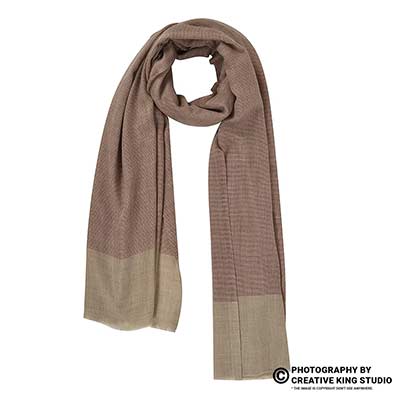
A matte cosmetic jar, a glossy stainless-steel cooker, and a satin-finished saree each demand a different light shaper. Softboxes flatten matte surfaces nicely, strip lights deliver clean specular highlights on glass and metal, and a beauty dish keeps fashion model photoshoots looking premium. Do not use one lighting recipe for every category.
Insight 04
Build the seven-slot stack with intent
Top-performing sellers map all seven image slots and the video before the shoot starts. A sample arc — (1) main hero, (2–3) feature infographics, (4) scale reference, (5) lifestyle moment, (6) packaging or unboxing, (7) trust block. This stack is pre-decided so the studio time is spent shooting, not improvising.
Insight 05
Treat infographics as content, not decoration
An Amazon infographic frame should answer one specific buyer question per image — material, dimension, capacity, certification, before/after benefit. Resist the urge to put every spec on one frame. Mobile readers cannot parse it, and Amazon’s compression flattens text below 16px.
Insight 06
Show real human scale, not just a measuring tape
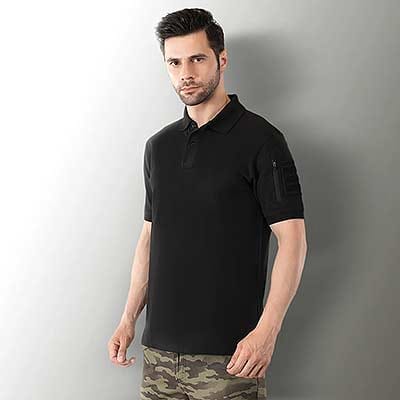
A hand holding the product, a wrist wearing the watch, a bag slung on a shoulder — human scale frames create instant trust because shoppers map the object onto their own body. This single insight has lifted CTR for many of the catalogues Ckstudio has reshot for Amazon and Flipkart sellers.
Insight 07
Lifestyle frames should answer ‘where does this live?’
The lifestyle slot is where you sell aspiration. A kitchen appliance on a real granite countertop with morning light, a saree styled at a wedding-mehendi setup, a fitness band worn on a 6 a.m. run — context converts. Lifestyle product photography is also where Myntra and Ajio listings benefit most, so plan for shared usage.
Insight 08
Shoot for mobile preview first
After every shot, preview it at the size Amazon will actually show — about 380px wide on a phone. If the headline benefit is unreadable, the composition is wrong, regardless of how it looks on a 27-inch monitor. Mobile-first composition is the one habit that separates 2024-quality imagery from 2026-quality imagery.
Insight 09
Use video to close the trust gap
The eighth listing slot — the video — is the single highest-leverage real estate on Amazon and is still under-used by Indian sellers. A 25–35 second clip showing real product handling, scale, and one or two key benefits sits next to your main image and quietly does the work of three more infographics. Studio-grade product video production is now table stakes for serious catalogues.
Insight 10
Test, log, iterate — every 60 days
The best Amazon sellers treat the image stack as a living asset. A/B test the main image, log the CTR lift, retire the lowest performer, and re-shoot the slot. Over a year, this iterative loop typically delivers more sales improvement than pricing changes or PPC optimisation.
Practical Examples From the Studio Floor
Example 1 — Apparel SKU on Amazon Fashion
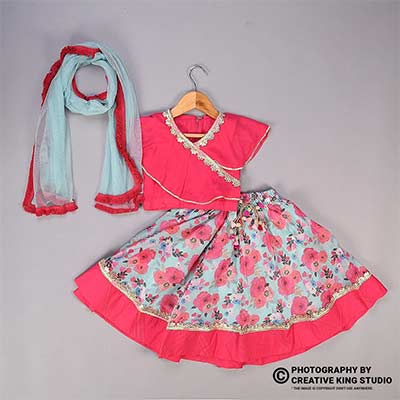
A Delhi-based ethnic-wear brand approached Ckstudio with a stagnant Amazon catalogue. The original imagery was on-model but shot with mixed light and inconsistent backgrounds. Reshooting with a clean garment photoshoot standard plus a dedicated ghost mannequin hero for each SKU produced visibly cleaner thumbnails. The same imagery was repurposed on Flipkart Fashion without modification.
Example 2 — Kitchen Appliance Brand
For a mid-sized appliance brand, a single before-and-after on the main image — replacing a glossy 3D render with a real kitchen product photograph on a true white background — was the difference between 2.1% and 3.4% CTR over a 30-day window. No price, copy or PPC change.
Example 3 — Jewellery Catalogue
Jewellery is an unforgiving category for AI imagery — buyers zoom in to inspect stone clarity and metal finish. A reshoot with macro lenses and controlled diffusion, the standard approach in any premium jewellery photography setup, restored buyer trust and reduced return-on-receipt complaints meaningfully.
Common Mistakes That Quietly Kill Conversion
Small image mistakes can quietly destroy Amazon conversions. From using lifestyle images as the hero shot to reusing AI renders as real product photos, non-compliant visuals reduce trust, hurt click-through rates, and increase the risk of policy violations in 2026.
❌ Using lifestyle as the main image
Amazon will sometimes accept it, but the algorithm penalises listings whose main image isn’t a clean white-background hero. Keep lifestyle for slots 4–6.
❌ Watermarks, logos and price stamps on images
This is an explicit policy violation and the fastest way to get a listing suppressed. Brand presence belongs in the A+ section, not on the main image.
❌ Shooting without a tethered preview
Composition errors, focus drift and white-balance shifts are invisible on a camera LCD. Shoot tethered — non-negotiable for catalogue work.
❌ Reusing AI-generated render as a ‘real’ photo
Even if it ‘looks fine,’ the buyer notices. Returns rise, reviews tank, and the listing’s long-term performance erodes — slowly, but reliably.
❌ Treating Flipkart and Amazon as the same brief
Flipkart often demands a different aspect and crop logic. Plan a multi-platform output map at the shoot stage to avoid expensive re-shoots.
Advanced Pro Insights for Scaling Catalogues
Once your single SKU listings are dialled in, the next leverage is process — turning photography into a repeatable, calendar-driven function rather than a one-off project.
Build a SKU master sheet with image-stack status (main, infographic 1, infographic 2…), so a missing slot is visible at a glance.
Standardise a brand visual system — fonts, infographic colour palette, layout grid — so any new SKU shoot feels native to the brand.
Schedule quarterly refresh shoots — image fatigue is real. Top-1% sellers refresh hero imagery every 90–120 days.
Capture variants in one session — colour, size, and bundle SKUs photographed together cost a fraction of what reshoots cost.
Plan for international marketplaces — if you also sell on eBay or Etsy, design the shoot output map once for all destinations.
For sellers in Delhi NCR and surrounding catchments, an in-house monthly slot at a dedicated catalogue studio is typically more cost-effective than ad-hoc shoots scattered through the year.
Tools & Equipment Ckstudio Uses
For sellers planning an in-house setup, or evaluating a partner studio, the equipment baseline matters. Below is the working kit on the Ckstudio shoot floor for Amazon and multi-marketplace catalogues.
Cameras
A pair of full-frame mirrorless bodies handles the bulk of catalogue work — a Sony A7R V for high-megapixel detail (jewellery, watches, packaging) and a Canon EOS R10 as a secondary body for fast-paced apparel and accessory pulls.
Lenses
A 100mm macro for jewellery and small accessories, a 50mm prime for general products and apparel close-ups, and a 24–70mm zoom for lifestyle and on-model coverage. The watch and small-accessory category particularly benefits from dedicated macro glass.
Lighting
Four Godox SK 400II heads paired with two Elinchrom FRX 400 units form the core of the lighting kit. Modifiers include four strip softboxes for clean specular work, two octaboxes for soft general fill, and a beauty dish reserved for fashion and on-model fashion shoots.
Post-Production Stack
Capture One for tethered colour-managed capture, Photoshop for finishing, and a dedicated retouching layer for clipping, dust removal, and Amazon-grade colour balancing.
Your 2026 Amazon Photography Checklist
Tap each item as you complete it — this checklist saves automatically while you’re on the page.
Main image on RGB 255,255,255 white background
Product fills 85%+ of the main-image frame
All seven image slots planned and shot
Infographic slots — one buyer question per frame
Lifestyle frame with real-world human scale
Resolution minimum 2000px on the longest side
Mobile preview reviewed at 380px width
Listing video uploaded — 25–35 seconds
No watermarks, logos or price stamps on imagery
A/B test calendar set for the next 60 days
Future Trends: Where Amazon Photography Is Heading
Three shifts will shape the next 18 months of Amazon imagery for Indian sellers, and Ckstudio is already building production processes around them.
1. Generative AI as a Studio Assistant, Not a Replacement
Expect AI to become deeply useful for background swaps, scene variations and infographic layout — but always layered on top of a real, photographed product. The studios that win in 2026 will be the ones that combine real photography with intelligent post-production AI, not the ones that abandon the camera.
2. Image-aware Search (Rufus & Beyond)
Amazon’s Rufus AI now reads imagery to summarise listings in conversational answers. Listings whose imagery visibly communicates benefit, scale and material will surface more often than text-heavy listings.
3. Vertical-first Content Formats
With Amazon Posts, Amazon Live, and short-form formats spreading across Instagram and reels-led commerce, sellers need imagery and short product video shot natively in vertical 4:5 and 9:16 alongside the standard square. Plan vertical capture from the same shoot brief.
Frequently Asked Questions
What are the Amazon main image guidelines for 2026?+
Amazon requires the main image to be on a pure white background (RGB 255,255,255), show only the product (no text, props or watermarks), fill at least 85% of the frame, and be a minimum of 1600px on the longest side for zoom functionality. Many top sellers go to 2000–2560px for sharper zoom on premium-segment listings.
Why does Amazon penalise AI-generated product images?+
AI-generated images often distort actual product details, materials, scale and colours. Amazon’s policy requires images to accurately represent the product the customer will receive. Misleading AI imagery can lead to listing suppression, increased returns, and policy violations — risks that quickly outweigh the cost saving.
How many images should an Amazon listing have in 2026?+
Amazon allows up to 7 images plus 1 video per listing. Top-performing sellers use all slots — typically 1 main white-background hero, 4–5 infographic and feature shots, 1–2 lifestyle images, and a 25–35 second video.
Does professional product photography increase Amazon sales?+
Consistently — yes. Professional photography typically improves click-through rate, reduces bounce rate, lowers return rates, and increases conversion. Listings with a complete infographic and lifestyle stack often see meaningfully higher engagement than text-heavy listings.
What does Amazon product photography cost in India?+
Pricing depends on product type, number of SKUs, image variants, and post-production complexity. Ckstudio offers transparent per-image and bundled pricing for Amazon sellers — request a custom quote on +91-8700258773 based on your catalogue size.
Is mobile-first product photography important for Amazon in 2026?+
Absolutely. Over 78% of Amazon India shoppers browse on mobile. Images must be readable, infographic text legible, and details clear when viewed on a 6-inch screen. Mobile-first composition decisions are now made at the shoot stage, not in post.
Conclusion: Your Next 30 Days
Amazon product photography in 2026 is no longer a creative checkbox — it is the most measurable, controllable performance lever a seller has. The path forward is straightforward: audit your current image stack against this checklist, fix the lowest-performing main images first, and plan a single comprehensive reshoot to bring every SKU up to the 2026 standard.
If photography production is not your team’s strength, partner with a studio whose work has been pressure-tested across Amazon, Flipkart and Myntra catalogues at scale. Ckstudio has been doing exactly that for Indian sellers since 2017 — and Prince and the team are happy to look at your current listings and tell you, honestly, what to fix first.
Ready to upgrade your Amazon catalogue?
Talk to Prince and the Ckstudio team for a no-obligation listing audit. Share your current ASINs and you’ll get a clear, prioritised plan — what to reshoot first, what to refresh, and what’s already working. Same-day reply during studio hours.
For Amazon’s official seller image policies and platform-specific requirements, refer to Amazon Seller Central India. For comparable Flipkart marketplace standards, Flipkart Seller Hub documents required image specifications and category-wise rules.