




Fashion Photography Services


E-commerce Photography

How modern manufacturers use professional industrial photography and videography services to win bigger B2B clients, prove their capability, and stand out in a crowded export market.
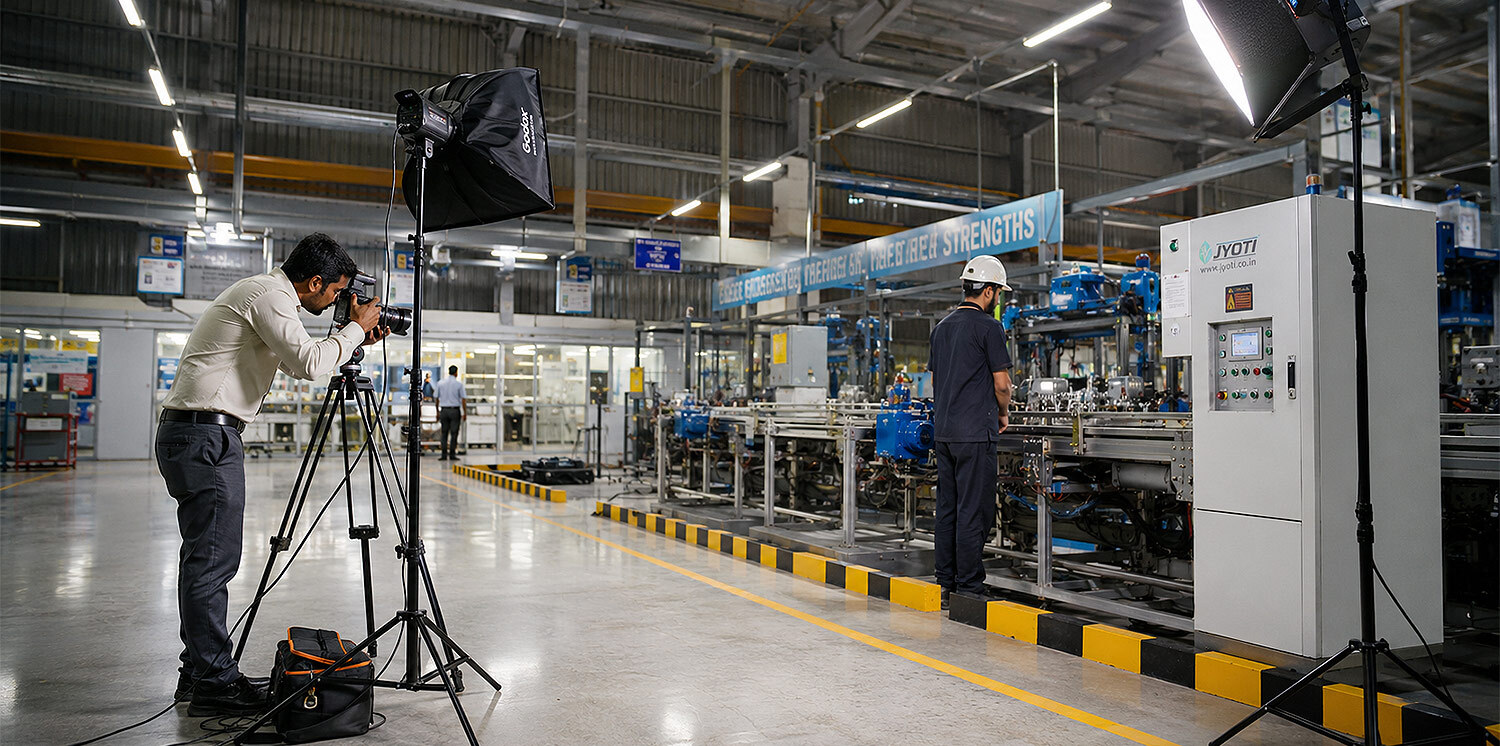
A well-lit plant walkthrough frame — the kind of shot that turns a factory tour into a sales asset.
For most manufacturing companies in India, the factory is the single biggest proof of capability — yet it is the part buyers almost never get to see. Professional industrial photography and videography services close that gap by turning your plant, machinery and processes into visuals that win trust before a single meeting happens. At Ckstudio, we have spent years helping factories, equipment makers and B2B suppliers document what they actually do, and the difference between a real shoot and a phone snap is the difference between a tender shortlisted and a tender ignored.
This guide explains exactly what these services cover, why they matter for manufacturers, and how to commission a shoot that pays for itself. Whether you supply auto components, heavy machinery, or precision parts, the principles here apply — and where pricing is concerned, you can dive deeper into our industrial shoot cost guide for 2026 and our broader factory and plant photography offering.
In simple terms, these services cover the specialised capture of factories, machinery, production lines, warehouses and finished industrial products — shot to a standard suitable for corporate, B2B and export use. Unlike a casual photo, an industrial shoot manages difficult lighting, reflective metal surfaces, cramped shop floors and safety constraints, while still producing clean, professional frames. It is a distinct discipline from commercial photography, though the two often overlap on a corporate project.
The output usually blends stills and motion. Photography handles catalogues, datasheets and website galleries, while video production handles plant walkthroughs, process explainers and brand films. Our team treats both as one connected story so that your machinery photography and your video footage feel like they belong to the same brand.
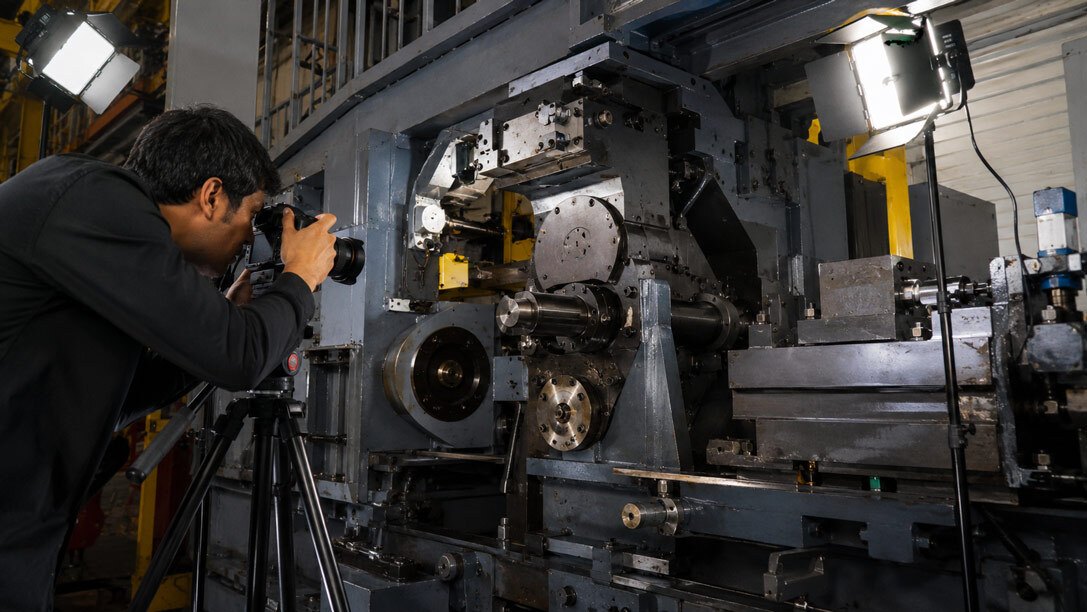
Controlled lighting tames reflective metal — essential for credible machinery shots.
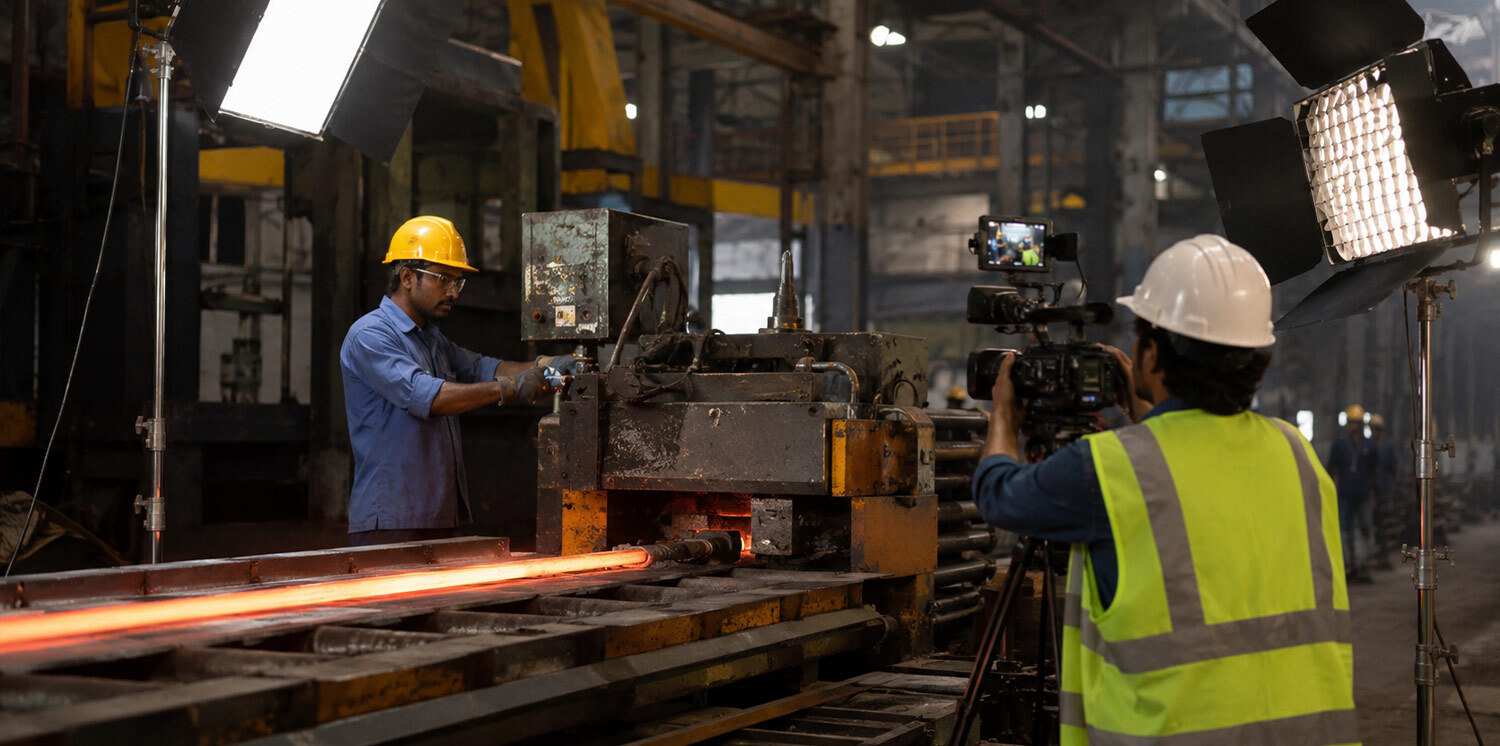
Operators in action add authenticity that static product shots cannot match.
B2B buyers, especially overseas importers, make decisions on perceived reliability long before price. When a procurement head on Amazon Business, a Flipkart wholesale partner, or a direct export client lands on your website, professional visuals signal that you are an established, serious manufacturer. Weak or missing imagery does the opposite — it quietly tells buyers to look elsewhere. This is why real documentation matters so much, and why we always steer clients away from synthetic shortcuts, a point we cover in depth in our comparison of real photography versus AI-generated product images.
There is also a practical multiplier. One well-planned shoot becomes dozens of assets: tender attachments, LinkedIn posts, trade-fair banners, investor presentations and listing images across marketplaces like Meesho and Ajio for any consumer-facing range you produce. If you are scaling output, the same logic that applies to managing photography at volume applies to industrial catalogues too — plan once, shoot efficiently, reuse everywhere. To discuss a plan for your plant, you can reach Ckstudio directly on +91-8700258773 or drop a note to [email protected].
of B2B buyers say visuals influence supplier credibility
more engagement on listings with video than without
years of Ckstudio shoot experience behind every project
A factory is not a studio, so preparation decides the outcome. Over years of on-site work, Prince has refined a simple sequence that keeps shoots safe, fast and productive. Here is the process we follow at Ckstudio for every factory and machinery project we take on.
Decide first where the visuals will live: website, tender, catalogue, or brand film. The destination dictates the framing, aspect ratios and the balance between stills and video. A clear shot list agreed in advance prevents the most common waste on industrial sets — discovering a missing angle after the crew has left.
Industrial environments carry real hazards, so safety induction, PPE and supervised access are non-negotiable. Scheduling around production downtime — or planning to shoot lines in action — needs to be agreed with your plant manager. Good crews plan power, scaffolding and machine cleaning days ahead, not on the morning of the shoot.
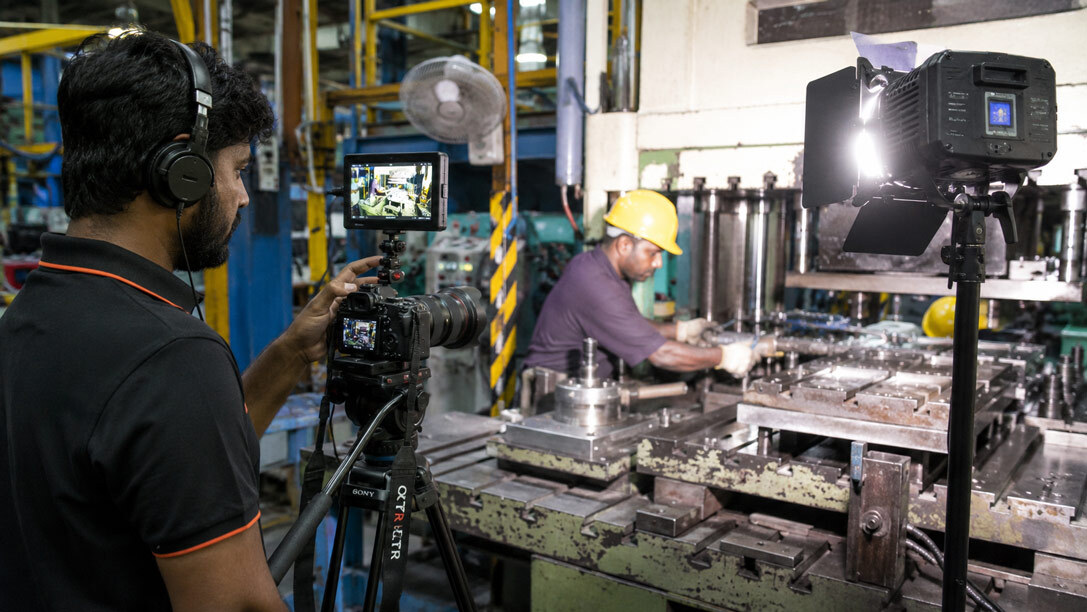
A planned crew moves fast and stays out of the production line’s way.
On the day, the most efficient order is wide establishing frames first, then machinery detail, then process footage, and finally aerial coverage if a drone is cleared. Capturing component-level detail alongside the big picture gives your marketing team both the hero shots and the supporting library they will need for months.
Raw industrial footage almost always needs grading, cleanup and colour correction to look its best — reflective surfaces and mixed factory lighting are unforgiving. Professional retouching and edit, the same craft behind our image editing services, is what separates a usable archive from a polished asset set ready for global buyers. If you want to see sample edits before committing, message Ckstudio on WhatsApp at +91-8700258773.
Many factories try an in-house attempt first. Here is an honest comparison of what changes when you bring in a professional team.
| Factor | In-House / DIY | Professional Studio |
|---|---|---|
| Lighting on reflective metal | Inconsistent, harsh | Controlled, even |
| Drone / aerial capability | Rarely available | Licensed and planned |
| Safety & insurance | Often overlooked | Built into the plan |
| Post-production | Basic or none | Full grade & retouch |
| Buyer perception | Amateur | Established & credible |
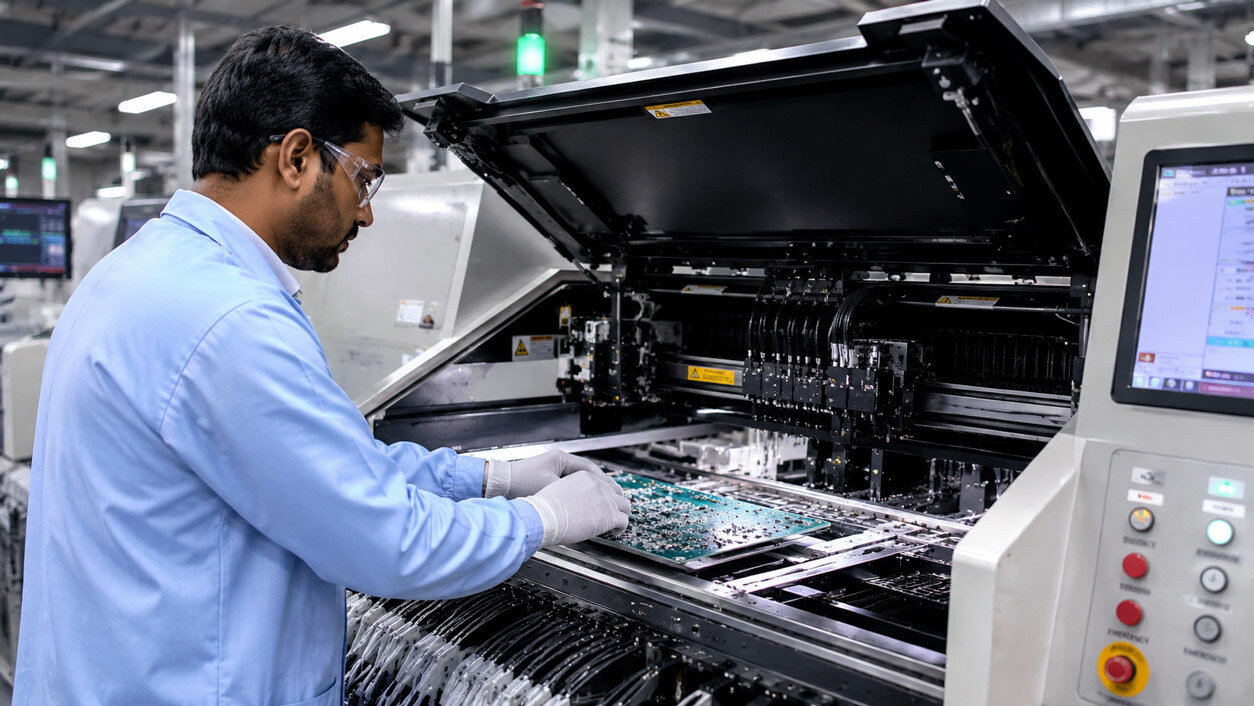
Macro detail on precision components shows engineering quality buyers care about.
Quality industrial work depends on the right kit. Ckstudio shoots on full-frame mirrorless bodies for resolution and dynamic range, pairs them with wide and macro lenses for both plant-wide and component-level frames, and uses powerful portable strobes to control mixed factory lighting. For video, stabilised gimbals and licensed drones add the cinematic motion that makes a technical product feel premium. The gear matters, but judgement on a live shop floor matters more.
The industrial space is moving quickly toward short-form video, interactive 360-degree product views and shoppable B2B catalogues. Drone coverage is becoming standard rather than premium, and exporters increasingly expect a plant walkthrough film as part of any serious supplier profile. Manufacturers who invest in a strong visual library now will be far ahead when these formats become the default expectation across marketplaces and trade platforms.
They include facility photography, machinery close-ups, in-action process footage, drone aerials and finished-product catalogue images — delivered edited and ready for B2B, web and export use.
Pricing depends on scope, location, duration and whether drone or video is involved. For transparent, current numbers, see our dedicated industrial shoot cost guide for 2026.
Yes — with proper safety clearance, in-action footage is some of the most compelling material. We plan this with your plant manager in advance.
Because they are not real. B2B buyers trust authentic documentation of your actual plant and machinery, and synthetic visuals erode the credibility you are trying to build.
Your plant already tells a powerful story — professional industrial photography and videography services simply make that story visible to the buyers who matter. With the right planning, the right crew and honest, real footage, a single shoot can lift your credibility across tenders, websites and global enquiries. Prince and the Ckstudio team bring 9+ years of shoot experience to every industrial project, and we would be glad to help you build a visual library that works as hard as your machines do.
Talk to Prince about a tailored industrial shoot for your plant. Call +91-8700258773, message us on WhatsApp at +91-8700258773, or email [email protected].
Get a Shoot Quote