









When a growing e-commerce seller crosses the 50-SKU mark, product photography stops being a creative exercise and becomes an industrial problem. The same workflow that delivered crisp images for the first 30 listings begins to crack — turnaround stretches, costs multiply unpredictably, and the visual consistency that separates serious brands from amateurs starts slipping. E-commerce photography at scale is fundamentally a different discipline from boutique product shoots, and most sellers learn this the expensive way.
This guide is the operational playbook Ckstudio uses to deliver 200, 500, and 1,000+ SKU production cycles for sellers across Amazon, Flipkart, Meesho, and D2C platforms. Every framework, benchmark, and checklist below comes from real production data — not theory.
Key Takeaways
- Volume photography requires a 7-stage production pipeline — not a bigger studio or more cameras.
- Sellers between 50 and 500 SKUs typically save 40–60% by outsourcing to a specialised studio versus building in-house.
- A well-engineered shoot can deliver 500 SKUs in 12–18 working days; without structure, the same volume takes 45–60 days.
- Visual consistency at scale is controlled by four standardisations: lighting recipes, camera profiles, tether reference frames, and master colour files.
- AI-generated images currently fail compliance on every major Indian marketplace and cannot replace real product photography for live listings.
Why Scaling Photography Breaks Most Sellers at 50+ SKUs
The first 50 SKUs of any e-commerce business — whether packaged goods or apparel and fashion catalogs — are usually shot ad-hoc — a freelance photographer, a borrowed studio, a few late nights of post-production. It works because the volume is small enough that inconsistencies hide in the noise. The catastrophe begins around SKU 80 to 120, when sellers discover that their visual language is fragmented across batches, their cost-per-image is unpredictable, and their photographer cannot scale time linearly with their growth.
Definition
Volume product photography is a structured production discipline where 200 or more SKUs are shot, retouched, and delivered through standardised pipelines designed to enforce visual consistency, predictable cost, and platform-specific compliance at scale.
There are four specific failure points that sellers hit between 50 and 500 SKUs, and recognising them early is the difference between a smooth scale-up and a six-week catalog disaster.
The Four Failure Points of Volume Photography
1. Inconsistency drift. When SKUs are shot across multiple sessions, weeks, or photographers, white balance shifts by 200–400 Kelvin, shadow direction flips, and the same product photographed twice looks like two different SKUs. On Myntra and Ajio listings, this drift triggers customer-perceived quality issues even when each individual image is technically fine.
2. Cost unpredictability. Per-image rates that worked at 30 SKUs balloon at 300 SKUs because freelancers rebuild setups, restage products, and reshoot rejects without batch efficiency. What sellers think will cost ₹250 per image lands at ₹500–700 by final invoice.
3. Turnaround compression. Marketplaces don’t pause for catalog production. Every day a SKU sits without images is a day of zero revenue. Without parallel post-production, retouching becomes the bottleneck — a single retoucher can finish 25–40 finished images per day, which means 500 SKUs takes 13–20 days of post-production alone.
4. Compliance fragmentation. Each platform — Amazon, Flipkart, Meesho, eBay — has different image guidelines, aspect ratios, and white-background requirements. Without a standardised export pipeline, a single SKU shoot has to be re-edited four times for four marketplaces, multiplying post-production effort.
The Real Cost of Volume Photography Mistakes
Most sellers underestimate the financial impact of poor photography systems because the costs are hidden — they show up as low conversion rates, high return rates, and lost listing visibility rather than as a line item on a studio invoice. Ckstudio has audited dozens of catalogs from sellers in the 100–500 SKU range, and the patterns are consistent.
| Mistake | Hidden Cost (per 100 SKUs) | Impact |
|---|---|---|
| Inconsistent white backgrounds | 8–12% conversion drop | Listing looks unprofessional vs competitors |
| Wrong aspect ratios per platform | 2–4 weeks of re-edits | Delayed launches, blocked listings |
| Low-resolution images | 15–20% bounce rate increase | Lost in search results, no zoom on mobile |
| Poor colour accuracy | 20–35% return rate increase | “Not as shown” complaints, refunds |
| Missing lifestyle/context shots | 5–10% lower AOV | Customer cannot visualise use case | ||
| No A+ content imagery | 10–25% lower listing rank | Missing premium SERP placement |
For a seller with 500 SKUs averaging ₹600 per order and 100 daily orders, a 10% conversion drop alone equals roughly ₹18 lakh in annual lost revenue — orders of magnitude larger than the cost of doing the photography correctly the first time. This is why Ckstudio’s case studies repeatedly show that proper volume photography pays for itself within 30–45 days of listing improvement.
Real Photos vs AI-Generated Images at Scale
A common question from scaling sellers in 2026 is whether AI image generation can replace professional photography to manage volume cheaper. The short answer, from a compliance and conversion standpoint, is no — and the gap is wider at 500 SKUs than at 50.
What Real Product Photos Deliver
- True material texture (fabric weave, leather grain, metal finish)
- Accurate dimensions, scale, and proportions
- Marketplace-compliant for Amazon, Flipkart, Myntra, Ajio
- Verifiable colour accuracy via colour-managed workflow
- Builds buyer trust — image matches what arrives in the box
- Eligible for A+ content, EBC, and rich media placements
Where AI Images Fail at Volume
- Hallucinated textures, fake fabric weaves, invented details
- Inconsistent dimensions across angles of the same product
- Rejected by Amazon, Flipkart, and Myntra compliance scans
- No reliable colour fidelity to the actual physical product
- Triggers buyer mistrust and return rates above 30%
- Cannot be used as primary listing images on any major Indian marketplace
Ckstudio’s recommendation for every seller in the 50–500 SKU range is unambiguous: real, professionally shot photography for every primary listing image, every variant, and every A+ asset. AI may have a future role in conceptual mood boards or background variation experiments, but the actual product on the actual listing must be the actual product, photographed correctly. This is also the policy reflected in the Amazon Seller Central image requirements and Flipkart Seller Hub guidelines.
Planning a 100–500 SKU Catalog Shoot?
Talk to Prince directly about production timelines, per-SKU costs, and platform-specific delivery. Ckstudio handles end-to-end volume photography for growing e-commerce brands across Amazon, Flipkart, Myntra, and D2C.
The 7-Stage Production Pipeline for High-Volume Catalog Shoots
Every successful 200+ SKU shoot at Ckstudio runs on the same seven-stage pipeline. The stages are sequential by design — skipping or compressing any one of them is the most common reason volume shoots fail. This is the framework Ckstudio’s production approach is built on, refined across nearly a decade of e-commerce work.

SKU Audit & Categorisation
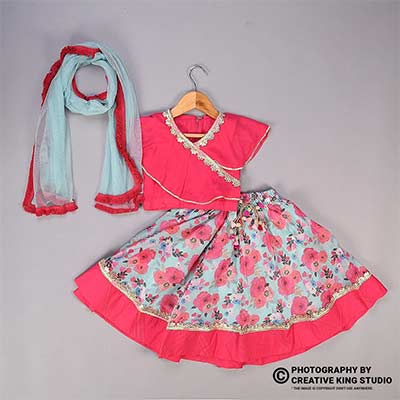
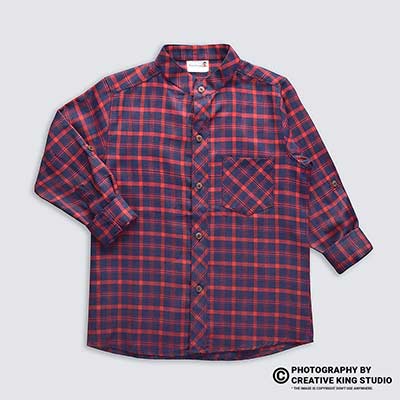
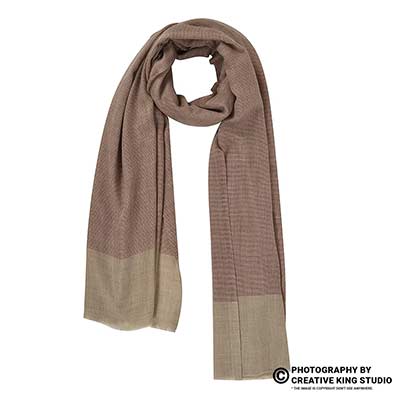
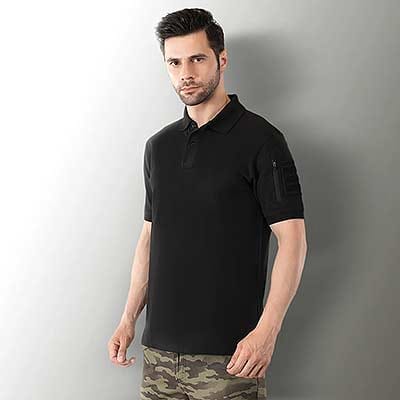
Before a single light goes on, every SKU is inventoried, photographed in reference shots, and grouped into shoot categories — apparel-on-model, ghost mannequin, flat lay, packaged goods, jewellery, footwear, lifestyle. Categorisation dictates everything downstream: lighting recipe, camera, lens, set, and post-production preset.
Output: Master SKU sheet with category tag, priority rank, and platform destination per item.
Shot List Engineering
For every SKU category, the team locks down the exact angles, backgrounds, and reference frames required. A garment photoshoot needs front, back, side, detail, and ghost mannequin shots; a jewellery SKU needs hero, scale, and lifestyle. Shot lists prevent the most expensive mistake in volume work — discovering at edit time that you missed an angle.
Output: Locked shot-list document approved by client before production day one.
Studio Setup Standardisation
Lighting recipes, camera settings, white balance, and tethering are configured once per category and frozen for the entire production cycle. At Ckstudio, this means locking 4× Godox SK 400II strobes with strip softboxes for apparel, octabox + beauty dish for model work, and a colour-checker reference frame at the start of every batch. Standardisation is what makes 500 SKUs look like a coherent catalog instead of a stitched-together patchwork.
Output: Documented lighting diagrams, locked camera profiles, calibrated colour reference.
Batch Shooting Execution
Products are shot in category clusters — every bottle one after the other, every garment in continuous sequence — to eliminate the 8–15 minutes of setup downtime between SKUs that destroys velocity in unstructured shoots. A well-organised batch day delivers 60–90 SKUs through camera. Tethered shooting to Capture One or Lightroom enables real-time client approval and immediate reshoots before the set is broken down.
Output: RAW captures organised by SKU code, shot-list checklist completion, daily client previews.
Parallel Post-Production Pipeline
Retouching does not wait for shooting to finish. From day two of the shoot, Ckstudio’s image editing and retouching team begins processing completed batches in parallel — colour correction, background cleanup, dust and lint removal, ghost mannequin reconstruction, and platform-specific resizing run as concurrent workflows on different operators. This single change can compress final delivery by 8–12 days on a 500-SKU project.
Output: Daily delivery of platform-ready images while subsequent batches are still being shot.
Quality Control Gate
Every image passes a three-tier QC checklist before client handoff: technical (sharpness, white balance, exposure), compliance (background colour, aspect ratio, file size, watermark policy), and brand (consistent shadow, scale, props). Sellers shooting for Meesho, Ajio, and Myntra simultaneously cannot afford to discover a compliance issue at upload time — the QC gate catches it at edit time instead.
Output: QC-approved master files tagged for export.
Platform-Specific Export
From a single QC-approved master file, automated export presets generate every platform variant — 2000×2000 white-background JPEG for Amazon, 1500×1500 for Flipkart, lifestyle aspect for Myntra, square-and-vertical for D2C and Instagram. This is also the stage where Amazon infographic and A+ assets are generated from the same source files, maintaining perfect visual continuity across the entire listing experience.
Output: Final folder structure organised by SKU and platform, ready for direct upload.
Case Study: How Ckstudio Delivered 500 SKUs in 14 Working Days
Real Project · Apparel D2C Brand · Delhi NCR
500 SKUs · 14 Working Days · Single Production Cycle
A Delhi-based apparel D2C brand approached Ckstudio with 500 new-season SKUs requiring simultaneous launch across their D2C website, Myntra, and Ajio. Their previous photographer had quoted 60 days. Ckstudio committed to 14 working days using the seven-stage pipeline.
The shoot was categorised into five clusters — ghost mannequin (220 SKUs), on-model (180 SKUs), flat lay (60 SKUs), detail and trim shots (30 SKUs), and lifestyle (10 SKUs). Two photographers ran parallel sets. A four-person retouching team began processing day-two batches by day three. Daily tethered previews were shared via cloud for client approval, eliminating the back-and-forth that usually delays approval cycles.
By day fourteen, every SKU was delivered in three platform-specific exports (D2C, Myntra, Ajio) with consistent shadow direction, white balance, and ghost mannequin construction across all 500 items.
500
SKUs Delivered
14
Working Days
1,500+
Final Images
3
Platforms Exported
8 Common Mistakes Growing Sellers Make at Volume
Across years of producing for sellers crossing the 50-SKU threshold, the same eight mistakes keep appearing. Each one costs measurable money, and each one is preventable with a structured pipeline.
Treating volume photography like an enlarged version of a 10-SKU shoot
Pricing, timeline, and workflow assumptions do not scale linearly. A 10-SKU shoot in one day does not mean 100 SKUs in ten days — that math fails because it ignores setup amortisation, batch optimisation, and parallel post-production.
No locked shot list before production starts
Improvising angles on a 200-SKU shoot guarantees that at least 20–30 SKUs will need reshoots when the seller realises a missed angle at upload time.
Mixing photographers across batches without standardised lighting
Different operators with different lighting recipes produce visibly different SKUs. A buyer scrolling a category page on marketplace listings notices inconsistency before they consciously identify it.
Sequential post-production instead of parallel
Waiting for all shooting to finish before starting retouching adds 10–15 days to the project for no benefit. Parallel pipelines compress timelines without compromising quality.
Editing once for one platform, then re-editing for others
Every additional platform multiplies post-production effort if export is not built into the master file. A single master file with export presets eliminates 60–80% of duplicate work.
No QC gate between retouching and delivery
Sellers discover compliance issues at the upload stage, by which point the shoot is already broken down. A pre-delivery QC gate catches the same issues days earlier.
Trying to use AI-generated images for live listings
Marketplaces actively detect and reject AI imagery. The cost of compliance violation — listing suppression — is dramatically higher than the cost of doing real photography correctly.
Choosing per-image price over total project cost
A ₹200 per-image quote that produces inconsistent, non-compliant images that need redoing is more expensive than a ₹400 quote that delivers production-ready files the first time.
Pro Insights: Workflow Automation & Batch Optimisation
Tethered Shooting Is Non-Negotiable Above 100 SKUs
Tethered capture into Capture One or Lightroom serves three roles in volume work: real-time exposure verification (catching errors before the subject leaves the set), instant client approval (eliminating end-of-day rejection cycles), and automatic file organisation by SKU code (eliminating manual sorting). Studios that shoot untethered above 100 SKUs lose 1–2 hours per day to file management alone.
Reference Frames Every 25 SKUs
Inserting a colour-checker and grey-card reference frame at the start of every 25-SKU batch creates indisputable colour reference for post-production. When the retouching team encounters a SKU with questionable colour, the nearest reference frame is the truth. This single practice eliminates 80% of colour-correction guesswork on volume jobs.
Master File Architecture for Multi-Platform Delivery
Every SKU produces one master PSD or layered TIFF with full resolution, full colour space, and isolated subject layers. From this master, automated export actions generate JPEG variants for each platform. When a marketplace updates its image specifications, only the export preset needs updating — every SKU in the catalog can be re-exported in hours rather than re-edited in weeks.
Tools & Equipment for Volume Production
Equipment for volume e-commerce work must be reliable across thousands of frames per day, not just creatively flexible. Ckstudio’s volume rig has been refined over years of high-throughput catalog work.
Cameras & Lenses
Full-frame mirrorless bodies — Canon R10 for general SKUs and Sony A7R5 for high-resolution apparel and jewellery — provide the dynamic range required for clean retouching. A 100mm macro lens handles jewellery and small product detail; a 50mm prime covers most general product work; a 24–70mm zoom adapts to lifestyle and on-model setups. Reliability and tethering compatibility matter more than the latest sensor specifications.
Lighting
Volume shooting needs strobes, not continuous lights. Ckstudio’s rig uses 4× Godox SK 400II strobes paired with 2× Elinchrom FRX 400 units, configured with 4× strip softboxes for apparel, 2× octaboxes for diffused fill, and 1× beauty dish for model and fashion shoots. Strobes deliver consistent output across 1,000+ exposures per day; LED panels drift in colour temperature and intensity over long sessions.
Capture & Processing Software
Capture One or Adobe Lightroom Classic for tethered capture and primary RAW processing. Photoshop for retouching and ghost mannequin construction. A documented preset library — exposure, colour, sharpening, output sharpening per platform — turns retouching from a creative decision into a repeatable operation.
Studio Infrastructure
Volume work demands a permanent studio setup: 12-foot seamless white cyclorama, dedicated apparel mannequins in size standard, calibrated colour-managed monitors at every retouching station, and a tethered shooting station with tested cable runs. Sellers attempting volume photography in rented day-studios consistently lose 25–40% of production time to setup and teardown.
Implementation Checklist for Your Next Volume Shoot
Pre-Production · Before Production Day One
Future Trends: Hybrid Production & AI-Assisted Workflows
The volume photography landscape is shifting through 2026 and beyond, but not in the direction sellers often assume. AI is not replacing photography — it is augmenting specific stages of the post-production workflow while real photography remains the unmovable foundation.
Three trends are reshaping how Ckstudio and other serious e-commerce studios deliver at scale. First, AI-assisted retouching tools are accelerating background cleanup, dust removal, and ghost mannequin reconstruction by 30–50%, freeing skilled retouchers to focus on colour grading and creative judgement. Second, marketplace image specifications are converging — Amazon, Flipkart, and Myntra increasingly accept similar formats, simplifying multi-platform export pipelines. Third, video is becoming a primary listing requirement; sellers who shoot stills, short-form product videos, and creator-style UGC content for marketplaces in the same production session save 40–50% versus separate shoots.
For sellers in the 50–500 SKU range, the practical implication is straightforward: build production relationships with studios that have already integrated these efficiencies, rather than spending six months learning them in-house.
Frequently Asked Questions
What is the average cost per image when shooting 500 SKUs in bulk?
For Indian e-commerce sellers shooting 500 SKUs in a single production cycle, professional studios typically charge between ₹250 and ₹600 per finished image, depending on product category, retouching depth, and platform variants required. Apparel with model shoots costs more than packaged goods on a white background. Volume discounts kick in meaningfully above 200 SKUs.
How long does it take to shoot 500 SKUs professionally?
A well-organised production pipeline can deliver 500 SKUs within 12 to 18 working days, including shooting, retouching, and final delivery in platform-ready formats. Without a structured workflow — pre-locked shot lists, parallel retouching, and standardised lighting — the same volume routinely takes 45 to 60 days.
Should growing sellers build an in-house studio or outsource photography?
Most sellers between 50 and 500 SKUs save 40 to 60 percent by outsourcing to a specialised studio rather than building in-house. In-house only becomes economical above 1,000 active SKUs with continuous monthly refresh cycles, because that is the threshold where studio infrastructure, equipment depreciation, and full-time photographer salaries are absorbed. Below that volume, the maths consistently favours outsourcing.
Can AI-generated product images replace professional photography at scale?
No. AI-generated images currently fail Amazon, Flipkart, Myntra, and Ajio compliance checks because they cannot reliably represent the actual product, fabric texture, true colour, or exact dimensions. Real product photography remains the only acceptable approach for live e-commerce listings on every major Indian marketplace as of 2026.
How do you maintain visual consistency across 500 SKUs shot over multiple days?
Visual consistency at volume requires four standardisations: documented lighting recipes per category, locked camera profiles and white-balance presets, tethered shooting with reference colour-checker frames inserted every 25 SKUs, and a centralised colour-corrected master file that defines the brand look. These four controls eliminate 90 percent of inconsistency issues that plague multi-day shoots.
What is the ideal team structure for shooting 500 SKUs in two weeks?
An efficient volume team includes one lead photographer, one assistant for set changes and product preparation, one stylist or set manager for apparel and lifestyle shoots, two retouchers running parallel post-production, and one project coordinator handling SKU tracking, daily previews, and client approvals. Fewer than five people consistently misses two-week deadlines on 500-SKU projects.
How does Ckstudio price a 500-SKU project versus a 50-SKU project?
Ckstudio’s pricing reflects the operational efficiency volume unlocks. A 50-SKU project carries higher per-image cost because setup amortisation works against small batches. A 500-SKU project typically lands at 35–50% lower per-image rate because lighting, set, and pipeline costs spread across many more SKUs. For exact pricing on a specific catalog, sellers can contact Prince directly at +91-8700258773.
Conclusion: Photography Becomes Infrastructure at 50+ SKUs
The transition from 50 to 500 SKUs is the moment product photography stops being a creative service and becomes operational infrastructure for a growing e-commerce business. Sellers who recognise this transition early build catalogs that scale; sellers who treat it as a bigger version of their first shoot run into cost, quality, and timeline failures that cost months of lost revenue.
The seven-stage pipeline, four consistency controls, and parallel post-production architecture in this guide are the same systems Ckstudio uses to deliver 200, 500, and 1,000+ SKU projects month after month for sellers across India. They are not theoretical frameworks — they are documented operational practice, stress-tested across years of marketplace photography under real deadline pressure.
For any growing seller currently sitting between 100 and 400 SKUs and watching catalog production become a bottleneck, the next correct step is a conversation about scope, timelines, and platform requirements before the next launch cycle locks in. Ckstudio’s team, led by Prince, is built specifically for this conversation. You can reach the studio at [email protected] or WhatsApp on +91-8700258773 to begin scoping a volume project.
Ready to Scale Your Catalog Without the Bottleneck?
Ckstudio handles end-to-end volume product photography for growing e-commerce brands — from SKU audit through platform-ready delivery. Get a fixed-quote, fixed-timeline production plan tailored to your catalog size and platform mix.