Fashion Photography Services
E-commerce Photography
A practical decision guide for D2C intimate apparel labels, catalogue managers and marketplace sellers who need to spend their photography budget where it actually moves the needle.
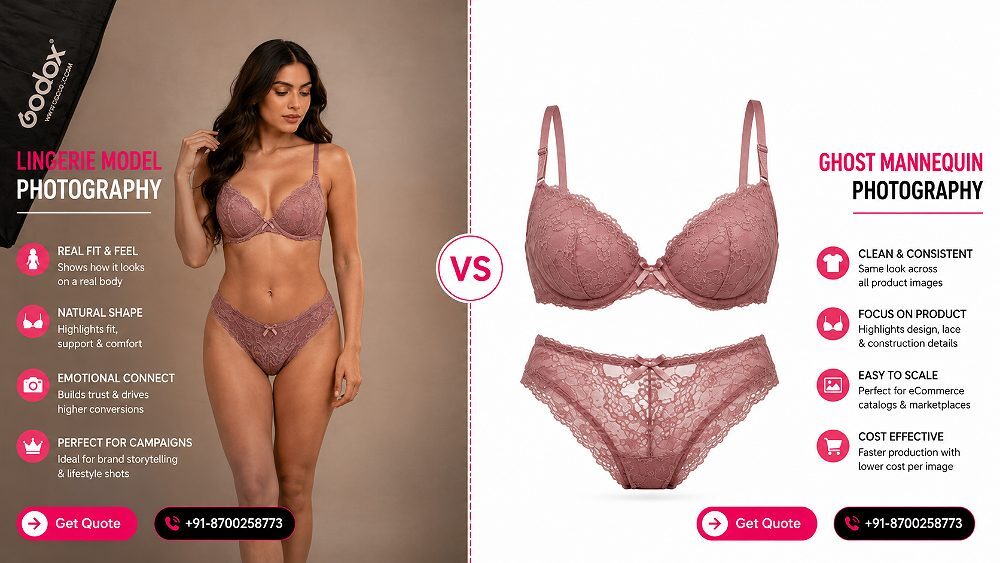
Choosing between lingerie model photography and ghost mannequin photography is one of the most expensive decisions a growing intimate apparel brand makes. Both approaches can look premium, and both sell — but they solve completely different ecommerce problems. This is not a question of which style is prettier. It is a question of what your bra, panty, bralette or shapewear listing actually needs to communicate to convert a shopper.
At Ckstudio, we shoot both formats every week for D2C labels, innerwear manufacturers and marketplace sellers, so this guide is written from the shoot floor rather than from theory. In the Model vs Ghost Mannequin debate, on-model imagery wins on real-body fit and brand storytelling, while ghost mannequin wins on catalogue consistency and cost-per-SKU. The right answer for your lingerie ecommerce photography depends on product type, catalogue size, sales channel and how premium your positioning needs to feel.
Ghost mannequin photography is usually stronger for scalable product catalogues where consistency and cost control matter most. Lingerie model photography is stronger for realistic fit, premium positioning and marketing content. Most serious lingerie ecommerce brands do best combining both.
Before the detailed breakdown, here is the fast version. The table below scores both formats across the factors that actually influence lingerie ecommerce performance — from fit communication to SKU scalability. Use it as a shortlist, then read the sections that match your situation. Notice that neither lingerie model photography nor ghost mannequin wins every row; each owns a specific job.
| Factor | Lingerie Model Photography | Ghost Mannequin | Best Choice |
|---|---|---|---|
| Fit communication | Real body, real proportions | Structural shape only | Model |
| Human / body context | Strong | None | Model |
| Catalogue consistency | Harder to standardise | Highly repeatable | Ghost Mannequin |
| Brand storytelling | Excellent | Limited | Model |
| SKU scalability | Slower per unit | Fast, controlled | Ghost Mannequin |
| Production complexity | Higher | Moderate | Ghost Mannequin |
| Post-production | Retouching-led | Compositing-led | Depends |
| Cost efficiency (per SKU) | Lower at scale | Higher at scale | Ghost Mannequin |
| Marketplace catalogue use | Good for supplementary | Ideal for primary | Ghost Mannequin |
| Paid advertising | High performing | Weak | Model |
| Social media | Native fit | Rarely used | Model |
| Premium brand positioning | Aspirational | Functional | Model |
| Speed for large collections | Limited | Excellent | Ghost Mannequin |
| Best overall use | Fit, PDP hero, campaigns | Catalogue depth, variants | Hybrid |
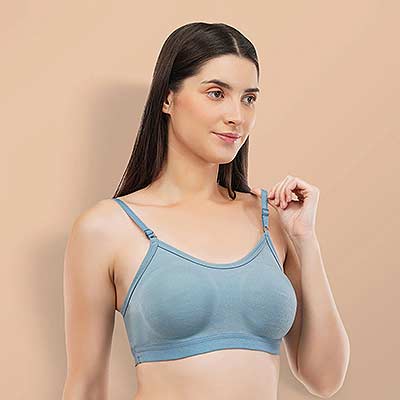
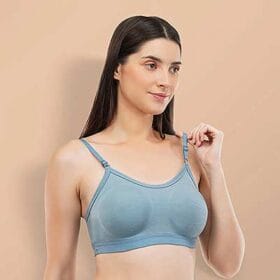
Lingerie model photography is the practice of photographing intimate apparel on a professional model so shoppers can see how a garment looks, sits and fits on a real human body. It covers everything from clean, fit-oriented catalogue frames to editorial campaign imagery. For ecommerce, the commercial version matters most: neutral backgrounds, honest styling and standard front, back, side and detail angles that represent the product accurately.
Unlike a pure fashion campaign, ecommerce model photography prioritises truth over drama. A bralette or babydoll set should look exactly like what arrives in the parcel. This is why brands such as Zivame, Clovia and Nykd by Nykaa rely heavily on on-model frames for their product pages, and why our model photoshoot and fashion photography teams treat fit accuracy as the first job of every frame.
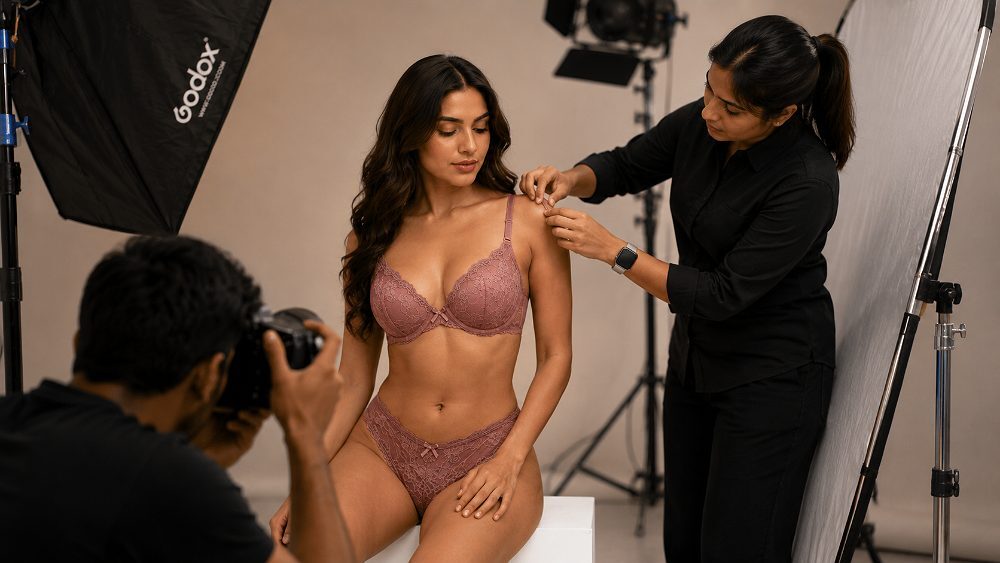
A productive lingerie model shoot follows a tight pipeline. It starts with model selection and sample sizing so garments sit correctly, then moves to consistent styling, controlled lighting and a fixed set of standard poses. Every intimate piece is shot for coverage, strap position and drape, followed by careful retouching and marketplace or D2C crops. When teams plan the samples well — something we cover in our guide on preparing garments for a shoot — a single day can cover a surprising number of hero pieces.
Ghost mannequin photography — also called invisible mannequin or hollow-man photography — captures a garment on a dimensional form, then removes that form during editing to leave a clean, product-only image with a natural 3D shape. For intimate apparel it is ideal for showing cup structure, waistband shape and the true silhouette of a bra or brief without any model distraction. It is repeatable, consistent and fast across many SKUs.
Because the technique isolates the garment, it produces the uniform, comparable frames that category pages depend on. If you want to understand the editing craft behind it, our ghost mannequin photography service page and the marketplace-focused ghost mannequin ecommerce guide both walk through how the invisible form is composited seamlessly.
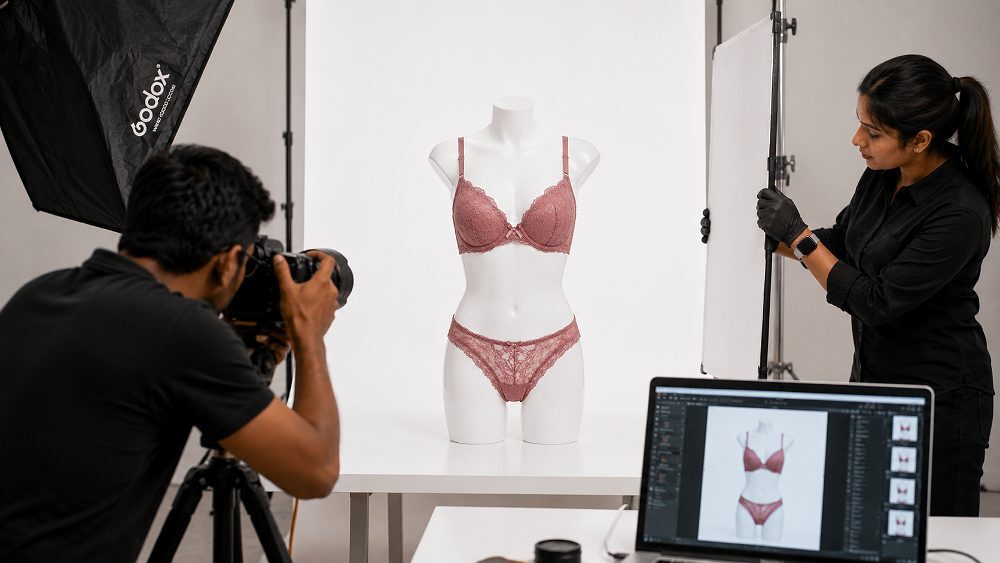
The strength of ghost mannequin lingerie photography is consistency at volume. Every frame uses the same crop, scale and lighting, so a shopper scanning a category page sees structured cups, clean waistbands, lace detailing and silhouette presented identically. That repeatability is exactly what large innerwear catalogues from labels like Jockey Women, Enamor and Amante need to keep hundreds of undergarment listings looking cohesive and trustworthy.
These seven factors decide where your budget belongs. Read each one against your own catalogue — the winner changes depending on whether you are optimising for fit, scale, cost or brand impact. This is the heart of the Model vs Ghost Mannequin comparison for lingerie ecommerce photography.
Nothing communicates fit like lingerie model photography. Strap positioning, coverage, rise, silhouette and proportion only make sense on a human body. A shopper can instantly judge whether a bikini brief sits high or low, how a bralette falls, and whether coverage matches expectation. On-model lingerie photography reduces the guesswork that drives returns, which is why fit-critical categories lean on it heavily.
When the garment must be the only story, ghost mannequin lingerie photography wins. There is no model, pose or skin tone to distract from the product, so bras and briefs read cleanly and compare easily side by side. Invisible mannequin frames give a uniform catalogue aesthetic where shape, structure and lace are the focus — perfect for a tidy category grid.
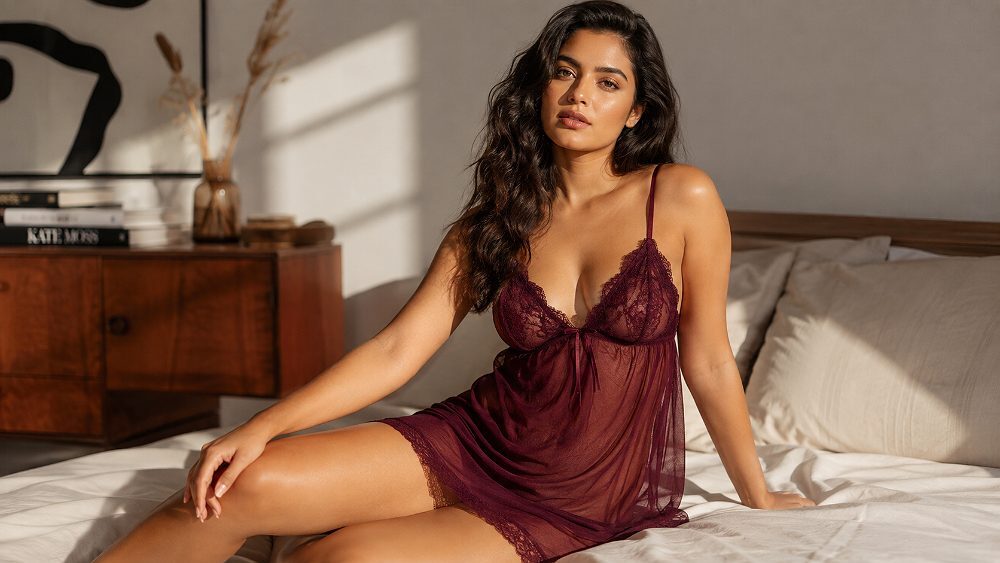
Premium intimate apparel sells on feeling as much as function. Ecommerce model photography carries personality, aspiration and mood, letting a customer picture themselves in the product. This emotional layer is what separates a forgettable listing from a covetable one, and it is why premium and boudoir-adjacent brands invest in on-model campaign frames for launches and homepage storytelling.
Consistency is where ghost mannequin photography quietly dominates. Identical framing, consistent scale and fewer variables produce cleaner category pages and a more professional catalogue. For brands refreshing inventory constantly, this predictability keeps the whole store looking coherent — a benefit we detail in our catalogue consistency guide.
A lingerie model shoot carries model fees, hair and makeup where required, fitting, scheduling, styling and extra shoot time. Ghost mannequin has its own costs — garment preparation, form setup, compositing and detailed retouching — but these scale more predictably across many SKUs. For large collections, ghost mannequin usually delivers a lower cost per finished image, while model photography earns its premium on hero pieces where fit and story justify it.
Controlled, repeatable setups are far easier to scale. Ghost mannequin lingerie photography does not depend on model availability, so throughput stays high across colour variants and seasonal refreshes. When you have to photograph a large innerwear range on a deadline, the invisible mannequin approach keeps a predictable pace that on-model shoots simply cannot match unit for unit.
Lingerie model photography stretches far beyond the product page. The same frames power ads, social posts, homepage banners, email campaigns, lookbooks and launch creatives. Ghost mannequin frames rarely leave the catalogue. If you need assets that work across paid media and brand storytelling, on-model imagery is the versatile investment.
For real-body fit interpretation, lingerie model photography is the clear winner. Shoppers can see coverage, proportion and garment positioning on a person, which is exactly the information they lack when buying intimate apparel online. On-model lingerie photography turns an abstract size chart into something visual and reassuring, and that confidence directly supports conversion while helping to reduce returns.
That said, ghost mannequin still communicates plenty. It shows cup construction, garment silhouette, waistband shape, seam placement and overall structure with a clarity that a posed frame can sometimes hide. The strongest listings use model imagery for human fit and ghost mannequin frames for structural truth. Our full lingerie ecommerce photography guide maps this out shot by shot.
Structured bras and bralettes benefit from both formats when budget allows. Model frames prove strap comfort and coverage, while ghost mannequin frames reveal cup shape and underband structure. For a hero bra, shoot both; for volume basics, ghost mannequin alone is often enough.
For panties, bikini briefs and everyday underwear, on-model lingerie photography shows realistic coverage and rise, while product-focused or ghost mannequin frames keep the catalogue consistent. Most brands pair one clean product frame with a model frame on their better-selling styles.
Shapewear is the strongest case for model photography, because the body-shaping effect is the selling proposition. A shopper needs to see smoothing and support on a real figure. Here, product fit on a person is not optional — it is the whole reason someone buys.
Not sure how to sequence fit frames and structural frames on your product pages? Explore how Ckstudio builds a lingerie photography services workflow, or send your shot list to Prince on WhatsApp at +91-8700258773 for a quick opinion.
For large SKU catalogues, ghost mannequin is the practical winner. Repeatability, high SKU throughput, consistent crops and lower dependence on model availability make it the reliable foundation for a big innerwear range. Seasonal refreshes and colour variants slot in cleanly because the setup barely changes, keeping catalogue appearance predictable across hundreds of undergarment listings.
Model photography still has a role in a large catalogue — just a targeted one. Reserve it for hero SKUs and priority collections where fit and brand story earn the extra cost. This is the same scaling logic we use when helping brands move from a handful of styles to a full range, discussed in our piece on fashion catalogue versus ecommerce product photography.
Marketplace rules change by platform, category and image position, so always verify current seller guidelines before publishing. As a general principle, keep a clean primary listing image and use supplementary lifestyle or on-model frames where the platform allows. The right mix of lingerie model photography and clean product frames depends on which channels you sell through.
For Amazon lingerie listings, separate the clean primary image from supplementary imagery. A crisp product or ghost mannequin frame typically anchors the listing, with on-model or lifestyle frames added where the category permits. Confirm the latest requirements directly on Amazon Seller Central India before you upload, since intimate apparel rules are updated periodically.
Fashion-first platforms like Myntra reward stronger model and fashion imagery alongside catalogue uniformity. Here, ecommerce model photography often carries more weight because shoppers browse for style, not just specification. Consistent ghost mannequin frames still support the grid, but the model frame frequently drives the click. Our clothing product photography brand guide compares these platform expectations in more depth.
On Flipkart and Meesho, clarity, consistency and cost-per-SKU matter most. Ghost mannequin frames deliver dependable primary images at volume, while a few well-chosen supplementary frames build buyer confidence. For value-driven catalogues, this keeps production efficient without sacrificing trust.
For a premium D2C intimate apparel label, lingerie model photography is the stronger foundation for brand building. Body context, aspiration and emotional resonance are what justify a premium price, and on-model lingerie photography delivers all three across product pages, collection launches, social advertising and homepage imagery.
That does not mean abandoning product-focused frames. The best premium brands support their model imagery with clean ghost mannequin or detail frames so the PDP still answers structural questions. Think of it the way global and Indian premium labels do — from Victoria’s Secret India to Sinderella and Shyaway — where campaign emotion and honest product detail sit side by side. If your brand leans into boudoir-style storytelling, our boudoir and lingerie photography service is built exactly for that positioning.
Rather than promise a single price, it helps to understand what actually drives cost in each approach. A lingerie model shoot spends more on people and time; ghost mannequin spends more on preparation and editing. Which is cheaper depends entirely on SKU count, styling complexity, retouching depth and how many final outputs you need. For current market context, see our product photography pricing guide.
| Cost Factor | Model Photography | Ghost Mannequin | Notes |
|---|---|---|---|
| Model / talent | Required | Not needed | Biggest model-side cost |
| Hair & makeup | Often required | Not needed | Adds per-shoot cost |
| Styling | Higher | Garment prep only | Fit & presentation time |
| Shoot time | Longer per hero | Faster per SKU | Throughput differs sharply |
| Garment preparation | Moderate | High | Pinning & forming matters |
| Retouching | Skin & fit clean-up | Product clean-up | Different skill sets |
| Compositing | Minimal | Core step | Invisible-form removal |
| Reshoots | Costlier to redo | Easier to repeat | Consistency helps |
| Number of SKUs | Best on few | Best on many | Scale changes the maths |
| Usage / licensing | May apply | Not applicable | Check model agreements |
| Final output count | Fewer, richer | Many, uniform | Match to channel needs |
The premium in a lingerie model shoot comes from people and time — model fees, grooming, fitting, scheduling and the extra care each pose demands. Every hero garment gets real attention on a body, which is exactly why the output is worth more for fit-critical and premium pieces even though the per-image cost sits higher.
On-model lingerie photography pays for itself on hero SKUs, high-margin collections, launch campaigns, paid media and premium D2C positioning. If an image will do double duty as a product frame and an ad creative, the higher cost is easily recovered. For everything else, ghost mannequin keeps the budget disciplined.
Every catalogue is different, so Ckstudio quotes against your actual SKU count, product mix and channels rather than a fixed rate card. The tiers below show how most intimate apparel projects are structured — request a quote and Prince will map the right combination of model, ghost mannequin and detail frames to your brief.
Request a Lingerie Shoot Quote
Product type is the fastest way to decide. Fit-dependent and premium pieces lean towards lingerie model photography; structured basics and high-volume variants lean towards ghost mannequin. The table below is the shortcut our team uses when planning an intimate apparel catalogue, and it works whether you sell bras, briefs, babydolls or loungewear.
| Product Type | Ghost Mannequin | Model | Recommended Mix | Reason |
|---|---|---|---|---|
| Underwired bras | Yes | Yes | Both | Structure + fit both matter |
| Wireless bras | Yes | Yes | Both | Comfort shown best on body |
| Bralettes | Yes | Yes | Both | Drape needs a real form |
| Panties & briefs | Yes | Selective | Both if fit-selling | Coverage clarity on models |
| Shapewear | Support | Yes | Model-led | Body effect is the pitch |
| Bodysuits | Yes | Yes | Both | Silhouette + fit |
| Camisoles | Yes | Selective | Ghost + selective model | Simple drape scales well |
| Nightwear & babydoll | Support | Yes | Model-led | Premium D2C storytelling |
| Loungewear | Yes | Yes | Both | Comfort + lifestyle appeal |
| Matching sets | Yes | Yes | Both | Coordination reads on body |
| Sports bras | Yes | Yes | Both | Support shown in motion |
| Premium lace & bikini | PDP support | Yes | Model-led | Emotion drives conversion |
Here is the honest answer most brands arrive at: stop choosing. The strongest lingerie ecommerce photography plan layers both formats by purpose. At Ckstudio we call this the Catalogue + Conversion framework, and it lets a brand scale its intimate apparel catalogue while still building an aspirational identity. It is the single most useful idea in this entire comparison.
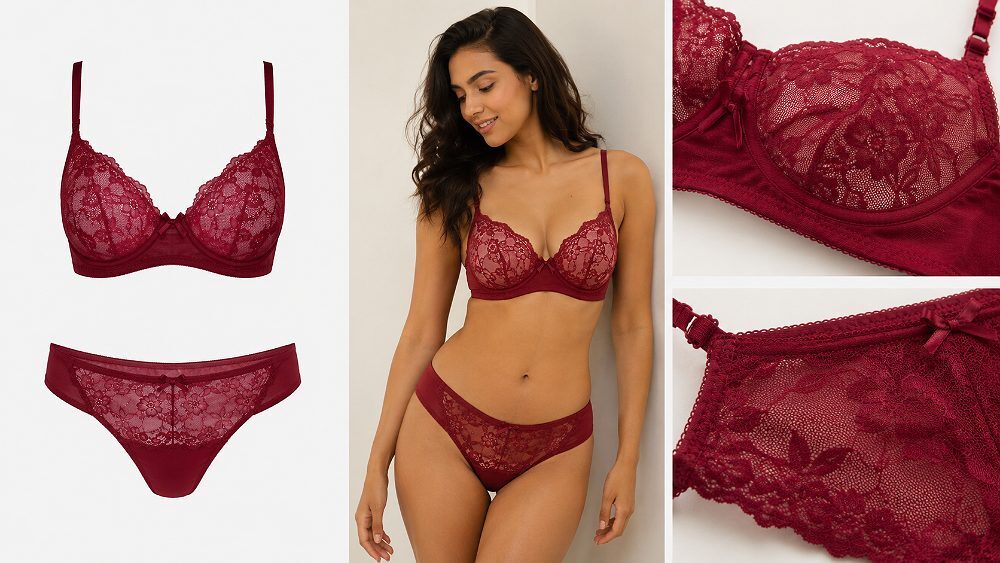
Layer 1 — Catalogue: ghost mannequin or clean product frames for consistency, comparison and scale. Layer 2 — Fit: lingerie model photography for human proportions, coverage and confidence. Layer 3 — Detail: macro close-ups of lace, stitching, straps and closures. Layer 4 — Brand: editorial and campaign frames for social, paid media and homepage storytelling.
Use this quick checklist to settle the decision for your catalogue. Most brands land in the middle and adopt a hybrid, but if your situation is clearly weighted one way, follow it. The Model vs Ghost Mannequin choice should follow business needs, not aesthetics.
| Brand Situation | Recommended Format | Why |
|---|---|---|
| New D2C launch | Hybrid (model-led) | Fit + brand story from day one |
| Premium collection | Model | Emotion drives premium price |
| 100+ SKU catalogue | Ghost mannequin base | Scale and consistency |
| Amazon-focused seller | Ghost mannequin + supplementary | Clean primary, added confidence |
| Fashion marketplace brand | Model + ghost mannequin | Style sells, grid stays clean |
| Paid social campaign | Model | Only on-model frames convert ads |
| Shapewear brand | Model-led | Body effect is the product |
| Seasonal refresh | Ghost mannequin | Fast, repeatable variants |
After years of shooting intimate apparel for D2C brands and marketplace sellers, our position at Ckstudio is simple: plan photography by image purpose, not by forcing every SKU into one style. Before recommending a format we look at your catalogue — SKU count, garment type, number of colourways, primary sales channels, campaign needs, fit-communication priorities, expected image usage and available budget. That audit almost always points to a smart hybrid.
The strongest ecommerce photography plan treats lingerie model photography as your conversion and brand layer, and ghost mannequin as your catalogue backbone. If you want a second opinion on your own range, Prince reviews shot lists personally — reach the studio at +91-8700258773 or email [email protected].
We push for on-model lingerie photography when fit is the deciding purchase factor, when a brand is premium or boudoir-led, when the frames must also serve paid media, and for shapewear, bikini and lace collections where the body context is the selling point.
We recommend ghost mannequin photography for large innerwear catalogues, high-volume basics, frequent colour variants and any brand where consistency and cost-per-SKU carry more weight than campaign emotion.
Most serious brands land here. If you sell across a D2C store and marketplaces, need both catalogue scale and premium positioning, and want PDPs that prove fit and structure, a hybrid Model vs Ghost Mannequin plan is the most versatile use of your budget.
A little planning saves a lot of shoot-day cost. Bring these answers and any lingerie photoshoot moves faster and cheaper — whether you book with Ckstudio or anyone else.
Here is a hypothetical planning example to make the hybrid idea concrete. Imagine a 60-SKU intimate apparel collection. All 60 SKUs receive consistent ghost mannequin catalogue frames as the base. The top 10–15 hero styles then get on-model fit frames. The best-selling, high-margin pieces receive a few extra campaign frames, and detail shots are added wherever construction or lace deserves a close-up. The result is full catalogue coverage plus premium impact — without shooting every SKU on a model.
Tell Ckstudio your SKU count, product categories, marketplaces and campaign needs, and we will map the right combination of model, ghost mannequin and detail photography for your brand.
Plan Your Lingerie Photoshoot Prefer to talk it through? Call Prince at +91-8700258773 or message us on +91-8700258773.Lingerie model photography is better when realistic fit, human context and brand storytelling matter most. Ghost mannequin photography is usually better for catalogue consistency, product-focused presentation and high-volume ecommerce production. Neither wins universally — the best choice depends on your products, channels and budget.
For most established intimate apparel brands, a hybrid approach is strongest. Use clean ghost mannequin or product frames for catalogue consistency and lingerie model photography for fit, premium PDP content, campaigns and advertising. Bras, briefs, babydolls and loungewear each benefit from a slightly different mix.
Ghost mannequin photography can be more economical for large catalogues because it removes model-related costs and simplifies repeat production. Final costs still depend on SKU count, styling complexity, retouching and the number of image outputs you need.
Not necessarily. Brands with large undergarment catalogues can use model photography for hero products and high-priority collections while using ghost mannequin photography for broader catalogue coverage. This keeps quality high where it counts and cost controlled everywhere else.
Lingerie model photography provides the clearest real-body fit context, because shoppers can see coverage, proportions and garment positioning on a person. Ghost mannequin imagery is better for showing isolated garment structure, cup shape and silhouette. Together they give the complete picture.
Last reviewed and updated: 4 September 2026.