











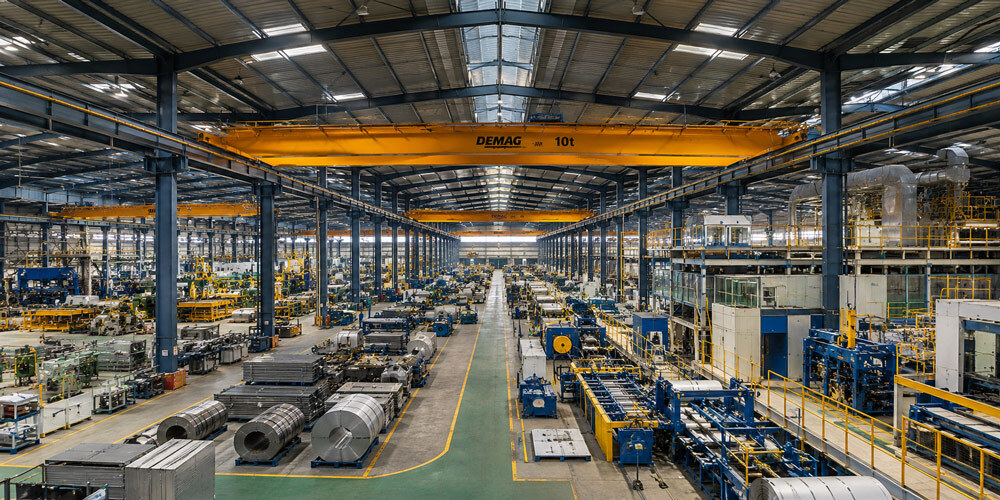
Panoramic industrial photography in India has quietly become one of the most powerful visual tools for manufacturing brands, heavy industries and large facilities that want their scale to actually look as serious as it is. A single, well-executed panoramic frame can tell investors, buyers and partners more than a 20-slide deck — and that is exactly why more factories are now booking specialised industrial photography services in India instead of relying on quick mobile snaps. At Ckstudio, our team has been creating wide-format industrial imagery for clients across Delhi NCR, Haryana, UP and beyond, and this guide breaks down everything you should know before commissioning a shoot. If you are also evaluating budgets, the 2026 industrial shoot cost guide is a useful companion read.
Key Takeaways
- Panoramic industrial photography captures wide production halls, plants and warehouses in one stitched, high-resolution frame.
- Best suited for corporate brochures, investor decks, ESG reports and global tender submissions.
- Combines ground-level detail with optional aerial drone coverage for a 360° brand story.
- Requires planning, safety compliance and specialised stitching — not a generic photographer’s job.
- Ckstudio delivers pan-India coverage with 9+ years of industrial shoot experience.
What Is Panoramic Industrial Photography?
Panoramic industrial photography is a specialised wide-format imaging technique where multiple high-resolution frames are captured and seamlessly stitched into a single ultra-wide image. Unlike a standard photograph that frames one machine or one corner of a plant, a panoramic capture can present an entire production line, an assembly bay, a warehouse aisle or even a multi-acre factory floor in one continuous view. For Indian manufacturers — especially those operating sprawling facilities in industrial belts like Manesar, Greater Noida, Pune and Sanand — this format finally lets the camera match the scale of the operation. It is also why our factory photography services are increasingly paired with panoramic deliverables for brochure and tender packages.
How Panoramic Photography Differs from Standard Industrial Photography
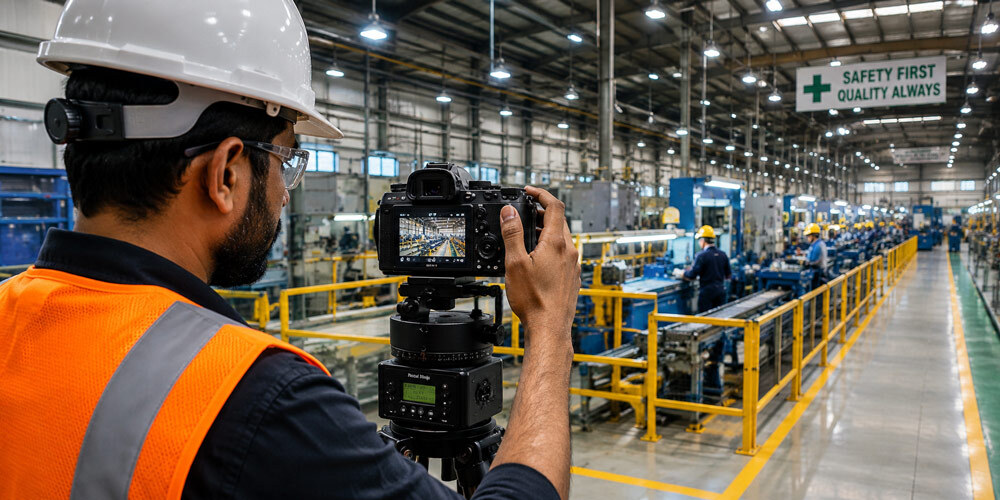
Standard industrial photography focuses on isolated subjects — a CNC machine, a worker, a finished product on a pallet. Panoramic industrial photography, in contrast, prioritises context and scale: it shows how machines connect, how workflow moves and how vast the facility really is. The technical workflow is also heavier — multiple bracketed exposures, motorised pano-heads, careful nodal-point alignment and post-shoot stitching in tools like PTGui or Lightroom.
Why Manufacturing Companies Need Panoramic Industrial Photography
The honest reason most brands invest in manufacturing photography services is simple — buyers, investors and global partners decide whether to trust a factory based on how it looks in pictures. A cluttered, badly-lit mobile shot signals an unorganised operation, while a clean panoramic frame signals process maturity and scale. Across nine-plus years of running shoots, Prince has seen mid-sized factories close enterprise deals purely because their industrial photography and videography deliverables looked more credible than their competitor’s. The same imagery then feeds the website, the annual report, the LinkedIn page and the export catalogue — one shoot, many years of return. For brands also producing video, our industrial corporate film production wing handles the moving-image side.
Better Facility Presentation
A panoramic frame shows the entire production environment — flooring, lighting, layout, safety signage — in a single glance. This is what wins trust during virtual factory audits and remote buyer reviews.
Stronger Corporate Branding
Industrial branding is no longer just a logo on a wall. Wide-format imagery on the homepage, brochures and trade-show backdrops creates a consistent, premium identity that smaller competitors cannot easily replicate.
Improved Marketing & Investor Communication
Investor decks, ESG reports and IPO documents demand high-quality visuals of operations. A panoramic shot of a clean, well-run plant communicates scale, compliance and capability in one image — something a worded paragraph simply cannot match.
Key Applications of Panoramic Industrial Photography
The versatility of panoramic industrial photography is the real reason it has been adopted across so many sectors. From automotive plants in Chennai to pharma facilities in Baddi, from steel mills in Raipur to electronics assembly units in Noida, panoramic imagery now serves as both a marketing asset and an operational documentation tool. Brands often pair it with close-up machinery photography for a complete visual library, and with commercial photography services when end-product visuals are also needed. Insurance documentation, statutory filings and even ISO audit packs are using these stitched frames as proof of facility condition.
Manufacturing Plants & Production Units
Auto, electronics, FMCG and textile factories use manufacturing facility photography to showcase assembly lines, paint booths and clean rooms. A single panorama can replace ten separate photos in a corporate brochure.
Warehouses & Logistics Centers
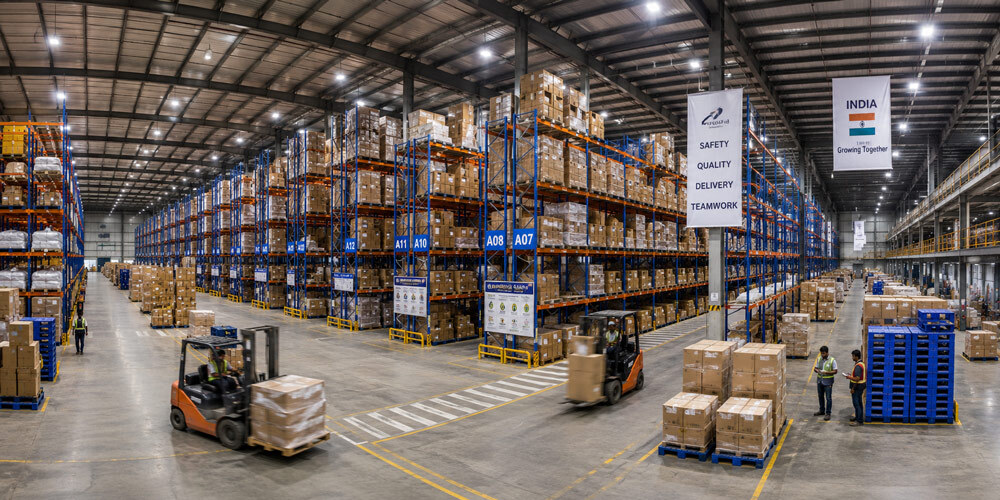
3PL operators and large e-commerce fulfilment centres rely on warehouse photography to demonstrate storage capacity, rack systems and inbound-outbound bays — critical visuals for landing enterprise tenancy and freight contracts.
Power Plants & Heavy Industries
For thermal, hydro and solar power facilities, panoramic frames document turbine halls, control rooms and switchyards. Heavy-industry brands also use these images for safety briefings, EHS documentation and regulatory submissions.
How Professional Panoramic Industrial Photography Is Created
Behind every clean panoramic image lies a workflow that takes far more planning than a standard shoot. An experienced industrial photographer in India does not simply walk in, point and stitch — there is a real production pipeline involving site recce, lighting strategy, safety briefings and post-production. At Ckstudio, every assignment begins with a pre-shoot call with the plant manager to map out timelines, machinery downtime windows, and access permissions. This is also where decisions are made about whether the project needs panoramic-only coverage or a hybrid with our industrial photography team handling both stills and motion.
Site Assessment & Planning
The photographer walks the facility, identifies vantage points, notes lighting conditions and flags any safety zones. A shoot script is then prepared with timings.
Specialised Camera Equipment
We deploy full-frame mirrorless bodies like the Sony A7R5 paired with wide and tilt-shift lenses, mounted on Nodal Ninja panoramic heads. Lighting is supplemented with Godox SK 400II strobes and Elinchrom FRX 400 units where ambient light falls short.
Image Stitching & Post-Production
Frames are merged using PTGui or Lightroom Classic with manual control-point alignment. Final images are colour-graded for brand consistency and exported in print-ready and web-optimised formats — typically 20,000 px wide for hoarding-grade output.
Pro tip from Prince: Always shoot panoramics during planned production runs — empty factories look “staged” and reduce credibility. A working line with operators in PPE, machines in motion and lights on conveys authenticity that no amount of post-production can fake.
Panoramic Photography vs Industrial Drone Photography
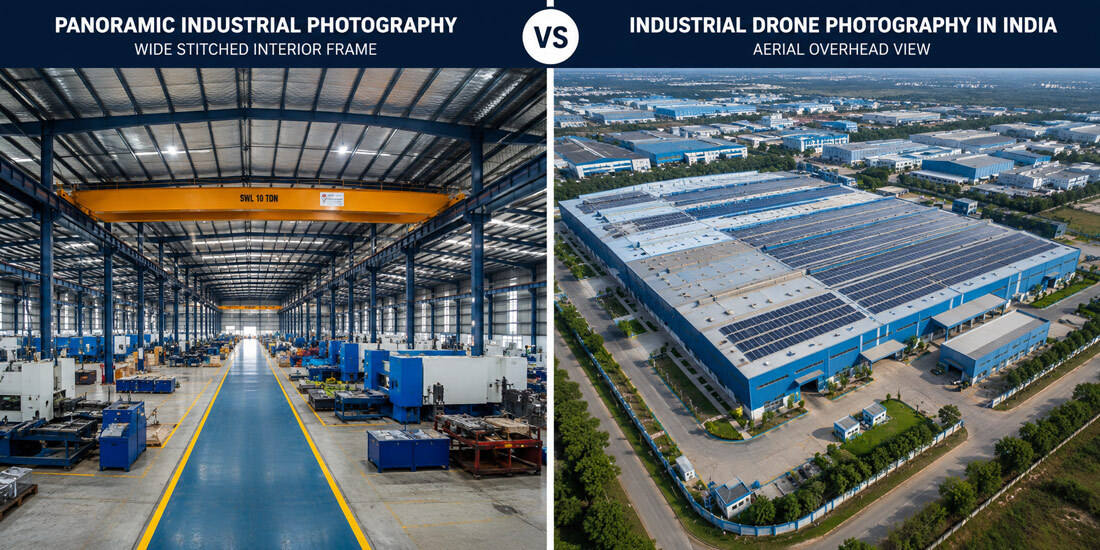
One of the most common questions clients ask is whether they need panoramic industrial photography or industrial drone photography — and the honest answer is that they solve different problems. Panoramic photography is unbeatable for interior, ground-level storytelling — production halls, control rooms, warehouse aisles. Drone photography, on the other hand, owns the exterior and aerial narrative — full-site overviews, perimeter views and rooftop solar arrays. Most serious industrial campaigns at Ckstudio use both formats together for complete coverage.
| Aspect | Panoramic Photography | Industrial Drone Photography |
|---|---|---|
| Best For | Interior wide-format shots | Aerial & exterior coverage |
| Detail Level | Very high — visible operator detail | Medium — overview focus |
| Equipment | Pano-head + full-frame DSLR | DGCA-approved drones |
| Permissions | Plant access only | DGCA airspace + plant access |
| Typical Output | Stitched 20,000 px+ frames | 4K stills + video |
| Use Case | Brochures, audits, reports | Hero shots, AGM, IPO decks |
Ground-Level Detail
Panoramic frames let viewers see workforce, safety gear, machinery brand names and process flow clearly — the kind of detail that builds operational trust.
Aerial Facility Coverage
Drones excel at showing the full footprint of a factory — boundary walls, parking, solar rooftops, raw material yards — in a single elevated shot.
When to Use Both Together
For annual reports, IPO prospectuses and high-stakes investor decks, brands typically commission both. Our video production wing often combines aerial b-roll with panoramic stills for a complete visual library — explored in detail in our industrial cost guide for 2026.
Choosing the Right Industrial Photography Partner in India
Hiring a panoramic specialist is fundamentally different from hiring an event or product photographer. The wrong choice can mean missed safety protocols, poor stitching, washed-out lighting or — worse — incomplete deliverables right before a deadline. Prince recommends evaluating partners on three concrete criteria before signing any contract, and our studio portfolio and documented case studies are designed to make exactly this evaluation easier for buyers.
Industry Experience
Look for at least 5+ years of dedicated industrial shoots — not general commercial work repackaged as industrial.
Equipment & Safety Compliance
The team must arrive with PPE, insurance, and equipment lists. Anyone refusing to share a safety document is a red flag.
Portfolio & Project Expertise
Ask for sector-specific samples — automotive, pharma, FMCG, heavy engineering. Generic samples mean generic results.
Pre-Shoot Checklist for Brands
Why Choose Ckstudio for Panoramic Industrial Photography in India
Ckstudio brings together nine-plus years of hands-on shoot experience, a full-frame mirrorless workflow and a calm, safety-first crew that has worked across nearly every major industrial belt in the country. Whether you operate a single-shed unit in Faridabad or a multi-acre facility in Sanand, our team scales the production accordingly — and our hybrid skillset across stills, drone and corporate film means brands rarely need to hire three different vendors. To get a fast estimate or discuss your project, reach Prince directly at +91-8700258773, or write to us at [email protected]. You can also explore our broader industrial photography and videography portfolio for sector-specific samples.
Ready to Book a Panoramic Industrial Shoot?
Talk to Prince at Ckstudio for a no-obligation quote, sample portfolio and shoot timeline tailored to your facility.
Frequently Asked Questions
What is panoramic industrial photography?
Panoramic industrial photography is a wide-format imaging technique that stitches multiple high-resolution frames into one continuous ultra-wide image, used to capture entire factory floors, warehouses, control rooms and plants in a single, detail-rich view.
Which industries benefit most from panoramic industrial photography?
Automotive plants, pharma facilities, FMCG units, electronics assembly, heavy engineering, power plants and large warehouses gain the most — basically any operation whose scale and process layout are central to its brand story.
How is panoramic photography different from drone photography?
Panoramic photography is best for ground-level, interior wide views with high detail. Drone photography is best for aerial, exterior coverage. For complete brand storytelling, most serious campaigns use both formats together.
Can panoramic industrial images be used for marketing materials?
Absolutely. Panoramic images work brilliantly on websites, hero banners, brochures, investor decks, annual reports, trade-show backdrops and even hoardings — a single panoramic frame can be repurposed across an entire year of marketing collateral.
How much does panoramic industrial photography cost in India?
Costs typically range from ₹25,000 to ₹1,50,000+ per day depending on facility size, number of stitched frames, crew strength and post-production complexity. Detailed pricing is broken down in our 2026 industrial cost guide.
Conclusion
For Indian manufacturers, choosing professional panoramic industrial photography in India is no longer a “nice-to-have” — it is a credibility multiplier that pays back across every brochure, deck and pitch you make for years. Whether you are a mid-sized factory looking to elevate your website or a heavy-industry brand preparing for an investor roadshow, working with specialised industrial photography services in India delivers visuals that match the seriousness of your operation. Prince and the Ckstudio team would be glad to discuss your next shoot — refer to our factory photography page or reach out at +91-8700258773 to get started.
References & further reading: Learn more about wide-format imaging techniques on Wikipedia’s Panoramic Photography page, and for DGCA drone-photography rules in India, refer to the official DGCA portal.