










When Indian businesses ask which marketing investment actually moves the needle in 2026, the answer increasingly points upward. The top Indian industries using aerial drone photography are not just decorating their websites with sky shots — they are using altitude as a real business tool, and the return is measurable. This guide breaks down the ten sectors that get the highest ROI from commercial drone photography in India, what kind of return looks realistic, and where the spend actually pays back.
Why It MattersWhy Aerial Drone Photography Has Become Essential for Modern Businesses
For most of the last decade, aerial photography in India sat in a niche bucket — film crews, large agencies, the occasional government project. That has changed. As aerial drone photography in India has matured, the technology has become safer, the regulation cleaner, and the cost-to-output ratio dramatically better. A single half-day drone shoot now produces visual assets that a brand can use across its website, sales decks, investor pitches, and trade-show booths for years. That is the real shift: drone visuals stopped being a marketing add-on and started becoming a primary asset class. At Ckstudio, we have watched this happen across our industrial photography and videography work across India and our deeper aerial drone photography offering, where the same client now books a single coordinated capture instead of three separate vendors.
The other shift is buyer expectation. Procurement teams looking at a factory, investors evaluating a portfolio, and even retail buyers scrolling property listings now expect to see the site from the air before they engage. Brands that show only ground-level visuals look smaller and less established than they actually are. That perception gap is exactly where industrial drone photography earns its return. Prince has personally led shoots where a manufacturing client closed a multi-crore export order on the strength of a single aerial film, and where a real estate developer cut sales-cycle length in half after replacing tired brochure renderings with proper drone visuals — work we have documented in our broader piece on how professional industrial photography enhances brand perception.
Key Business Benefits of Drone Photography
The headline ROI categories that show up across every sector are remarkably consistent: stronger brand perception, faster B2B sales cycles, lower documentation cost, and better stakeholder communication. Decision-makers using corporate drone photography typically report higher response rates on cold outreach because the visual itself does the credibility work. Founders presenting to investors use aerial frames to convey scale that would otherwise take pages of text. And in regulated sectors, aerial photography services in India have quietly become the cheapest insurance against documentation disputes, because the timeline is photographed, not described.
Key Takeaways
- Real estate, manufacturing, and construction consistently lead in measurable ROI from drone visuals.
- One aerial shoot can replace three vendors: marketing, documentation, and inspection.
- DGCA-compliant operations are now a non-negotiable for B2B and infrastructure clients.
- Investors expect aerial coverage for any pitch involving physical assets above ₹5 Cr.
- Drone visuals shorten B2B sales cycles by improving first-impression credibility.
How Drone Photography Generates Higher Marketing and Operational ROI
The reason drone photography ROI beats most other visual investments comes down to three multipliers. First, an aerial frame is inherently rare — most competitors do not have it, so the visual stands out in any search, brochure, or social feed. Second, the same frame works for multiple purposes: a marketing reel today, a board-deck slide next month, a recruitment banner next quarter. Third, drone visuals age slowly. A well-shot factory or campus film from Ckstudio remains usable for three to five years with light updates, which spreads the cost over many cycles. We have documented this pattern across our case work and our analysis of manufacturing process videos versus corporate profile films, where drone footage almost always appears in both deliverables.
Marketing ROI Benefits
For marketing teams, the return shows up in three places. Website bounce rate drops because the hero visual finally matches the scale of the operation. Sales decks become shorter because one drone slide replaces five explanatory paragraphs. And paid campaigns get cheaper because aerial creatives tend to outperform stock photography by a wide margin on CTR. We have seen these effects most clearly in industrial marketing photography projects where the client tracked spend before and after introducing drone assets — the cost-per-qualified-lead consistently dropped in the first quarter after the new visuals went live, especially when paired with our industrial corporate film production work.
Operational and Documentation Benefits
On the operations side, the gains are quieter but equally real. A monthly drone visit to a construction site replaces multiple manual inspections and produces a permanent visual record. Solar plant operators use periodic aerial passes to spot panel-level issues before they become outage problems. Logistics parks use overhead frames to plan stacking, traffic flow, and expansion. These are cases where the same shoot that delivers marketing material is also producing operational intelligence — covered in our specialist panoramic industrial photography and combined factory photography, videography and drone filming services.
Top 10 Indian Industries That Get the Highest ROI from Aerial Drone Photography
The list below ranks the sectors where Ckstudio has seen the most consistent, measurable returns from aerial work. It is built from real engagements — not theory. For each industry, you will find the typical use-cases, the kind of payback that makes the spend worthwhile, and where the visuals usually end up.
Manufacturing and Industrial Plants
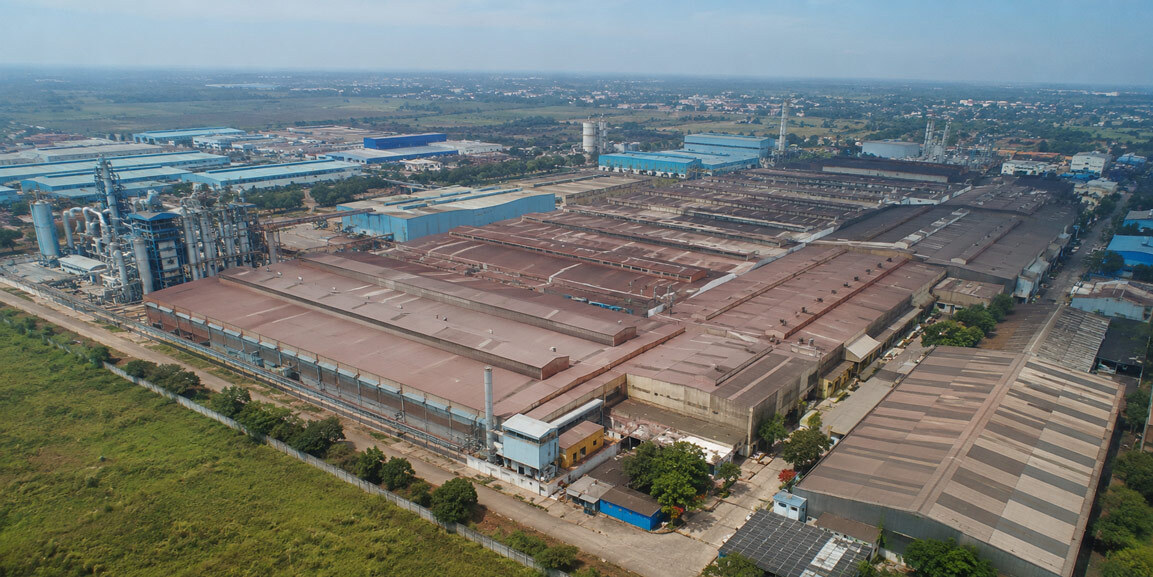
Manufacturing is the sector where factory drone photography delivers the most layered return. A single aerial set covers brand marketing, plant capability decks, investor presentations, recruitment campaigns, and export-tender submissions. Buyers visiting a factory virtually can assess scale, layout, raw-material flow, and finished-goods despatch in under thirty seconds — and that visual confidence translates directly into faster B2B closes. Ckstudio has captured plants across the Delhi NCR belt, Gujarat, and Maharashtra under our dedicated factory photography services for India, and the same shoots increasingly feed our clients’ recruitment storytelling work as well.
Real Estate and Property Development
For developers, real estate drone photography is arguably the highest-ROI marketing investment available right now. Aerial frames sell the surroundings, the connectivity, and the masterplan in a way no floor plan or render can match. Plotted developments, gated communities, premium apartments, and commercial towers all benefit, and the same visuals power brochures, listing portals, sales-office screens, and channel-partner decks. We have seen developers cut average sales-cycle length significantly after adding professional aerial coverage, and the visuals continue paying back across phases.
Construction and Infrastructure Projects
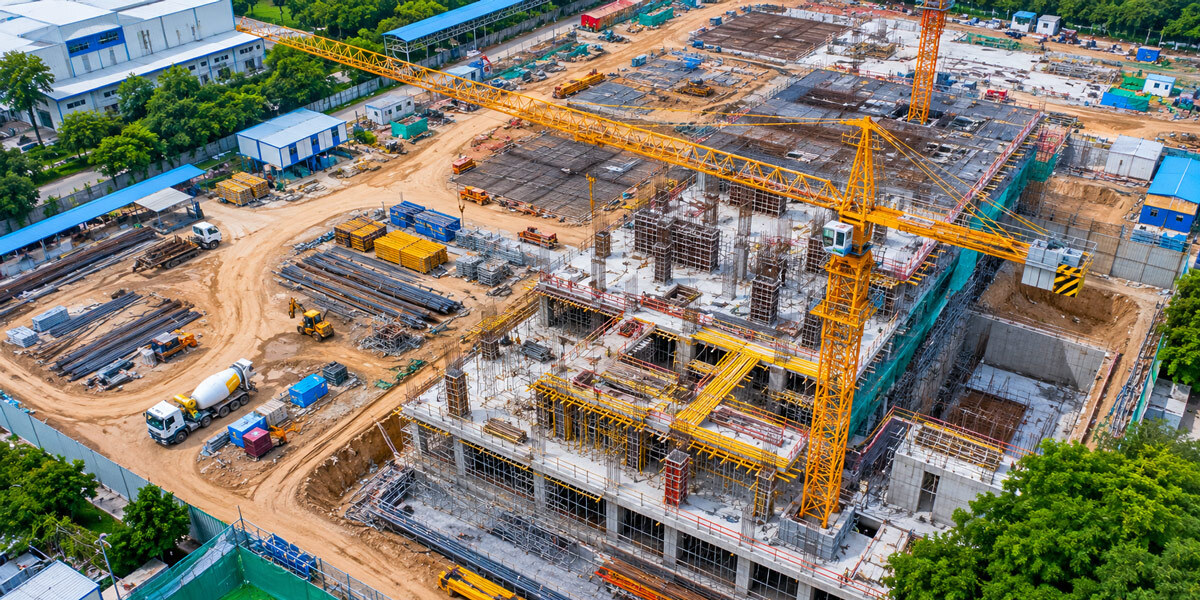
Construction is the one sector where aerial drone photography in India is no longer optional — major contractors now expect monthly or fortnightly drone coverage as part of the project brief. The reason is simple: a single aerial pass produces progress reports, stakeholder updates, safety documentation, and BOQ-verification visuals in one go. Project managers use the footage for client billing milestones, while marketing teams reuse the same library in case-study films. Our case studies portfolio includes several long-running construction engagements where the same set of monthly drone passes paid for itself many times over.
Solar Power Plants and Renewable Energy Projects
Solar farms occupy enormous land footprints, which makes them almost impossible to document credibly from the ground. Aerial coverage solves both the marketing problem and the inspection problem at once — investors see scale, while operations teams use periodic passes to spot panel-level anomalies before they affect generation. The renewable energy sector has rapidly become one of the most consistent users of industrial drone photography in India, with returns concentrated on the operational and documentation side rather than pure marketing. For commissioning shoots and quarterly progress documentation, the spend is typically recovered within the first reporting cycle.
Logistics Parks and Warehouses
The logistics boom across India has made warehouse drone photography a regular booking at Ckstudio. Aerial visuals communicate cluster size, dock count, road access, and yard capacity instantly — exactly the data that 3PL clients and large tenants need to evaluate a facility. The same shoots also feed leasing brochures, broker portals, and parent-company annual reports. Because logistics parks tend to operate at scale, even a modest improvement in tenant-conversion rate from better visuals translates into significant rupee value, which is why this sector has quietly become one of the steadiest revenue lines in our commercial photography practice.
Mining and Heavy Engineering Industries
Mining and heavy engineering operations are physically the hardest to photograph from the ground, which is exactly why aerial coverage produces such strong returns here. Pit dimensions, stockpile volumes, plant-to-pit logistics, and site rehabilitation progress all communicate clearly from the air. Heavy engineering yards use the same approach to showcase fabrication scale, crane capability, and despatch readiness for tender submissions. These are sectors where a single coordinated shoot can be the deciding visual in a hundred-crore tender response.
Ports and Shipping Facilities
Ports, container terminals, and dry-port hubs are visually impressive from above and almost invisible from the ground — exactly the kind of asymmetry that commercial drone photography in India is built to solve. Aerial frames sell capacity, connectivity, and scale to international shipping clients in a way that no spec sheet can match. The same visuals support government liaison, expansion-funding pitches, and ESG reporting. For port operators serving global clients, professional aerial coverage has shifted from a nice-to-have into a default brand asset.
Hospitality and Tourism Industry
Resorts, premium hotels, and destination properties use aerial coverage as their single most powerful booking-conversion tool. Pool, beach, hillside, or backwater context all read better from the air — and luxury travellers explicitly look for these visuals before booking. The same library powers OTA listings, brand websites, and travel-trade collateral. For tourism boards and state-level destination marketing, drone coverage has become the standard format for promoting circuits and emerging destinations across India.
Educational Campuses and Institutions
Engineering colleges, universities, and large schools across India increasingly invest in aerial campus photography for admission marketing, NAAC documentation, alumni outreach, and recruitment films. A polished campus film with strong aerial coverage tells parents and students more in ninety seconds than a sixty-page prospectus ever could. The same visuals fuel placement-season social content and corporate-tie-up presentations, which means the ROI compounds across admission cycles.
Corporate and Commercial Business Parks
Corporate parks, IT campuses, and large commercial complexes have a specific need: they must look organised, premium, and well-occupied. Aerial visuals deliver exactly that brand register. Operators use the footage for tenant brochures, parent-company branding, and CSR-event documentation, and the same library increasingly supports executive-presence content — paired with corporate headshot photography and LinkedIn-ready professional headshot work for the leadership team behind the campus.
Industry ROI Comparison: Which Sector Benefits the Most?
Different industries get different kinds of return from aerial coverage. The table below ranks the top five against three ROI vectors — marketing pull, documentation utility, and inspection value — based on the engagements Ckstudio has delivered. The rankings reflect actual on-the-ground patterns rather than theoretical estimates, and they offer a useful starting point for any business deciding where drone investment will pay back fastest.
| Industry | Marketing ROI | Documentation ROI | Inspection ROI |
|---|---|---|---|
| Manufacturing | High | High | Medium |
| Real Estate | Very High | Medium | Low |
| Construction | High | Very High | High |
| Solar Energy | Medium | High | Very High |
| Logistics & Warehousing | High | Medium | Medium |
When Should Businesses Invest in Professional Drone Photography?
The clearest signal that a business is ready for professional drone services in India is when ground-level visuals stop telling the full story. If the operation occupies more than two acres, has multiple buildings, or sits in a context that itself sells the brand — riverside, hillside, industrial corridor, near a port — then aerial coverage pays back fastest. The second signal is sales-cycle friction: if prospects are asking for site visits before engaging, drone visuals can collapse that step into a single email attachment. The third is investor or audit timing — quarterly reviews, funding rounds, and ESG submissions are natural moments to lock in a coordinated shoot.
Best Use Cases for Maximum ROI
The highest-return moments for booking aerial photography services in India are the ones with the longest downstream usage: a plant commissioning, a phase-completion milestone, a pre-launch real estate stage, or a major corporate anniversary. Coordinated bookings that combine drone work with industrial machinery photography or full video production services tend to extract maximum value from a single site visit. The cost economics of one well-planned shoot are dramatically better than three separate vendors arriving on three different days — a pattern we have unpacked in detail in our published 2026 industrial photography, videography and drone cost guide.
PitfallsCommon Mistakes Businesses Make with Drone Photography
Two mistakes show up repeatedly. The first is hiring on price alone — engaging an uninsured pilot with a consumer-grade drone to save thirty percent on a shoot that will represent the brand for three years. The downside risk on a site mishap is far higher than the saving. The second mistake is shooting without a brief — turning up, flying around, and hoping useful frames emerge. Strong aerial work begins with a shot list mapped to specific marketing and documentation goals, not improvisation. Prince has rebuilt several brand libraries that began as cheap, briefless shoots, and the rework cost almost always exceeds the original saving.
Why CkstudioWhy Businesses Across India Choose Ckstudio for Drone Photography Projects
Ckstudio operates as a single-window partner for commercial drone photography in India — meaning one team, one brief, one creative direction, and one accountable lead. Our pilots fly DGCA-compliant, our cameras are calibrated, and our post-production matches the colour and tonal standards used in the rest of the brand library. Most importantly, we plan the shoot around the deliverables: where the visuals will appear, who will look at them, and what they need to do. That planning is the reason the same Ckstudio drone reel often shows up in a client’s website hero, sales deck, and investor pack at the same time.
Industries Served by Ckstudio
Active engagements at Ckstudio currently cover manufacturing plants, automotive component facilities, real estate developments, solar parks, logistics hubs, hospitality properties, and educational campuses — across Delhi NCR, Gujarat, Maharashtra, Rajasthan, Karnataka, and Tamil Nadu. The same teams handle industrial photography across India and our specialist machinery and heavy-equipment work, which means clients can request a coordinated capture that covers ground-level, drone, and panoramic in a single visit.
FAQFrequently Asked Questions
Choosing the Right Sector and the Right Partner
The top Indian industries using aerial drone photography all share one trait: they treat altitude as a business tool rather than a visual gimmick. Whether the goal is closing larger B2B deals, shortening real estate sales cycles, or building credible documentation for tenders and investors, the ROI is most reliable when the shoot is briefed, planned, and executed with the end-use clearly in mind. For credible reference points on safe operations, the official DGCA Digital Sky portal publishes current rules and authorisations, and Make in India highlights the manufacturing growth that is driving much of today’s industrial aerial demand.
If you are weighing where to allocate your next visual-marketing budget, Prince and the Ckstudio team can walk you through what a coordinated industrial or commercial drone engagement would look like for your specific sector. Reach out by phone at +91-8700258773, email at [email protected], or WhatsApp at +91-8700258773 — the right shoot is usually one conversation away.