
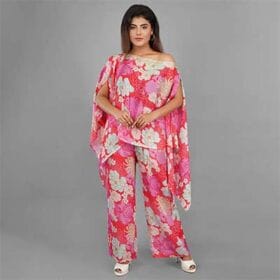
Fashion Photography Services
E-commerce Photography
A side-by-side, shoot-floor view of where AJIO and Myntra really differ, so you launch on the right fashion marketplace first and plan one catalogue that works on both.
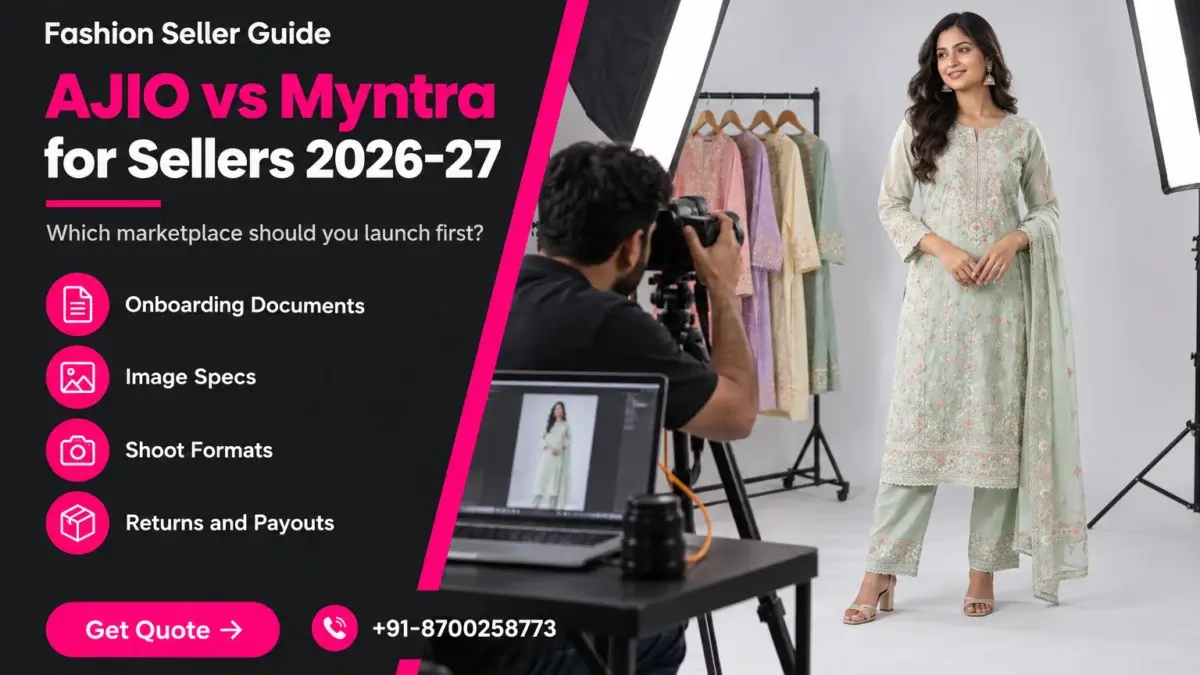
AJIO vs Myntra for sellers is the first real decision most new fashion labels face once their GST and trademark paperwork is in order. Both platforms are fashion-first, both ask for brand approval, and both judge your listing by its first portrait image. Our AJIO seller hub covers AJIO step by step; this guide puts the two marketplaces side by side so you can pick a launch order and shoot once for both.
At Ckstudio we photograph apparel catalogues that go to both marketplaces, often from the same garment rail on the same day. The differences that matter are rarely the logos on the portal. They sit in frame ratios, file-size bands, which shoot format may lead the gallery, how the brand is evaluated and how stock and returns are handled. Prince has written this comparison from that shoot-floor angle, with every platform rule tied to a public source and no invented commission numbers.
In this guide
Myntra is a larger, style-led fashion destination with a fixed 3:4 portrait frame and on-model-first galleries. AJIO runs inside the Reliance supplier ecosystem, uses a slightly taller 1:1.25 portrait frame and screens brands closely before catalogue access. For most labels the catalogue work overlaps by around 80 percent; the remaining 20 percent decides your launch order.
Unlike general ecommerce marketplaces, both platforms judge a fashion brand as a brand. Think of the comparison as three layers. The first is who you are allowed to be: both marketplaces evaluate the brand, not only the business, so a label with a clean trademark trail and a coherent range moves faster on either. The second is what the catalogue must look like: portrait ratios, file-size bands, gallery length and the rule on which image can lead. The third is how money flows: business models, return handling and settlement cycles, which differ by agreement rather than by a public rate card.
New sellers usually over-weight the first layer and under-weight the second. Yet the image layer is where most launch delays happen, because a single file outside the ratio or size band can hold back an entire style during catalogue QC. That is why this guide spends more time on frames and formats than on portal screenshots, which change every few months anyway.
| Factor | AJIO | Myntra |
|---|---|---|
| Where you register | Reliance supplier portal, one profile across Reliance retail channels | Myntra partner onboarding route |
| Brand check | Brand evaluation before catalogue access | Brand review during onboarding |
| Image frame | Portrait 1:1.25, over 1000 px on both sides | Portrait 3:4, minimum 1080 × 1440 px |
| Images per style | 1 to 14 | 1 to 7, varies by category |
| Who leads the gallery | On-model cropped front for apparel; mannequin and ghost shots not first | On-model expected for most apparel |
| Business models | Marketplace, sale-or-return, outright | Marketplace and partner models, sale-or-return, outright |
The table is a planning view, not a contract. Each row links back to the sections below, where the source for every rule is named and the practical consequence for your shoot is explained. If a row matters to your margins, confirm it inside the live seller portal before you sign anything.
Very few brands stay on one platform for long. The smarter question is which marketplace gives your range the cleanest first ninety days. A label with strong ethnic or premium casual styles and patient working capital may start on AJIO; a label with fast-moving western wear and a ready on-model catalogue often starts on Myntra. Section six turns that into a decision table you can apply to your own range.
Both marketplaces want the same core set: GSTIN, PAN, bank proof, signatory details and trademark or brand authorisation in one consistent legal name. AJIO routes you through the Reliance supplier registration and a brand evaluation; Myntra runs its own partner onboarding with a brand review and commercial setup. Mismatched names, not missing papers, cause most delays.
On AJIO, registration starts at the Reliance supplier portal (supplierregistration.ril.com), where one supplier profile can serve several Reliance retail channels. Details must match your GST certificate exactly, down to spacing in the trade name. After registration, AJIO evaluates the brand itself, and that evaluation also decides which business models are offered to you. Only then does Seller Central at seller.ajio.com open category templates for catalogue upload.
On Myntra, the sequence is application, business verification, brand approval, commercial and KYC setup, then catalogue preparation. Our Myntra seller registration walkthrough lists each stage with the documents that usually stall it. Creating an account is not approval, and approval is not go-live; catalogue review still sits between you and the first order.
The brand-evaluation stage is where photography quietly enters onboarding. Reviewers see your range before your catalogue exists, and a sample set shot on a phone against a bedroom wall signals a very different brand from ten styles shot in a consistent studio frame. You do not need the full catalogue at this point, but a clean 8–12 image brand deck helps on both platforms.
From the studio floor
For brand-review decks we shoot 8 to 12 hero styles on one light grey seamless, with a 85mm-equivalent lens at roughly 3 metres, two octaboxes at 45 degrees and the camera at chest height. Every frame is exported twice from the same raw: a 3:4 crop at 1500 × 2000 px and a 1:1.25 crop at 1600 × 2000 px, both sRGB. The reviewer on either marketplace sees a consistent brand, and the same files later seed the live catalogue.
One practical tip: keep a single shared folder named by legal entity, with each document saved once as a searchable PDF. When either portal asks for a re-upload, you send the same file rather than a fresh scan with different margins, which removes a common source of name and date mismatches.
Myntra listing images must keep a 3:4 ratio at a minimum of 1080 × 1440 px, as JPEG files between 500 KB and 1 MB, on a white or light grey background. AJIO asks for images above 1000 px on both sides and professional photoshoots only, with its guideline sheet using a 1:1.25 portrait frame. Neither accepts watermarks or promotional text.
The Myntra numbers come from Fynd’s Myntra listing FAQ, which also notes a resolution of 72 dpi or more, an image count between one and seven depending on category, and a ban on cropped or stretched images. The AJIO numbers come from Fynd’s AJIO listing FAQ, which allows one to fourteen images per style, lets you reorder them after upload and states that all product images must be professional photoshoots following AJIO’s image guidelines.
| Spec | AJIO | Myntra | Source |
|---|---|---|---|
| Minimum size | Above 1000 px height and width | 1080 × 1440 px | Fynd AJIO and Myntra listing FAQs |
| Aspect ratio | 1:1.25 portrait (AJIO guideline sheet) | 3:4, must be maintained | AJIO guideline sheet; Fynd Myntra FAQ |
| File format and size | JPEG or PNG, roughly 200 KB to 1 MB | JPEG, 500 KB to 1 MB | AJIO guideline sheet; Fynd Myntra FAQ |
| Images per style | 1 to 14 | 1 to 7 by category | Fynd AJIO and Myntra listing FAQs |
| Background | Light colour, white included | White or light grey | AJIO guideline sheet; Fynd Myntra FAQ |
| Not allowed | Brand URLs, promo text, price tags, watermarks, duplicates | Watermarks, text, cropped or stretched images | Both sources |
Two consequences matter on set. First, a 3:4 frame and a 1:1.25 frame are not interchangeable: 1:1.25 is taller, so a crop composed tightly for Myntra loses headroom or hem when re-cropped for AJIO. Second, the file-size floors differ. A well-compressed Myntra JPEG can sit below 500 KB and fail, while the same garment at 1600 × 2000 px for AJIO lands comfortably inside its band.
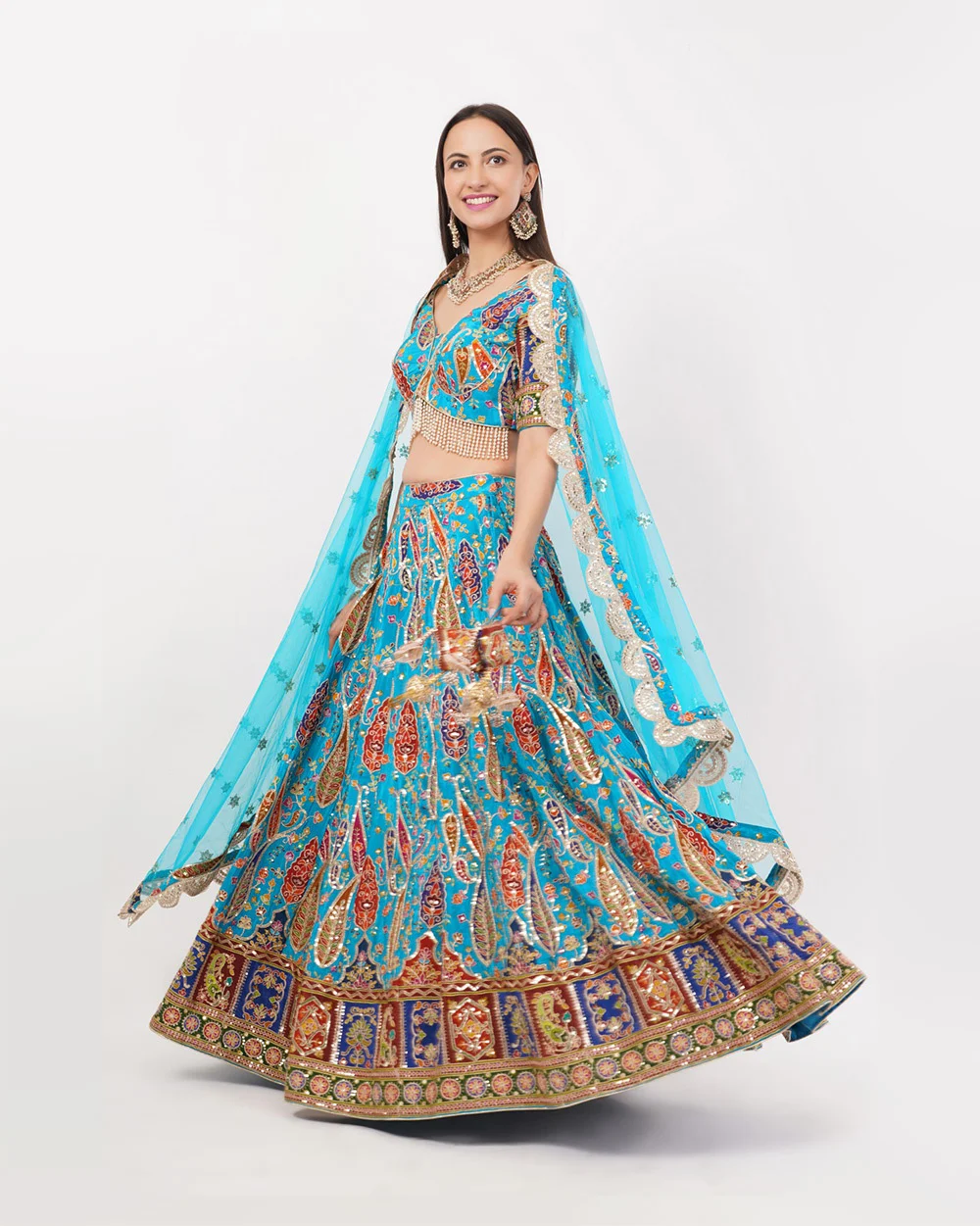
The safe method Ckstudio follows is to compose for the taller AJIO frame and crop down for Myntra, never the reverse. If you need help building that crop discipline into a live catalogue, our Myntra catalogue photography team shoots portrait masters that export cleanly to both specs. Sellers who also list on Amazon or Flipkart should add a square export later rather than compromising the portrait master.
From the studio floor
We tape two frame guides on the tether monitor: a 4:5 outline (the 1:1.25 frame) and a 3:4 outline inside it. The model’s crown sits 4 percent below the top of the 4:5 line and the hem 3 percent above the bottom, which keeps the garment at roughly 80–85 percent of the frame on both crops. Exports go out as sRGB JPEG at quality 85 to 90, then each file is checked against its marketplace size band before upload.
On both marketplaces an on-model front image should lead apparel galleries. AJIO’s guidelines say mannequin, ghost mannequin and pack shots cannot be the first image, though they can follow later. Flat lays suit kidswear, accessories and extra gallery frames, but check your category’s first-image rule before relying on them.
The practical difference is gallery length. With up to fourteen slots on AJIO and up to seven on Myntra, AJIO rewards a deeper story per style: front, side, back, two or three detail crops, a styled look, a fabric swatch and a ghost mannequin view for structure. Myntra’s shorter gallery forces discipline, so the front, back and one texture detail must carry most of the persuasion on their own.
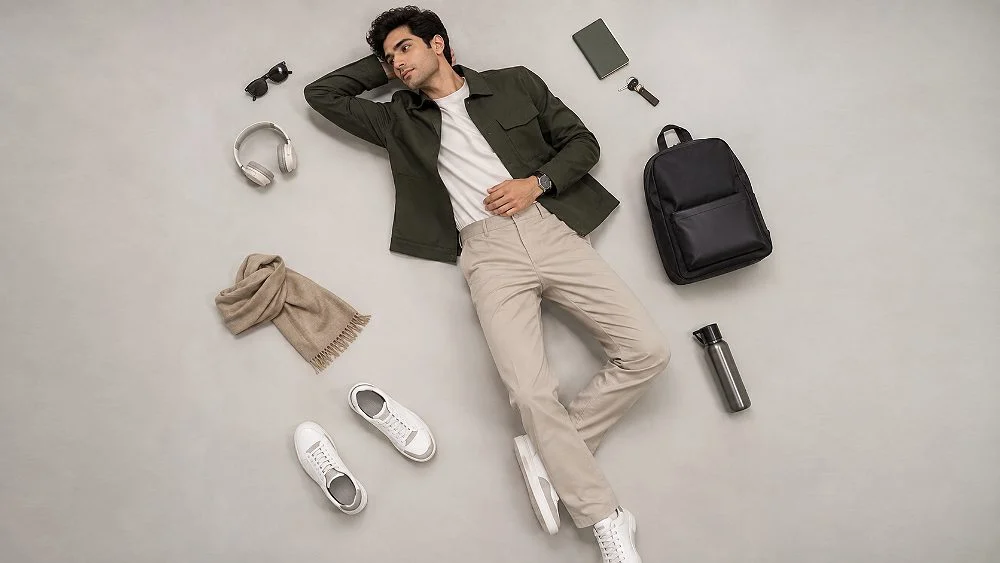
For the first image, both platforms are looking for the same thing a shopper wants on a phone screen: the garment large, true to colour and worn by a real body. That is why on-model fashion photography remains the default lead frame for kurtas, dresses, shirts and co-ord sets on both marketplaces. Cropping at the base of the nose is accepted on AJIO for topwear and bottomwear, which keeps attention on the garment.
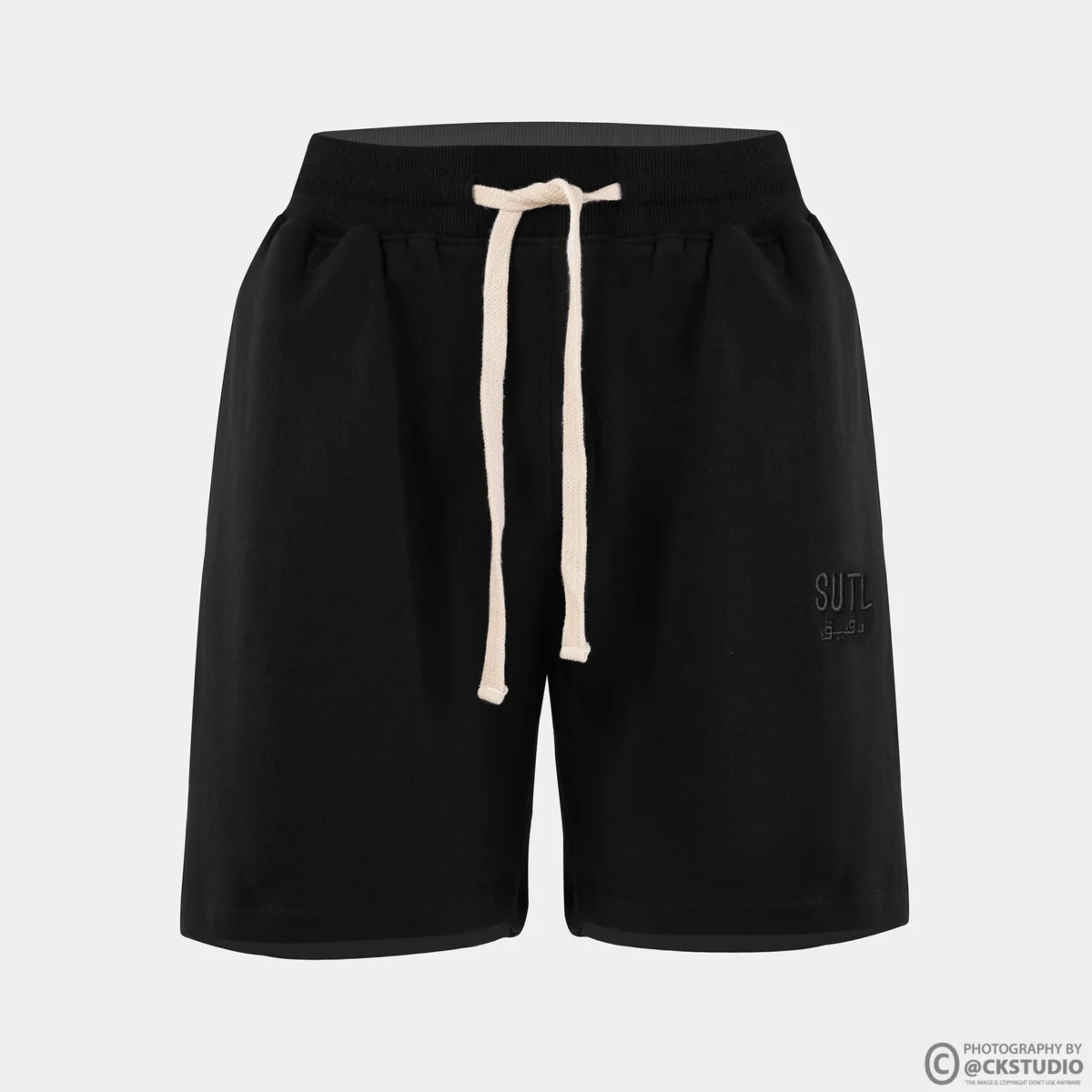
Ghost mannequin views earn their place deeper in the gallery, especially for structured pieces like blazers, denim and shorts where shape and waistband detail matter. Brands that need volume at a lower styling cost often book ghost mannequin photography alongside a smaller on-model set. For a full breakdown of when each format wins, read our flat lay, ghost mannequin and model comparison.
The short video below shows how a studio runs a marketplace product shoot from set-up to tethered review. Watch the way the angle set is locked before the first frame; that same discipline is what keeps an apparel gallery consistent across two marketplaces.
Both marketplaces offer more than one business model, and the model you sign decides who holds stock, who carries unsold risk and when you are paid. AJIO offers marketplace, sale-or-return and outright; Myntra offers marketplace and partner fulfilment models plus sale-or-return and outright. Commission and fee rates are set in your agreement by category, so compare written terms rather than blog numbers.
Under a marketplace model you list stock you hold and ship against orders; you carry inventory risk, but price and range stay in your control. Under sale-or-return the platform takes stock and returns unsold pieces; working capital is tied up longer, and returns from the warehouse can arrive in bulk. Under outright the platform buys the stock; margins are negotiated hard, but sell-through risk moves to the buyer.
Returns behave similarly on both platforms because fashion buyers return for fit, colour and fabric feel. The share of those returns caused by images is the part you control. When the on-screen colour differs from the garment, or the fabric looks heavier than it is, the shopper sends it back and both marketplaces deduct accordingly in settlement. On AJIO, those deductions appear line by line in the settlement statement, so reconcile them monthly rather than at year end.

From what Ckstudio sees across seller briefs, neither marketplace publishes a single public rate card that applies to every seller, so any number you read on a forum is someone else’s agreement. Ask each platform’s onboarding contact for the category-wise commission, fixed fee and logistics schedule in writing, then model three months of sales at your expected return rate on both. The cheaper platform on paper is often not the cheaper one after returns.
Photography has a measurable role in that model. Accurate colour, a true fabric close-up and a size chart that matches the measured garment reduce the fit-and-look returns that eat into settlements on either platform. That is the most direct line between a catalogue shoot and your payout statement.
Launch on Myntra first if you sell trend-led western wear, have an on-model catalogue ready and want fast discovery among style-led shoppers. Launch on AJIO first if your range is premium casual, ethnic or curated, your brand story is strong and you are comfortable with a closer brand evaluation. Many brands should plan both within six months.
| Your situation | Start on | Why |
|---|---|---|
| Western wear, fast drops, on-model catalogue ready | Myntra | Shorter gallery; strong discovery for trend-led styles |
| Premium casual or curated label with a clear brand story | AJIO | Brand evaluation favours coherent, curated ranges |
| Ethnic wear with heavy embroidery detail | Either; AJIO’s 14 slots help | Longer gallery shows more detail per style |
| Kidswear or accessories led by flat lays | Check category first-image rules on both | Flat lay as lead image is category-dependent |
| Limited working capital | Marketplace model on either | Avoid long sale-or-return cycles early |
Example scenario
Example: a new label has 40 kurta and co-ord styles in three colours each, so 120 colour variants. On Myntra, at five images per variant, that is about 600 delivered frames. On AJIO, at eight images per variant to use the longer gallery, it is about 960 frames. Shooting one tall portrait master per angle and exporting both crops means roughly 960 captures cover both marketplaces, instead of two separate shoots totalling over 1,500. These numbers are illustrative only.
The worked example shows why, at Ckstudio, launch order rarely changes the shoot plan. Whichever marketplace you open first, shoot the longer AJIO gallery from day one and hold the extra frames for later. When the second platform opens, the catalogue is already sitting in the right ratios, and only data entry and QC remain.
If you are unsure which seller type you are, look at your top ten styles by expected volume. If most are trend pieces with a short selling window, discovery matters more than gallery depth. If most are carry-over styles with intricate detail, gallery depth and brand presentation pay back for longer. That single check settles the AJIO vs Myntra for sellers question for most new brands in under an hour.
Sellers who want a second opinion can send their range sheet to [email protected]; Prince or the catalogue team will reply with a suggested angle plan for both marketplaces.
Shoot every style once as a tall portrait master, compose for AJIO’s 1:1.25 frame and crop down to Myntra’s 3:4. Lock pose heights, lighting and background tone for the whole batch, then export two file sets with their own size bands. This avoids a second shoot and keeps both galleries visually identical.
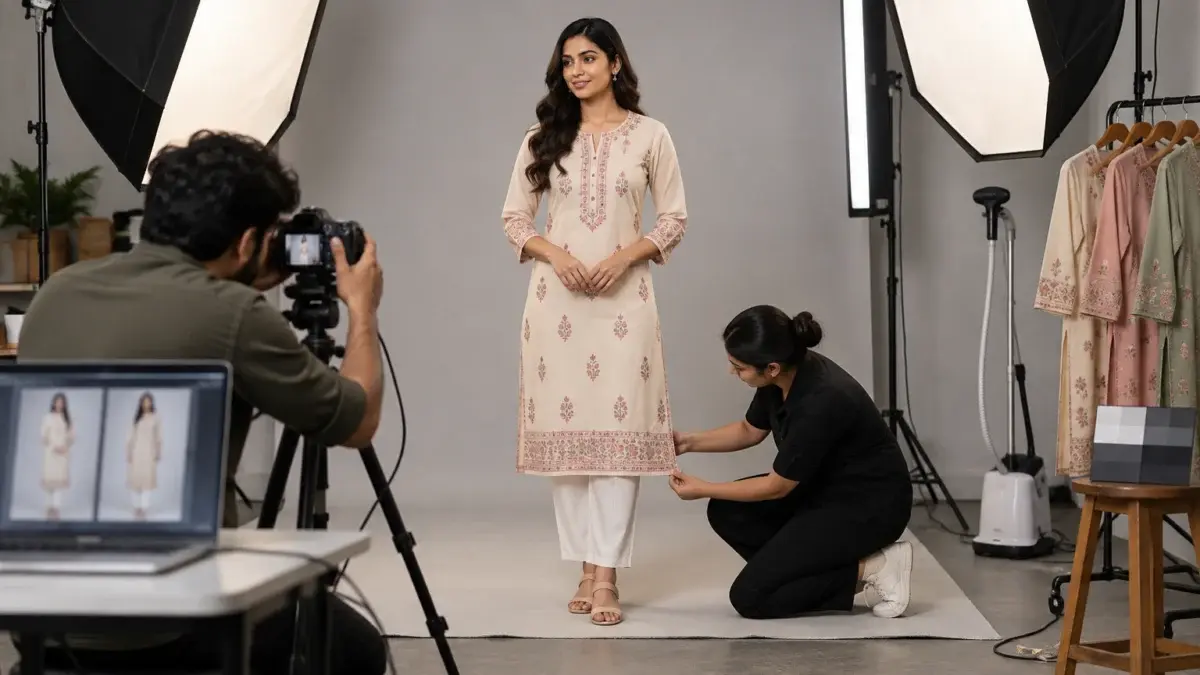
From the studio floor
For dual-marketplace apparel we shoot at f/8 with a 70–200mm lens around 100mm, two octaboxes at 45 degrees plus one strip box behind for edge separation, and the background lit one stop brighter than the subject to stay clean without blowing out white fabric. A batch of 25 styles gets one grey card frame at the start and after every lens or light change, and colour is matched against the physical garment under 5000K viewing light before export.
The second video shows a marketplace apparel shoot with a male model, the kind of front, back and movement coverage that fills both galleries from one session.
For bookings or a shot-list review, call +91-8700258773 or message on +91-8700258773 with your style count and categories.
The most common mistakes are reusing one crop for both ratios, compressing Myntra files below 500 KB, leading AJIO galleries with ghost mannequin shots, and letting the legal name drift between documents. Each has a simple fix if it is caught before upload rather than after QC.
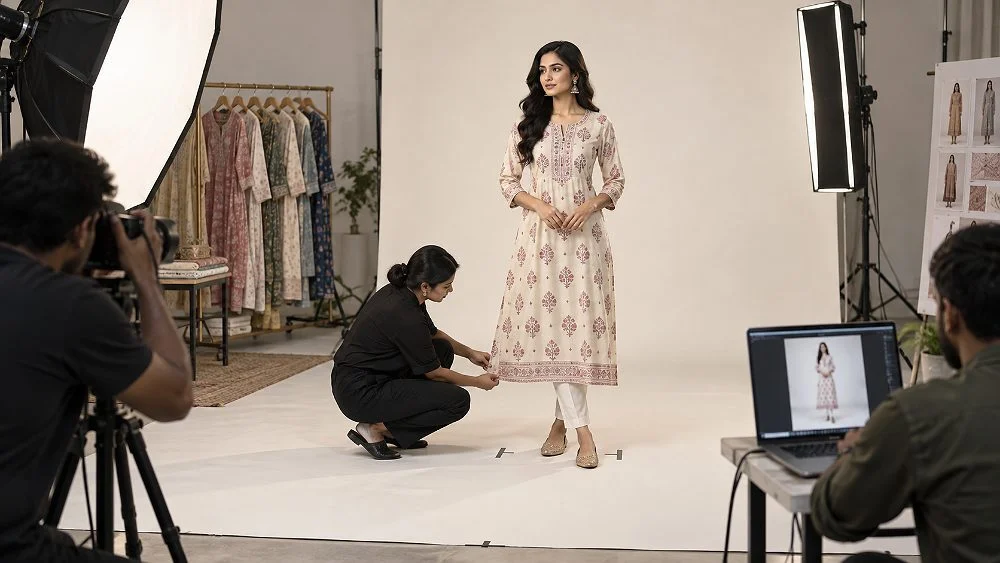
Most of these mistakes come from treating the second marketplace as an afterthought. A seller launches on one platform with files sized only for that platform, then tries to stretch or re-crop them months later. The result is either a QC rejection or a gallery that looks quietly worse than the first one, which shoppers notice when they compare prices across apps.
The fix is upstream, as in any serious e-commerce catalogue: decide on both marketplaces at shoot planning, even if one launches later. Store the masters, both export sets and the upload sheets in one folder per style code. When the second portal opens, you upload in days rather than booking a reshoot.
Before each upload, open five random files per batch at 100 percent zoom, confirm the ratio and pixel size in file properties, check the file size against the band, and compare one variant’s colour against the physical swatch. Ten minutes here saves a full QC cycle on either marketplace.
For AJIO vs Myntra for sellers starting out, Myntra usually suits trend-led western wear with a ready on-model catalogue, while AJIO suits curated, premium casual or ethnic labels with a strong brand story. Many brands launch on one and add the other within six months.
You can use the same shoot, but not the same files. Myntra needs a 3:4 crop and AJIO’s guideline sheet uses 1:1.25, with different file-size bands, so export two sets from one tall master.
Per Fynd’s Myntra listing FAQ, images must be at least 1080 × 1440 px in a 3:4 ratio, JPEG, 500 KB to 1 MB, on a white or light grey background, with one to seven images depending on category.
Fynd’s AJIO listing FAQ allows one to fourteen images per style, each above 1000 px on both sides, and all must be professional photoshoots following AJIO’s image guidelines.
Largely yes: GSTIN, PAN, bank proof, signatory details and trademark or brand authorisation in one consistent legal name. AJIO routes registration through the Reliance supplier portal; Myntra runs its own partner onboarding.
No. AJIO’s guidelines say mannequin, ghost mannequin and pack shots cannot be the first image; place them after the on-model views in the gallery.
The AJIO vs Myntra for sellers decision is less about which portal is bigger and more about which one your first ninety days fit. Ckstudio has photographed fashion catalogues for brands selling on Amazon, Flipkart, Myntra and Ajio since 2015, and the pattern is consistent: brands that plan for both marketplaces at the first shoot launch the second one far faster.
Next step: before your first upload, learn the image, attribute and size chart errors that trip new labels in our guide to fixing AJIO catalogue QC rejections.
Ckstudio shoots portrait masters that export cleanly for both marketplaces, from styling and steaming to colour-matched retouching. Share your style count on +91-8700258773 or email [email protected] for a shot plan.
Call Prince: +91-8700258773