




Fashion Photography Services





E-commerce Photography




A profitability-first guide for Indian sellers comparing Amazon FBA, Easy Ship and Self Ship—covering current fee logic, storage economics, inventory planning and SKU-level contribution margin.

Amazon FBA, or Fulfillment by Amazon, can remove a large part of the storage, packing, delivery and customer-facing fulfilment workload from an Amazon India seller. But FBA should not be judged by convenience alone: the correct decision is made at SKU level by combining Amazon FBA fees, storage duration, inventory turnover, product dimensions, sales velocity, return rate and contribution margin.
This Amazon FBA guide is built for sellers who want to know whether FBA remains financially sensible after the complete cost stack is included. It explains Amazon FBA India operations, FBA vs Easy Ship, FBA vs Self Ship, current 2026 fee signals, inventory ageing, replenishment and an INR profitability example. For a wider marketplace roadmap, sellers can also use the planned Amazon Seller Guide as the cluster hub.
Fee schedules change. The figures in this guide were checked against Amazon India’s official seller pricing pages on 2 October 2026, including the closing-fee update effective 7 September 2026. Sellers should still verify the current Amazon India seller fees in Seller Central immediately before making pricing or fulfilment decisions.
Amazon FBA is most attractive when a SKU has predictable demand, healthy contribution margin, compact dimensions and enough sales velocity to keep storage time low. Slow-moving, bulky or tight-margin products can lose profitability because fulfilment cost, storage cost and cash tied in inventory compound over time.
Amazon FBA is a fulfilment model in which sellers send eligible inventory to an Amazon fulfilment centre, where Amazon stores the stock and then picks, packs, ships and supports customer orders. The seller still controls sourcing, pricing, listing quality, replenishment, advertising and Amazon FBA profitability.
Operationally, the seller creates or converts an eligible offer to FBA in Amazon Seller Central, prepares units, applies the required product identification such as an FNSKU where applicable, builds the inbound shipment and sends inventory to the assigned FC network. Once the stock is received, the available inventory can be used to fulfil customer orders linked to the SKU and ASIN.
Amazon’s official FBA information describes FBA as an all-in-one solution for storage, packing, shipping, delivery and customer support. Sellers considering the broader marketplace setup can connect this workflow with the Amazon seller eligibility and onboarding guide and the Amazon seller registration process.
Amazon FBA fees are only one part of the total Amazon seller cost stack. Sellers should separate marketplace selling fees—such as referral fee and closing fee—from FBA-specific operational costs such as weight handling, pick and pack, monthly storage, removal and inbound transportation.
Amazon’s official pricing page currently shows referral fees starting at 0% and varying by category, closing fees starting at ₹2 and varying by price/channel, weight handling starting at ₹37 per shipped item, FC pick-and-pack at ₹17 for standard items up to 1 kg, FC storage at ₹50 per cubic foot/month, and 18% GST on displayed Amazon fees. Exact category, size, distance and programme rules must be verified again before publication or repricing.
The referral fee is category dependent and may also vary with selling-price bands. Amazon’s current seller pricing page states that referral fees start at 0%, but that does not mean every category or every price band is zero. The closing fee is separate and depends on product price and fulfilment channel.
Amazon also states that closing fees changed from 7 September 2026, with a ₹1 increase for products up to ₹500 and a ₹3 increase for products above ₹500 across FC, Easy Ship and Seller Flex. Sellers should therefore avoid old screenshots or percentage-only assumptions and use the live fee table. A deeper fee-and-margin discussion is available in the Amazon seller fees India and FBA profit-margin guide.
Amazon FBA shipping economics depend on size, shipping weight, destination and the current weight-handling schedule. Sellers should understand the difference between actual weight, volumetric weight and the final billing weight used by the applicable fee methodology. A large lightweight carton can therefore cost more to fulfil than its scale weight suggests.
Pick and pack is a per-unit fulfilment cost. The current public pricing page lists ₹17 for standard items up to 1 kg, with additional increments for higher weights, and ₹26 for heavy and bulky items. Monthly Amazon FBA storage fees are volume-sensitive; Amazon currently lists ₹50 per cubic foot per month for FC storage, which is why low-velocity bulky inventory can become expensive even when the selling price looks healthy.
If stock no longer makes sense to keep, a removal order or disposal order may become part of the decision. Amazon’s public pricing page currently lists standard-size FC removal at ₹10 standard or ₹30 expedited, and heavy/bulky removal at ₹100 per unit. Age-related inventory charges and programme thresholds should be checked in Seller Central rather than copied from an old blog post.
| Fee / cost | What triggers it | Calculation basis | Seller-controlled? | Profit impact | Current-rate source |
|---|---|---|---|---|---|
| Referral fee | Marketplace sale | Category/price-band percentage | Partly | Direct deduction from revenue | Amazon Fees & Pricing |
| Closing fee | Order completion | Price band + fulfilment channel | Partly | Higher sensitivity on low-priced SKUs | Amazon Fees & Pricing |
| Weight handling | Shipping/delivery | Weight, volume, distance and size band | Partly | Can materially change bulky-SKU margin | Amazon Fees & Pricing |
| Pick & pack | FBA unit sold | Per unit / applicable weight rules | No | Fixed fulfilment cost per sale | Amazon Fees & Pricing |
| Monthly storage | Inventory held in FC | Cubic volume × time | Yes | Compounds on slow-moving stock | Amazon Fees & Pricing |
| Age-related inventory cost | Inventory remains too long | Current ageing policy | Yes | Can turn old stock unprofitable | Seller Central |
| Removal | Stock returned from FC | Per unit / size band / speed | Yes | Exit cost for excess inventory | Amazon Fees & Pricing |
| Inbound transportation | Seller sends stock to FC | Carrier, weight, distance, shipment plan | Yes | Must be allocated per unit | Seller/carrier records |
| Returns/operations | Returns or extra handling | SKU-specific | Partly | Reduces realised contribution | Seller Central reports |
| GST | Applicable Amazon service fees | Current tax treatment | No | Must be included in cash-cost planning | Amazon invoice / tax advice |
For the most current policy language, use Amazon’s official Fulfillment by Amazon documentation. For commercial planning, Ckstudio also recommends treating catalogue and ASIN workflow as part of the operational system rather than a separate afterthought.

An Amazon fulfilment centre is not just storage space; it is part of the seller’s cash-conversion cycle. Every inbound unit ties up product cost, occupies FC volume and begins an inventory-age clock, so shipment quantity should reflect forecast demand rather than the maximum quantity a seller can send.
Before creating an FBA shipment, verify the SKU, unit count, product dimensions, packaging, labels and any current preparation rules. A mismatch can delay receiving and leave units in an inbound or receiving status rather than available stock. Sellers should also maintain buffer stock outside FBA when supplier lead time or FC receiving variability could create a stockout.
Avoid treating FC capacity as a target. A better Amazon FBA inventory plan starts with average daily sales, replenishment lead time, safety stock and expected promotional demand. This is especially important during seasonal periods; sellers can cross-reference the Amazon festive listing 2026 guide when preparing catalogue and stock for high-demand events.
Consider two products that both sell for ₹1,000. Product A is compact and light; Product B is physically large but also light. Even with the same gross margin, Product B can face a less favourable fulfilment cost because shipping and storage economics respond to product dimensions and volumetric characteristics, not only the selling price.
That is why packaging optimisation belongs in the unit-economics discussion. Reducing unused carton volume can improve storage density, lower billing-weight risk and support better FBA fulfilment fees without changing the product itself. Measure the packed sellable unit, not a theoretical unpacked product.
Amazon Seller Central may show inbound, receiving, reserved and available quantities at different stages. Operational teams should not count every inbound unit as immediately sellable. Replenishment should be timed so that available inventory plus confirmed inbound stock covers expected demand without creating excessive inventory ageing.

Amazon FBA storage fees should be translated into a per-SKU, per-unit cost rather than viewed only as one monthly account expense. The longer a slow-moving SKU remains in storage, the more storage cost, aged inventory risk and opportunity cost can erode the contribution margin earned when it finally sells.
If a product sits for three months instead of three weeks, the realised storage cost per sold unit can be very different from the estimate used at launch. This is why inventory turnover and storage-adjusted profit should be reviewed together. The finance team should not wait until a monthly Amazon invoice becomes unusually large.
Inventory ageing is a signal to act, not simply a report to observe. Slow-selling units may require a pricing change, listing improvement, advertising reduction, bundle strategy, replenishment pause, removal order or disposal order depending on expected recovery. Exact aged inventory thresholds and charges can change, so sellers should use the current Seller Central policy rather than an old fixed threshold from the web.
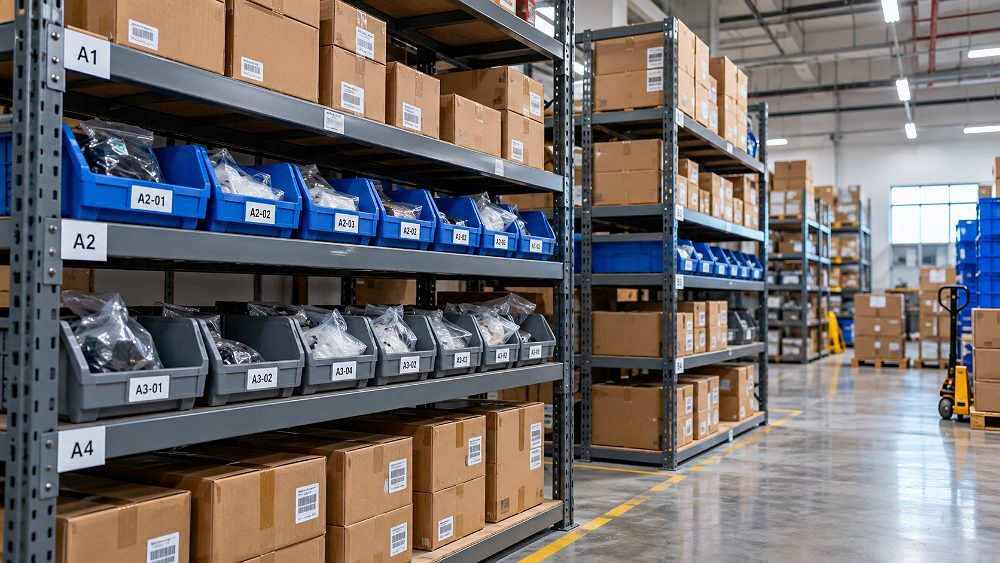
Amazon FBA profitability is the contribution left after product cost, Amazon selling fees, FBA fulfilment fees, storage, inbound freight, returns allowance, advertising and applicable taxes or operating costs are deducted from selling price. The calculation should be done per SKU and refreshed when fees, price or sales velocity changes.
Start with revenue, subtract COGS, Amazon costs, fulfilment cost, storage, advertising and a realistic returns allowance, then calculate contribution profit. Contribution margin % is contribution profit divided by revenue. Do not confuse this with gross margin, because gross margin often excludes marketplace, fulfilment, returns and advertising costs that materially affect net profit.
The example below is illustrative, not a category quote. It demonstrates how an Amazon FBA calculator should be structured. Replace every Amazon-specific fee with the live rate for the actual category, price band, billing weight, distance and programme before setting a final selling price.
| Cost component | Amount | % of selling price | Notes |
|---|---|---|---|
| Selling price | ₹1,499 | 100.0% | Illustrative customer price |
| Product cost | ₹520 | 34.7% | COGS |
| Referral fee | ₹180 | 12.0% | Illustrative category rate only |
| Closing fee | ₹35 | 2.3% | Illustrative; verify live price band |
| Weight/fulfilment cost | ₹65 | 4.3% | Illustrative shipping characteristics |
| Pick & pack | ₹17 | 1.1% | Current public standard ≤1 kg figure; verify applicability |
| Storage allocation | ₹12 | 0.8% | Illustrative per-unit allocation |
| Inbound freight | ₹22 | 1.5% | Seller-to-FC allocation |
| Advertising cost | ₹180 | 12.0% | Illustrative ad spend allocation |
| Returns allowance | ₹60 | 4.0% | Illustrative expected cost |
| Applicable fee taxes/other | ₹65 | 4.3% | Illustrative combined allowance |
| Estimated contribution profit | ₹343 | 22.9% | Before fixed overhead allocation |
A seller should also monitor return-adjusted profit, storage-adjusted profit, contribution profit per unit, contribution margin %, advertising cost such as TACOS where relevant, and net profit by SKU. This approach is more useful than asking only, “What percentage does Amazon charge?”
FBA inventory management is the process of keeping enough available units to protect sales while avoiding stock that sits long enough to create storage and ageing costs. The practical control system uses sell-through rate, days of cover, inventory age, reorder point, safety stock and return-adjusted contribution margin.
Sell-through rate shows how efficiently stock is converting into orders. Days of cover translates current units into time. Used together, they help identify a stockout risk on fast sellers and excess inventory on weak sellers before the account reaches an expensive inventory-age problem.
Replenishment lead time should include supplier readiness, transport to the FC and realistic receiving time—not just courier transit. Safety stock should absorb demand variability without becoming a permanent overstock buffer. For each SKU, the reorder point should be updated after meaningful changes in velocity, seasonality or conversion.
A stockout can mean lost sales, reduced advertising continuity and weaker momentum. Excess inventory creates the opposite problem: storage cost, inventory ageing, cash tied up and markdown or removal risk. The objective is not “maximum stock”; it is a controlled inventory position that supports customer demand at an acceptable fulfilment cost.
| Metric | Formula | What it tells you | Warning signal | Recommended action |
|---|---|---|---|---|
| Sell-through rate | Units sold ÷ average inventory | Inventory velocity | Falling trend | Reduce inbound / improve conversion |
| Days of cover | Available units ÷ daily sales | Stock duration | Too low or too high | Adjust replenishment |
| Inventory age | Days since receipt | Ageing exposure | Large old-stock share | Markdown/remove/reforecast |
| Stockout rate | Out-of-stock time ÷ period | Availability loss | Repeated gaps | Increase safety stock or shorten lead time |
| Contribution margin | Contribution profit ÷ revenue | Economic quality | Below required threshold | Reprice/reduce cost/change fulfilment |
| Storage cost per unit | Monthly storage ÷ avg. units | Storage burden | Rising each month | Improve sell-through |
| Return rate | Returned units ÷ sold units | Post-sale leakage | Category/own baseline exceeded | Fix product/listing/quality issue |
| Reorder point | Daily sales × lead time + safety stock | When to replenish | Order placed too late | Automate review cadence |
There is no single fulfilment model that produces the highest profit for every SKU. FBA, Easy Ship and Self Ship should be compared using total fulfilment cost, seller warehouse cost, product dimensions, order volume, margin, delivery capability, inventory control requirements and the operational workload your team can absorb.
| Factor | Amazon FBA | Easy Ship | Self Ship |
|---|---|---|---|
| Inventory storage | Amazon FC | Seller | Seller |
| Packing | Amazon | Seller | Seller |
| Delivery | Amazon network | Amazon pickup/delivery model | Seller/3PL |
| Customer fulfilment | High Amazon involvement | Shared | Seller-led |
| Prime opportunity | FBA products generally receive Prime eligibility subject to current rules | Prime may be available under eligible programmes | May be available under eligible programmes |
| Seller warehouse requirement | Lower for FBA stock | Required | Required |
| Operational workload | Lower fulfilment workload | Moderate | Highest |
| Amazon fulfilment charges | FBA-specific | Easy Ship specific | Marketplace fees; own delivery cost separate |
| Inventory control | Shared with FC processes | High seller control | Highest seller control |
| Scalability | Strong for suitable SKUs | Strong with seller warehouse discipline | Depends on seller logistics capacity |
FBA is often a strong operational fit for fast-moving hero SKUs with predictable demand, healthy product margin, compact dimensions and high order volume. It can also suit teams that want to reduce daily fulfilment workload while providing Prime delivery experiences. The decision still depends on Amazon FBA cost after storage, shipping and returns are included.
Easy Ship can fit sellers that already operate a warehouse, need greater inventory control and still want Amazon-supported last-mile delivery. Self Ship can fit special-handling products, very slow inventory or sellers with a strong own logistics operation. A hybrid strategy can place fast-moving products in FBA, medium-volume catalogue in Easy Ship and special or slow-moving inventory in Self Ship.
| Seller/product situation | FBA | Easy Ship | Self Ship | Recommended evaluation |
|---|---|---|---|---|
| Fast-selling compact product | Strong candidate | Compare | Compare | Model total cost + Prime value |
| High-margin product | Often viable | Viable | Viable | Compare service level and contribution |
| Bulky product | Model carefully | Potentially useful | Potentially useful | Measure volumetric and warehouse cost |
| Slow-moving catalogue | Selective use | Often easier to control | Often easier to control | Prioritise storage-duration economics |
| Seasonal inventory | Forecast tightly | Useful | Useful | Plan exit after peak |
| Tight-margin SKU | Stress-test fees | Compare | Compare | Protect contribution margin |
| High-volume SKU | Scalable | Scalable with warehouse | Requires strong operation | Compare workload and delivery SLA |
| Seller with own warehouse | Use selectively | Natural comparison | Possible | Include internal warehouse cost |
| Seller with strong delivery operation | Compare | Compare | Strong control option | Benchmark real logistics cost |
FBA products are generally Prime eligible under Amazon’s current programme rules, which can improve the delivery proposition shown to shoppers. Prime eligibility may support convenience and conversion, but it is not a substitute for unit economics: the SKU still needs enough margin to absorb the fulfilment, storage, return and advertising cost.
Amazon’s official FBA page states that FBA products receive the Prime badge and that Amazon stores inventory, packs orders, delivers products and supports customer service and returns. A Prime badge can make fast delivery more visible, but sellers should avoid assuming a guaranteed sales uplift for every ASIN. Conversion still depends on price, reviews, offer quality, product detail and the clarity of the listing.

The safest way to adopt Amazon FBA is to test the economics before moving the entire catalogue. Use contribution margin, packed dimensions, 30/60/90-day demand forecasts, storage-adjusted profit and fulfilment alternatives, then launch selected high-potential SKUs and compare estimates with actual settlement and inventory data.
Include product cost, referral fee, closing fee, fulfilment cost, storage, inbound freight, advertising, returns allowance and applicable taxes. Do not stop at gross margin.
Confirm actual dimensions, actual weight and volumetric weight. Packaging can change both shipping and storage economics.
Model expected daily sales, seasonality, lead time and safety stock so the first inbound shipment is not simply the largest quantity available.
Estimate profit at different sell-through speeds. A SKU that is profitable in 30 days can become unattractive after several months.
Include your own warehouse rent, packing labour and courier cost when comparing non-FBA models. “No Amazon storage fee” does not mean “no storage cost.”
Start with selected high-potential SKUs and review actual fulfilment cost, inventory movement, customer returns and contribution profit before scaling.
Most FBA profitability problems come from planning errors rather than one unexpected fee. The recurring patterns are sending too much stock, ignoring volumetric weight, using incomplete unit economics, letting slow-moving inventory age, replenishing without a demand forecast and neglecting listing conversion.
Excess inventory increases storage cost, inventory ageing and cash lock-up. Send stock against demand, not available warehouse capacity.
A large lightweight product can create a higher fulfilment cost than expected. Measure the packed unit before forecasting Amazon FBA shipping charges India.
Unit economics must include COGS, inbound freight, ads, returns and internal overhead—not only Amazon FBA fees.
Old inventory can absorb contribution through storage and aged-inventory exposure. Build intervention points before the stock becomes a cash trap.
High revenue does not automatically mean high demand for every SKU. Replenish from velocity and forecast data.
FBA can improve fulfilment efficiency, but weak titles, poor product images or incomplete buying information can leave inventory sitting in storage.
Strong fulfilment cannot compensate for a product detail page that fails to convert. Sellers should connect FBA operations with accurate Amazon product photography, useful Amazon A+ content and media that explains size, features and use. Ckstudio’s role in this part of the system is visual conversion support, not fulfilment operations.
For sellers deciding between AI-created visuals and a real shoot, the AI Amazon photography vs studio photography comparison explains where real product evidence matters. Sellers can also review Amazon photography services and Amazon product video planning when improving the listing around an FBA launch.

For a practical look at the visual-production side of marketplace selling, this behind-the-scenes example shows how a product is handled under controlled studio conditions before listing media is published. It complements the FBA discussion by showing why listing quality and fulfilment economics need to work together.
Before shipping stock into FBA, complete a SKU-level profitability and inventory review. The checklist below is designed to catch the common gaps that cause margin leakage after a product has already entered the fulfilment network.
If the product is already live but the offer is suppressed or rejected, operational inventory planning should be paired with the suppressed ASIN and listing-rejection guide. If the next constraint is demand generation rather than fulfilment, use the Amazon Sponsored Products growth guide after the unit economics can support paid acquisition.
Ckstudio helps Amazon sellers create conversion-focused product photography, A+ visual content and marketplace media in Delhi. Prince can review the photography requirement around your next FBA launch without changing the operational advice in this guide.
Call +91-8700258773 · Email [email protected]
Amazon FBA, or Fulfillment by Amazon, lets sellers send eligible inventory to Amazon’s fulfilment network. Amazon stores the inventory and handles picking, packing, shipping, customer service and returns for FBA orders. Sellers remain responsible for sourcing, pricing, listing quality, inventory planning, replenishment and overall Amazon seller profitability.
Amazon FBA cost varies by product category, selling price, size, weight, shipping characteristics, storage usage and applicable services. Current public pricing includes separate referral, closing, weight-handling and FBA-specific costs. Use the live Amazon fee table and revenue calculator for the exact SKU rather than relying on an old fixed percentage.
Amazon FBA can be profitable when sales velocity, product margin, inventory turnover and conversion can absorb fulfilment, storage, advertising, returns and inbound costs. Profitability is SKU specific: a compact fast-selling product can perform very differently from a bulky or slow-moving product even at the same selling price.
With FBA, Amazon stores and fulfils inventory through its network. With Easy Ship, the seller normally stores and prepares inventory while Amazon handles delivery. With Self Ship, the seller manages storage and delivery directly or through a third-party logistics provider. Compare total cost, order volume, product margins and operational capacity.
Sellers can control Amazon FBA storage fees by sending inventory according to expected demand, tracking days of cover and inventory age, replenishing smaller quantities when practical, improving slow-SKU sell-through and acting on aged inventory before storage and opportunity costs materially reduce contribution profit.
Amazon FBA can remove significant fulfilment work and create a scalable operating model, but convenience has a measurable cost. Calculate Amazon FBA profitability SKU by SKU, manage Amazon FBA inventory aggressively, review storage duration and conversion, and periodically compare FBA vs Easy Ship and Self Ship as fees and demand change.
The central topic analysis is simple: FBA fees + storage duration + inventory turnover + product dimensions + sales velocity + contribution margin = real Amazon FBA profitability. Ckstudio recommends treating listing conversion as part of that equation because strong fulfilment cannot compensate for product images that fail to explain quality, features, scale and buying information.
For photography support, Prince can be reached at +91-8700258773, on WhatsApp, or by email at [email protected]. Sellers can also return to the Amazon marketplace seller hub as the broader cluster develops.