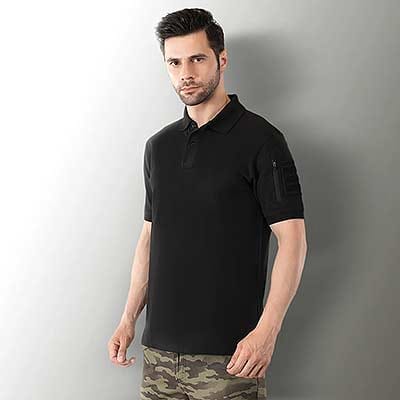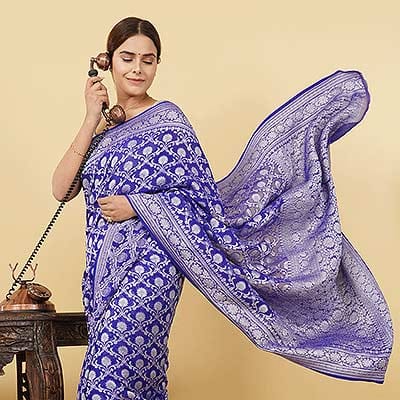
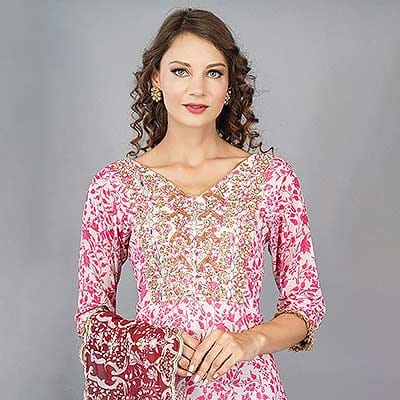

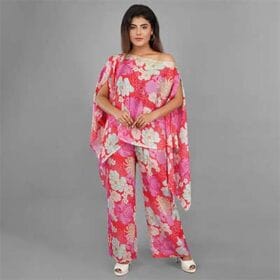
Fashion Photography Services
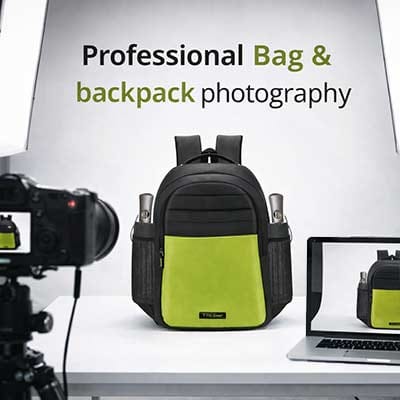
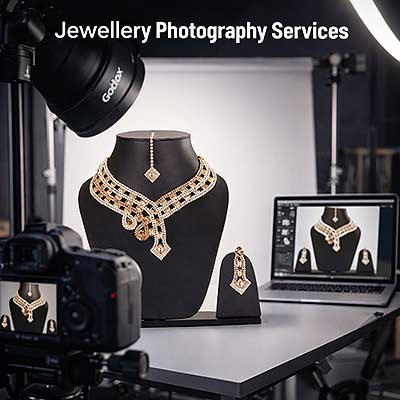
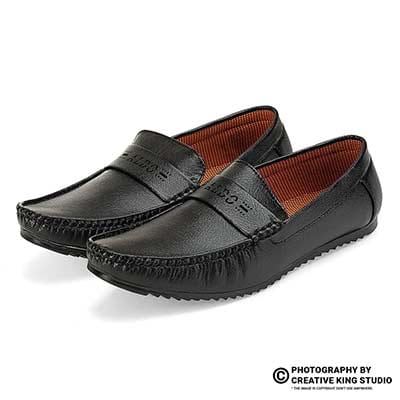
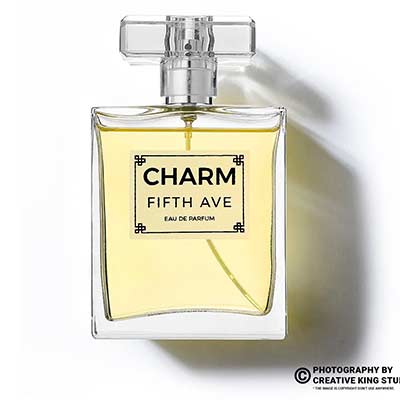
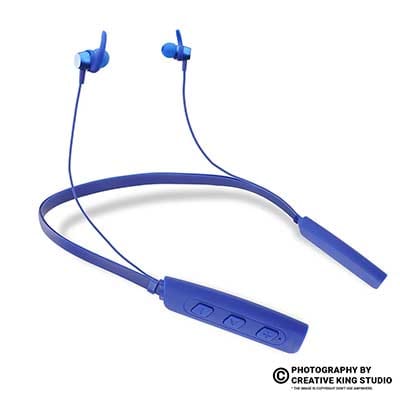
E-commerce Photography
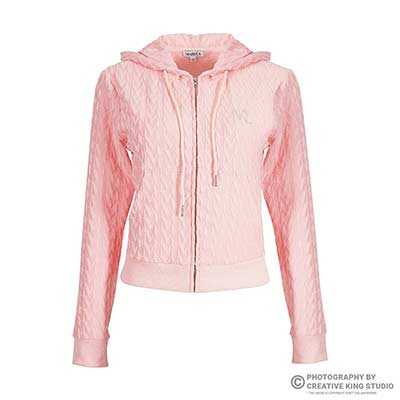
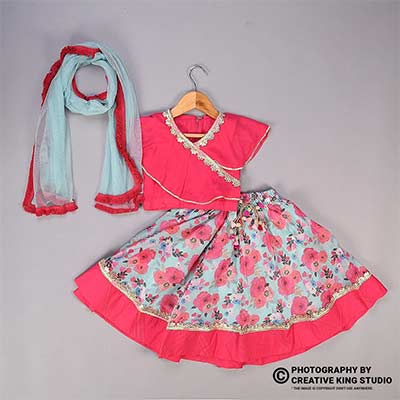
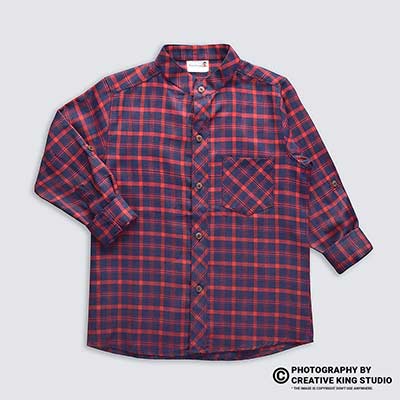
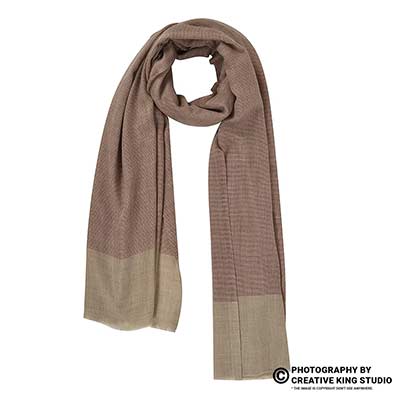
A transparent, no-fluff evaluation framework from Prince and the Ckstudio team — built on 9+ years of shooting for Amazon, Flipkart, Myntra, Ajio, Meesho and 500+ D2C brands across India.
The best ecommerce photography company for your brand is the one that combines proven marketplace expertise (Amazon, Flipkart, Myntra), a verifiable portfolio in your product category, transparent per-image pricing, dependable turnaround, and a written revision policy. Ckstudio, a Delhi NCR based ecommerce photography studio, checks all fifteen evaluation points covered in this guide.
In 2026, product images are doing more heavy lifting than ever — they are the digital shelf, the pitch, and the trust signal all rolled into one. According to Shopify and Baymard Institute research, roughly 93% of online buyers say visual appearance is the single biggest driver of their purchase decision, and product images influence around 75% of add-to-cart moments on marketplaces like Amazon and Flipkart. That’s why choosing the right ecommerce photography company is no longer a nice-to-have creative decision — it’s a direct revenue lever.
At Ckstudio, we’ve watched brands add 30–50% incremental conversion rate purely by swapping amateur or AI-generated visuals with real, marketplace-tuned photography. Marketplace algorithms increasingly reward listings that hold shoppers longer, and clean, consistent visuals are what stop the scroll. Whether you sell garments on Myntra, home décor on Amazon or accessories on Meesho, the right ecommerce product photography partner can make the difference between a hit listing and a dead SKU.
An ecommerce photography company is a specialised studio that produces high-conversion product visuals for online stores and marketplaces — including white background catalogue shots, ghost mannequin, lifestyle, model, flat lay, 360°, and infographic-ready images. Unlike a generic ecommerce photography agency or a wedding photographer taking on side gigs, a true ecommerce photo studio in India is built around marketplace compliance, batch shooting workflows, and repeatable quality across hundreds of SKUs. India’s ecommerce market, projected by IBEF to cross USD 325 billion by 2030, has made these product photography services mission-critical for every scaling brand.
Founders often ask us the same question — should we hire a full ecommerce photography company, work with a freelance product photographer, or build our own in-house team? Each option has a place. A freelancer can be economical for a one-off launch of 5–10 SKUs, but their limited backup capacity, single-person schedule and inconsistent post-production make them risky for growing catalogues. In-house teams offer control but demand studio infrastructure, dedicated staff and constant volume to justify the cost.
A dedicated ecommerce photography company, on the other hand, brings a fully equipped studio, multi-photographer bench, standardised workflows and marketplace expertise from day one. For most Indian D2C brands scaling from 50 to 500+ SKUs, this middle path — as explained in our detailed piece on scaling product photography from 50 to 500 SKUs — turns out to be the most predictable route, both on cost and quality.
| Criteria | Photography Company | Freelance Photographer | In-House Team |
|---|---|---|---|
| Cost per image | ₹250–₹1,200 | ₹200–₹800 | ₹100–₹400 (at scale) |
| Quality Consistency | High | Variable | High |
| Turnaround | 2–5 days | 5–10 days | 1–3 days |
| Scalability | Yes | Limited | Fixed capacity |
| Marketplace Expertise | Deep | Case-by-case | Depends on hires |
| Revisions | Structured | Loose | Internal |
| Best For | Growing D2C, marketplace sellers | Occasional shoots | High-volume enterprises |
This is the framework we wish every founder had before their first vendor meeting. Below are the fifteen factors Ckstudio uses internally to benchmark our own work, and the same lens you should apply to any ecommerce photography company, product photography agency or photography service provider you’re evaluating. Score each shortlisted studio on a scale of 1–10 for a fair, side-by-side comparison instead of relying on sales calls alone.
A great ecommerce photography company portfolio shouldn’t just look pretty — it should look relevant. Ask specifically for work in your product category. A studio brilliant at jewellery may struggle with home appliances, and vice versa. Look for consistency across a single client’s SKUs: crops, colours, shadows and background tones should feel like they were shot in one session, not stitched together. Ckstudio maintains category-wise showcases across fashion, jewellery and electronic products so brands can see specialization proof, not just showreels.
Ask for at least three live marketplace listings the studio has shot. Cross-check the images on Amazon or Flipkart with the studio’s portfolio and confirm attribution with the brand if possible. Anyone can screenshot pretty images from Pinterest; only a real studio can show you the store, the SKU count, and the shoot brief behind it. Our behind-the-scenes post on how product photography actually happens on set is a good reference for what a real shoot looks like.
Every marketplace has its own image bible — pixel dimensions, background rules, model policies, packaging visibility, zoom requirements. A serious ecommerce photography company will not only know these but bake them into the shoot list. Ask any candidate studio to walk you through the Amazon India main image rule (85% product coverage on pure white RGB 255,255,255), Flipkart’s aspect ratios, or Myntra’s ghost mannequin standards. If they hesitate, they’re not marketplace-ready.
Non-compliant images get rejected, delisted or deprioritised in algorithmic ranking — that’s real money lost. Our step-by-step guides on Amazon product photography and Flipkart photography guidelines exist because we saw sellers lose weeks re-shooting rejected assets. A studio that shoots Amazon/Flipkart/Myntra listings weekly will already have marketplace-compliant lighting presets and QC checklists built into every project.
The main image must be on a pure white background, occupy ≥85% of the frame, feature only the product (no logos, watermarks, models unless the product is a garment) and be at least 1000px on the longest side for zoom. Alternate images should show scale, use cases, texture and packaging. A trained ecommerce photo studio in India will hand you this checklist before shoot day, not after.
Flipkart typically wants images at 500×500 minimum with 1600×1600 preferred, JPG format, pure white background for catalogue shots and no promotional text. Myntra is stricter on fashion — front, back, side, close-up, styled and detail shots are the minimum, with ghost mannequin standard for apparel. Our detailed garment prep guide explains what studios should ask you to send in advance.
Transparent pricing is the single fastest credibility signal. A trustworthy ecommerce photography company will publish clear per-image or per-SKU rates, spell out what’s included (angles, retouching depth, revisions), and quote apples-to-apples against your brief. Anyone who says “let’s finalise on call” without a written quote is almost always saving room for hidden charges. For real-world benchmarks, our detailed breakdowns of product photography cost in Delhi, Mumbai and pan-India pricing for 2026 lay out honest, city-wise ranges you can hold every vendor to.
Speed matters — but only if quality holds. Ask about realistic turnaround for 20, 50 and 200-SKU projects. A mature ecommerce photography company will commit to 2–5 working days for standard catalogues and 24–48 hours for enterprise retainer clients. Also ask what happens during peak seasons like Diwali or end-of-season sales; a real studio has surge capacity, temporary teams and priority workflows for retainer partners. Ckstudio’s production capacity, refined over hundreds of shoots, is what lets us ship marketplace-ready assets when brands need them most.
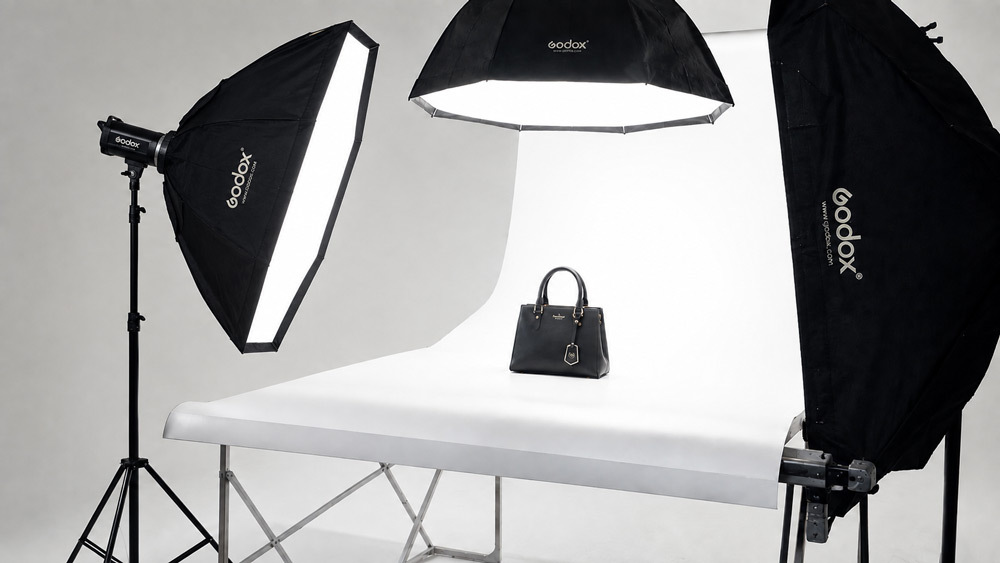
An in-house ecommerce photo studio is a strong quality signal. Rented spaces mean rushed sessions and inconsistent lighting between shoots. At Ckstudio, we shoot on full-frame mirrorless bodies (Canon R10, Sony A7R5), pair them with product-specific optics (100mm macro for jewellery detail, 50mm for fashion, wide primes for lifestyle), and use a controlled lighting kit — 4× Godox SK 400II and 2× Elinchrom FRX 400 strobes, strip softboxes, octaboxes and a beauty dish. That controlled environment is what makes fashion photography and jewellery photography repeatable across 500 SKUs.
Shooting is 40% of the job — the rest lives in post. Ask any ecommerce photography company what “retouching” actually includes: background clean-up, colour correction, dust/lint removal, shadow work, skin retouch on models, ghost mannequin composites. A studio that offers granular product image editing services — not just a blanket “we edit everything” — is one that understands marketplace-grade output. Compare edited samples side-by-side; look for clean edges, honest colour, and consistent shadow direction.
Your product mix will evolve. A one-trick studio limits your growth. The best ecommerce photography services under one roof reduce vendor sprawl, standardise brand aesthetics and unlock volume discounts. Ckstudio’s under-one-roof menu spans ghost mannequin, flat lay, 360° photography, lifestyle, lookbook and model photoshoots. Ask candidate studios what percentage of shoots they’ve done in the last 90 days across these formats — recent activity beats old showreels.
An experienced photographer sees problems before they show up in the frame — reflective packaging, transparent lids, saree drape, fabric sheen. Ask who will actually shoot your brand — the lead or a junior. Prince has personally led ecommerce shoots at Ckstudio for over 9 years across 500+ brands, and every project has a named lead photographer accountable end-to-end. That accountability is what separates a real ecommerce photography team from a rotating pool of gig workers.
Client testimonials, verifiable brand logos and ecommerce photography company reviews on Google give you the outside view. Look for repeat clients — that’s the single strongest quality signal. A studio that clients return to for their next season, next launch, next campaign has clearly delivered. Cross-check Google Reviews, ask for 2–3 references you can call, and skip anyone unwilling to share.
A great shoot is 60% pre-production. Ask your shortlisted ecommerce photography company to walk you through their project management workflow — brief intake, shot list confirmation, sample approvals, shoot day, proofing, revisions, delivery. Do they use shared drives, WhatsApp groups, project boards? A studio without a defined workflow will bleed you on scope creep and missed timelines. Ckstudio assigns a single point-of-contact per project, so you never chase multiple people.
A written revision policy is non-negotiable. Standard industry practice is 1–2 free revision rounds per image within 7–14 days of delivery. Ask what qualifies as a “revision” versus a “reshoot” — this line is where most disputes happen. Any credible ecommerce photography services provider will document this clearly in the quote.
For fragile, high-value, or bulky products, a nearby ecommerce photo studio in India reduces logistics stress massively. If you’re in Delhi NCR, working with a Delhi NCR based photography company means same-day sample drop-offs, on-site attendance, and easy site visits. Even for pan-India shoots, a studio with local pickup routes across Gurgaon, Noida, Faridabad, Ghaziabad and Agra makes life easier.
Ask about file delivery formats — high-res JPG, PSD layers for future edits, TIFF for print, WebP for site performance. A modern ecommerce photography company will deliver via a shared cloud drive with clear naming conventions (SKU-Angle-Version) and long-term backup. Ckstudio’s file delivery workflow is built around marketplace ingestion — every folder is ready to bulk-upload without renaming.
Can your shortlisted studio handle 500 SKUs in 10 days if you land a large marketplace order? Bulk product photography demands parallel setups, multiple photographers, staging assistants, and a QC layer. This is where dedicated ecommerce photography services beat freelancers by a mile. Our internal playbook on scaling shoots from 50 to 500 SKUs covers how mature studios plan for volume without dropping quality.
Read the fine print. Who owns the final images — you or the studio? Where can you use them (website, marketplace, ads, print)? Are model release forms provided for male model shoots and female talent? A professional ecommerce photography company will transfer full commercial usage rights on payment and provide signed model releases as standard. Anything less means legal exposure down the line.
Let’s talk about the number every founder wants first — money. Ecommerce photography pricing in India in 2026 ranges roughly from ₹150 per image for high-volume white background work to ₹2,500+ per look for model campaigns. What decides where you sit on this spectrum is complexity (styling, model, retouch depth), volume (per-product vs package), and turnaround demand. Anyone quoting a flat “everything for ₹99 per image” is either cutting corners on quality or hiding charges. Our transparent product photography pricing benchmarks and ghost mannequin cost breakdowns give you honest starting points.
Per-product pricing suits sellers with irregular shoot needs — you pay only for what you shoot. Package pricing is ideal for launches (say, 50 SKUs bundled at a discount). Retainer models unlock the best per-image cost and priority turnaround for brands doing weekly or monthly shoots. Ckstudio structures all three; most growing D2C brands land on packages, while marketplace-heavy sellers move to retainers within a quarter. Choose based on your actual monthly SKU flow, not on which sounds cheapest on paper.
Over 9 years, we’ve onboarded hundreds of brands who came to Ckstudio after painful experiences with the wrong studios. The mistakes are almost always predictable. Watch for these red flags before you sign — they’ll save you months of rework and rejected marketplace listings.
Verbal promises evaporate. Any real ecommerce photography company will send an itemised, per-SKU quote within 24 hours.
Reverse-image search their portfolio hero shots. If Getty or Unsplash returns hits, you’ve caught a fraud.
This always ends in scope creep or slow delivery. Look for structured revision rounds instead.
Any serious studio will offer a paid sample of 2–3 SKUs so you validate quality before a big project.
Ask about Amazon’s 85% coverage rule or Myntra’s ghost mannequin standard. Blank stares = no expertise.
Refuse to work with pure “virtual” outfits for fragile inventory. Ask to visit before signing.
If usage rights aren’t transferred on payment, you may not legally own your own product images.
Use these ten questions to ask a photography company during your first vetting call. Verifiable, specific answers are what separate real studios from confident-sounding fronts. Send the exact same list to your top three shortlisted vendors — the differences in answers alone will make the decision for you.
Ckstudio was founded by Prince as a specialised ecommerce photography services studio in Delhi NCR, built specifically to solve what generalist photographers keep getting wrong — marketplace compliance, catalogue-scale consistency, and honest pricing. Over 9+ years, our team has delivered ecommerce shoots for D2C fashion labels, jewellery brands, home & kitchen sellers, industrial exporters and marketplace-first businesses across Amazon, Flipkart, Myntra, Ajio and Meesho. Every project is anchored by a named lead, a written brief, a shot list, and a delivery timeline you can hold us to.
What sets Ckstudio apart isn’t a slogan — it’s the operating model. We shoot inside our own controlled studio, retouch in-house rather than offshore, staff every project with a dedicated project manager, and give brands complete image rights on payment. Our clients include export houses shipping to global marketplaces, D2C beauty and fashion brands scaling on Instagram and Meesho, and industrial manufacturers needing everything from industrial machinery photography to aerial drone filming. For any of these use cases, we work at Ckstudio the way we’d want a studio to work for us — transparently, quickly, and repeatably.
Under one roof, Ckstudio delivers the full ecommerce visual stack — Amazon product photography, Flipkart shoots, Myntra listings, ghost mannequin, lifestyle, 360°, Amazon A+ infographics, and UGC video creation. That range means one point of accountability, one brand voice across every asset, and volume discounts your CFO will thank you for.
One example among many: a Delhi-based fashion label came to Ckstudio after three failed vendor relationships. Within a single Standard package (50 SKUs, ghost mannequin + lifestyle), their Myntra CTR climbed by 34% and returns dropped by 19% over the following quarter — largely because product images finally matched what the customer actually received. That pattern — honest images reducing returns and lifting conversions — repeats across our client roster. See more work on the Ckstudio portfolio and read Ckstudio case studies for full metrics.
| Platform | Min Size | Background | Format | Special Rule |
|---|---|---|---|---|
| Amazon India | 1000×1000+ | Pure white (255,255,255) | JPG | Product ≥85% of frame |
| Flipkart | 500×500 (1600 pref.) | Pure white | JPG | No promotional text |
| Myntra | 1080×1440 | White / neutral | JPG | Ghost mannequin standard for apparel |
| Meesho | 800×800+ | White | JPG/PNG | Multiple angles mandatory |
| Ajio | 1080×1440 | White / studio | JPG | Model + flat + detail set |
Here’s the six-step process we recommend to every founder — the same steps our own onboarding team uses in reverse. Treat this as your hiring playbook whenever you’re evaluating any ecommerce photography company in India.
The buyer’s journey behind “choosing an ecommerce photography company” is fundamentally commercial investigation — decision-makers actively compare vendors, benchmark prices and vet portfolios before committing. Our audience is a mix of D2C founders, ecommerce brand owners, catalogue managers, procurement heads and marketplace sellers on Amazon, Flipkart, Myntra, Ajio and Meesho — most of them based in Delhi NCR, Mumbai, Bangalore, Ahmedabad and Hyderabad, and increasingly from Tier-2 cities scaling on Meesho and Shopify.
The pain points we hear on discovery calls are remarkably consistent — inconsistent quality across vendors, hidden pricing on invoices, long turnarounds that hurt product launches, marketplace rejections due to non-compliance, and difficulty verifying photographer claims. That’s exactly why this guide is structured as a buyer’s framework rather than a promotional piece. Your goals as a buyer are simple: find a reliable, quality-consistent ecommerce photography partner, understand fair pricing benchmarks, verify vendor credibility and marketplace expertise, reduce turnaround, and guarantee compliance. Ckstudio’s angle is straightforward — we position transparency, marketplace-tuned quality and 9+ years of experience against what most competitor content doesn’t offer: a structured 15-point checklist, honest pricing brackets, red-flag warnings, and India-specific compliance guidance. If a studio’s blog reads like a sales letter without any decision framework, that itself is a data point.
Below are the five most common questions we receive from brands evaluating an ecommerce photography company. Each answer is drawn from real client conversations with the Ckstudio team.
Evaluate ecommerce photography companies using a 15-point framework — portfolio quality in your product category, marketplace compliance experience (Amazon, Flipkart, Myntra), transparent pricing, turnaround time, in-house studio infrastructure, retouching depth, revisions policy and client testimonials. Prioritise studios with proven ecommerce specialization over general photographers, and always order a paid sample shoot before committing to a large project.
Ecommerce photography companies in India typically charge ₹150–₹1,500 per image depending on complexity. White background shots start at ₹150–₹400, ghost mannequin at ₹500–₹900, model photography at ₹800–₹2,500, and 360° photography at ₹800–₹1,800. Package pricing and volume discounts significantly reduce per-image costs for bulk orders. See our 2026 pricing benchmarks for city-wise comparisons.
An ecommerce photography company offers dedicated in-house studios, multi-photographer teams, consistent quality standards, structured workflows, project managers, and scalability for bulk orders. Freelance photographers offer lower costs and personal attention, but limited scalability, inconsistent turnaround and no backup capacity. Companies suit growing brands and marketplace sellers; freelancers suit occasional single-product shoots.
Ask about portfolio samples in your product category, marketplace compliance experience for Amazon/Flipkart/Myntra, transparent per-product pricing, turnaround time, revision policy, image usage rights, post-production process, in-house studio access, sample shoot availability, and 2–3 client references. Verifiable, specific answers are the credibility signal you’re looking for.
Ckstudio is a leading ecommerce photography company in Delhi NCR, specialising in product, fashion, jewellery, ghost mannequin and model photography for Amazon, Flipkart, Myntra and D2C brands. With an in-house studio, transparent pricing, fast turnaround and marketplace compliance expertise, Ckstudio serves growing and enterprise brands across India. Call Prince directly at +91-8700258773 or email [email protected].
Choosing an ecommerce photography company is not about picking the cheapest quote or the flashiest showreel — it’s about picking the partner whose workflow, marketplace expertise and quality standard match where you want your brand to be twelve months from now. Use the 15-point framework in this guide, ask the ten questions honestly, watch for the seven red flags, and never skip the sample shoot. That simple discipline will save you money, time, and the pain of listing rejections.
If you’re evaluating photography partners in Delhi NCR or across India, Ckstudio is happy to be on your shortlist — and comfortable being compared honestly against anyone else on it. That’s how good partnerships start. Reach out to Prince and the Ckstudio team for a transparent conversation, a written quote, and a paid sample shoot before you commit.
Every ecommerce photography search intent, mapped to helpful next-read content from Ckstudio’s blog and services.