Fashion Photography Services
E-commerce Photography
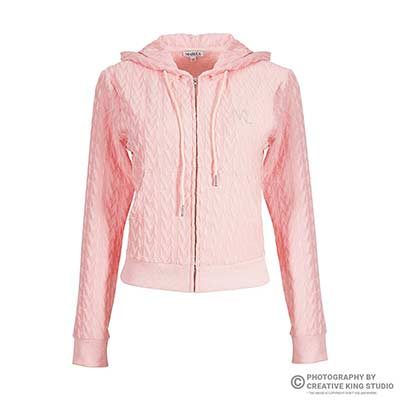
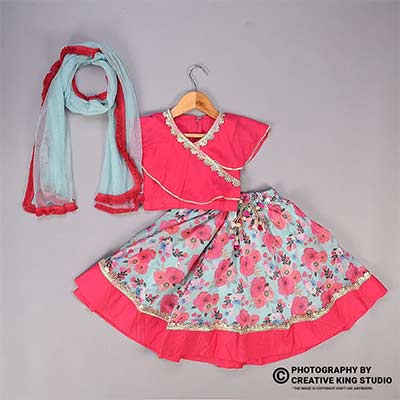
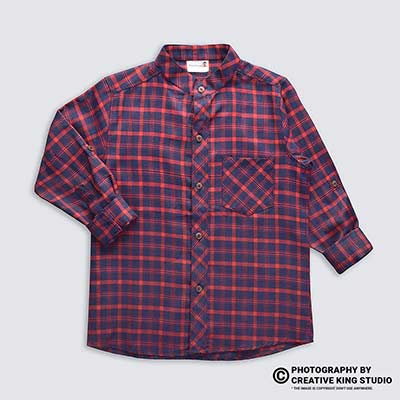
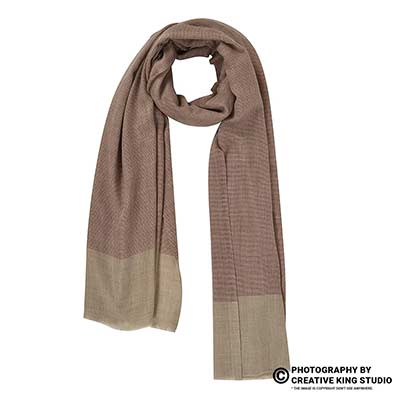
A practical, production-first guide from Ckstudio: Myntra model requirements by category, what Body Shape ID means for your casting, how brands cast models, and the 11-step styling, hair and makeup, posing and creative direction workflow that keeps the product at the centre.
Myntra models are professional fashion models that brands, sellers or their production studio cast to wear garments in catalogue shoots that follow Myntra’s image guidelines. Myntra does not publish one fixed model height or size. In practice, a good Myntra model has measurements that match your sample size, a clean and groomed look, ecommerce posing experience (front, three-quarter, side, back, movement and detail) and a profile that suits your target customer. On Myntra, the model is not the hero. The garment is, and everything else exists to sell it.
If you are looking up Myntra models or Myntra model requirements before your next listing, start here: there is no single “Myntra look”. A catalogue looks premium or generic depending on how well the model, sample size, styling and creative direction fit together, and all of that is decided before the camera is switched on. At Ckstudio, we run every fashion shoot on that principle. This guide covers a model requirements checklist by category, Body Shape ID in Myntra, how brands cast models, and the 11-step framework we use on real client catalogues in our Delhi NCR studio. For platform rules on image size, angles and uploads, see our Myntra photography guidelines. This piece stays focused on models and creative production.
Selling on Myntra is different from selling on a purely product-first marketplace. Myntra shoppers browse the way they browse fashion magazines. They scroll for aspiration, and they buy when the garment on the model looks like something they would wear. So Myntra Fashion Model Photography has to combine sharp ecommerce catalogue clarity with fashion-brand storytelling. At Ckstudio, we treat every fashion shoot as a hybrid production, not a copy of Amazon-style flat product photography.
Product readability still matters. Fit, silhouette, fabric behaviour and construction details must be visible in every frame. What changes on Myntra is the surrounding presentation: styling, expression, movement and creative direction all need to earn their place. Anything on set that hides the neckline, breaks the drape or pulls the eye away from the garment works against you. The specification side (sizes, angles, upload rules) is covered in our Myntra photography guidelines, so this article stays on models and creative production. For budgeting and garment-level planning, read our Myntra photoshoot cost guide and Myntra clothing photoshoot guide alongside this one.
Basic ecommerce photography is transactional: the shopper wants to see the object clearly and decide. Myntra Fashion Model Photography is persuasion at scale. The model, the styling and the expression build the brand story together, while the garment stays at the centre of every frame. You see the difference most in fashion catalogue photography, where a series of SKUs has to feel like one collection rather than a random set of studio images. Our fashion catalogue vs ecommerce photography breakdown goes deeper into this comparison for brand managers.
| Feature | Basic Ecommerce Photography | Myntra Fashion Model Photography |
|---|---|---|
| Model importance | Low — often ghost mannequin | High — face and body support brand |
| Garment fit | Approximate is acceptable | Must be precise, per SKU |
| Styling | Minimal or none | Curated, category-specific |
| Expression | Not required | Aligned to brand tone |
| Pose direction | Standard angles | Directed per silhouette |
| Brand identity | Neutral | Deliberate and consistent |
| Catalogue consistency | Nice-to-have | Essential across collection |
| Creative direction | Optional | Non-negotiable |
Try this thought experiment. Give the same ₹1,500 kurta to two production teams. Team A photographs a strong-featured model in a rushed studio with no styling brief and standard poses. Team B casts a model whose proportions suit the silhouette, runs a proper fitting, keeps jewellery minimal and directs a confident three-quarter stance. The garment is identical, yet Team B’s images will read as premium and Team A’s will read as budget. That is why Myntra Fashion Model Photography should be treated as a production discipline, and why brand positioning has to be decided before a model is even shortlisted. Our Myntra catalogue model photography workflow covers this in more depth.
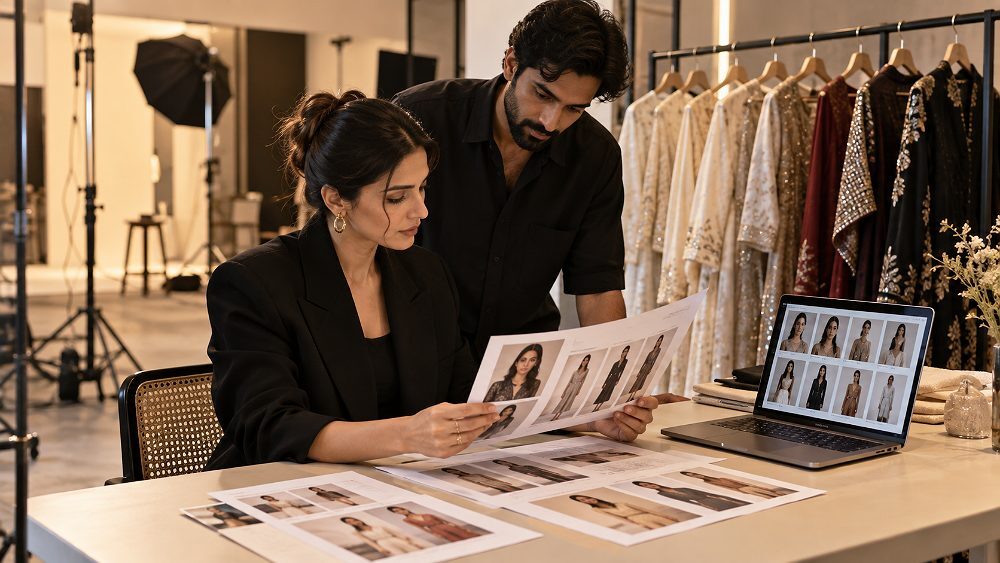 Pre-production casting review — the model is chosen for the customer and the garment, not the other way around.
Myntra does not publish a fixed height or body-size rule for models in seller listings. Its image guidelines are about how the product is shown, such as a clean background, accurate colour, full garment visibility and consistent framing. The requirements below are the casting ranges Indian fashion studios, including Ckstudio, typically use so that standard sample sizes fit and photograph well. Treat them as starting points rather than platform rules, and check current image specifications in our Myntra photography guidelines before every new collection.
| Category | Typical Model Height | Typical Sample Size Worn | Casting Focus |
|---|---|---|---|
| Womenswear — western | 5’6″–5’9″ (168–175 cm) | S / M | Balanced torso-to-leg ratio, clean shoulder line |
| Womenswear — ethnic (kurta, saree, lehenga) | 5’5″–5’9″ (165–175 cm) | S / M | Waist definition, drape ability, poise |
| Menswear | 5’11″–6’2″ (180–188 cm) | M / L | Shoulder width for shirts and jackets, correct trouser break |
| Plus-size (women and men) | Category height | Your actual plus sample (e.g. XL–3XL) | Real plus-size proportions, not a padded straight-size model |
| Kids | Matches the age band | The size label being sold (e.g. 4–5Y, 8–9Y) | Comfort on camera, short supervised sessions |
| Athleisure / activewear | Category height | S / M or M / L | Genuine athletic build and movement ability |
These requirements are the casting stage of a larger pipeline. To see how they connect to fitting, shooting, QC and delivery, follow our Myntra catalogue model photography workflow.
Body Shape ID is a Myntra shopper feature. It identifies a customer’s body shape from details they enter in the app and then personalises style and fit recommendations. It works on the customer side only. Sellers do not upload a Body Shape ID for their models, and it does not change Myntra’s image rules.
It still affects how you cast. If shoppers are being shown silhouettes that suit their shape, your images need to show those silhouettes honestly. Here is how it carries through to model and size selection:
Before you audition a single model, answer six questions on paper. Who is the customer? What price point are you selling at? What garment category is this collection? What lifestyle does the customer aspire to? What is your brand personality: quiet luxury, high-energy streetwear, refined ethnic, professional workwear or playful youth? And how aspirational should the imagery feel compared with how relatable? Every later decision about model, styling, HMU, poses and expressions follows from these answers. This is the biggest mindset shift we push on brands when they first walk into Ckstudio.
A ₹799 mass-market kurti and a ₹3,999 premium designer kurta may share fabric, colour and silhouette, but their photography should look almost nothing alike. The mass-market piece suits bright, approachable, energetic direction: a smiling model, daylight-style lighting and relatable poses. The premium piece suits controlled, minimal direction: a softer expression, restrained jewellery, elegant three-quarter stances and editorial-influenced framing. Copying a competitor’s poses without asking where their brand sits is how catalogues end up looking generic. Read our notes on choosing the right fashion ecommerce background before you lock any set.
In nearly every reshoot request we audit, the original team skipped positioning and jumped straight to casting. When we rebuild the shoot, positioning is where we start — and it usually cuts our shot list by 20–30% because we stop chasing frames that don’t fit the brand.
A one-page creative brief prevents most on-set arguments. It should list the collection name, target audience, marketplace, garment category, brand colour palette, model profile, styling direction, HMU direction, required poses, brand references, an avoid list and deliverables. Share it with the photographer, stylist, HMU, model, art director and brand team before the shoot day. That one document decides whether the shoot flows or stops every 30 minutes for approvals.
A working mood board should include model references, hair references, makeup references, pose references, garment styling references, accessory direction, lighting reference, crop and framing reference, and brand tone examples. Keep it visual and tight, and keep it on the wall through the shoot so the whole crew stays aligned. For a fuller pre-production toolkit, see our fashion catalogue shoot planning guide.
Model casting is where most brands overspend and underperform, usually because they cast on face alone. For a Myntra shoot, casting has to weigh eleven variables: target customer alignment, garment category fit, current sample measurements, model proportions, height, body type, age appearance, expression range, posing ability, ecommerce experience and brand personality. When those inputs are right, a mid-tier model outperforms a celebrity-tier model, because the garment fits and the poses work. Menswear brands should also use their own casting criteria, separate from womenswear, as we explain in our guide to male model photography.
Frame every casting decision as the best model-product-customer match, not the most attractive model. That reframe ends the familiar reshoot cycle where a brand loves a model, hires them, and finds halfway through the day that half the garments don’t sit well on their shoulders or hips. The same casting logic applies to reels, UGC and lookbooks, as in our fashion lookbook photography approach.
Different Myntra categories reward different casting profiles. A young western-wear label targeting 18–24 year olds needs a model whose energy matches that customer: expressive, relaxed and comfortable on camera. A premium ethnicwear brand for a 28–40 year old customer needs poise, refinement and expression control. A workwear label reads best on a model whose posture and expressions show quiet confidence. A menswear label needs a model whose face and physique carry the collection’s story, whether sporty, editorial or classic. An athleisure label needs an athletic body type and genuine movement ability, not a static fashion model faking a stretch.
The garment decides the body type, not the other way around. Oversized silhouettes need balanced proportions so the garment doesn’t swallow the model. Fitted dresses need clean shoulder-to-hip lines and bust and waist measurements that match your sample. Structured shirts need shoulder architecture in the model, or the garment collapses on camera. Kurtas and kurtis need waist definition to show the shape. Sarees need height and drape ability, and lehengas need posture that can carry volume. Trousers need the correct break at the ankle, which depends on height and proportion. Activewear needs real athletic proportions. Force every SKU onto one unsuitable body type and the catalogue looks like a costume department, not a fashion collection. Our garment preparation guide covers this handover in more detail.
| Factor | What to Check | Why It Matters | Red Flag |
|---|---|---|---|
| Measurements | Bust, waist, hip, shoulder | Sample fit depends on it | >1.5" deviation |
| Proportions | Torso-to-leg ratio | Silhouette read | Wrong garment category |
| Age appearance | Matches customer age band | Aspiration alignment | Too young/old on camera |
| Expression range | Smile, neutral, confident | Brand tone match | One-note face |
| Posing experience | Ecommerce, not just runway | Fit-showing angles | Only editorial poses |
| Brand alignment | Personality on set | Team dynamics | Off-brand attitude |
| Sample fit | Live test | Reshoot prevention | Visible pulling |
| Availability | Full window locked | Continuity | Partial-day only |
Most brands cast Myntra models in one of three ways: through a model agency, through a production studio’s own model roster, or by hiring freelance models directly. Agencies give you the widest choice but take longer and cost more. A studio roster is faster and the models already know ecommerce posing. Freelancers can be cost-effective, but you take on the vetting, contracts and backup planning yourself. Whichever route you choose, the casting process should follow the same sequence:
If you want a studio to handle casting and the shoot together, check what it should deliver against our Myntra apparel photography standards and QC checklist.
Planning a casting round for your next Myntra collection? Prince and the Ckstudio team can coordinate model shortlisting, fitting sessions and creative direction from one production point. Call +91-8700258773 or WhatsApp +91-8700258773.
Every reshoot we audit at Ckstudio traces back to one of two things: the wrong model or the wrong fit. Fit gets ignored more because it feels like a stylist’s job, but it is really a creative director’s job. Inspect samples physically before shoot day, and assume nothing about size labels. Indian apparel sample tolerances are wide, and a piece labelled M can behave like an S or an L. Check the shoulder line, waist placement, sleeve length, trouser break, neckline sit, bust and chest fit, symmetry and drape, then steam every piece. If a piece fails more than two of those checks, alter it or drop it from the shoot list. This is the fastest way to lift catalogue quality, and it is built into our ecommerce apparel workflow as well.
For any Myntra shoot with more than 15–20 SKUs, a pre-shoot fitting is non-negotiable. At Ckstudio, the fitting runs in six steps:
A two-hour fitting the day before a shoot routinely saves 4–6 hours of production time on the shoot day. For a documented framework, our Myntra model photography workflow guide lays it out step by step.
Some fit issues can be fixed on set with clips outside the frame to tighten a back panel, minor pinning, temporary hemming with fashion tape, lint removal and steaming. Others can’t: a wrong sample size, a broken zip, permanent stains, severe construction defects, a sample in a visibly different colour from the production run, or a missing garment component. If you photograph these anyway, the QC team will reject the images and customers will return the product. Reject the sample, reshoot later and protect the catalogue.
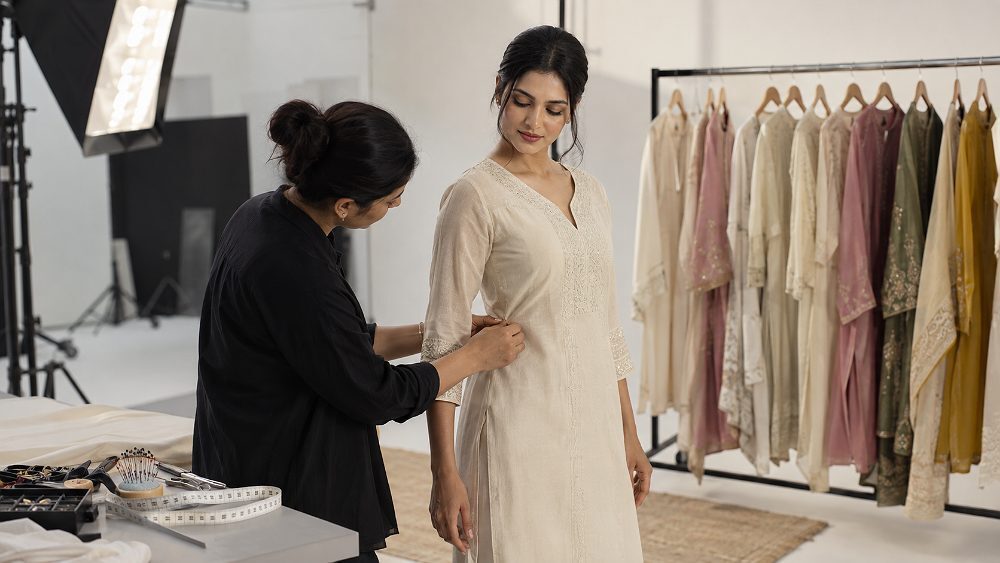 Fitting sessions decide catalogue quality — most fit problems are cheap to fix the day before, expensive to fix on the shoot day.
The central styling rule for a Myntra model shoot is simple: the garment being sold stays the hero. Every styling decision should either support the garment or be cut. Treat accessory hierarchy as a real design decision, with one statement piece per look at most. Footwear should complement the garment’s palette without becoming the focal point. Keep jewellery off the neckline when the piece has neckline detail. Belts should not compete with the silhouette, and bags should not cover the front of the garment. Layering should reveal, not hide. Colour coordination should follow the brand palette rather than the model’s personal taste. Styling continuity across SKUs is what makes a catalogue look like a collection instead of a series of unrelated shoots.
We use two quick before-and-after examples in Ckstudio creative reviews. Bad: an oversized bag styled in front of a kurta, covering half the embroidery. Better: the same bag at the model’s side, with the embroidery fully visible. Bad: a heavy statement necklace on a kurta with a keyhole neckline, hiding the very detail that justifies the price. Better: minimal drop earrings, with the neckline visible and the product story intact. Styling should reveal the reasons a customer would buy the piece. If it hides them, the styling is wrong.
A styling continuity sheet is a one-page record of decisions across the collection: which shoes go with kurtas and which with dresses, which jewellery goes with ethnic and which with western, tuck rules, sleeve rolls, buttoning, dupatta position, belt use, jewellery by neckline and hair placement. Update it live during the shoot. Six months later, when the brand launches a follow-on collection, this sheet is what makes the new catalogue feel like the same brand. We build it into our ecommerce photography workflow for repeat clients.
| Category | Styling Priority |
|---|---|
| Kurta / Kurti | Neckline, sleeve, dupatta, trouser pairing |
| Saree | Drape, pleats, blouse visibility |
| Lehenga | Dupatta treatment, jewellery restraint |
| Western dress | Silhouette and footwear |
| Menswear | Tuck, collar, cuff, trouser break |
| Athleisure | Movement + product functionality |
Hair and makeup exist to polish the model without becoming the subject. On a Myntra catalogue shoot, lock these HMU decisions before the first frame: skin finish (matte, satin or dewy depending on the category), eye makeup weight, lip tones that suit the palette, shine control, flyaway management, hair placement around the neckline, and how the look will be maintained across a long day. The most common mistake we see is HMU that looks great on the model in isolation but competes with the garment on camera. Product-focused HMU is slightly under-styled on purpose.
Long hair is a styling variable, not a fixed element. Hair covering collars, shoulders, back-yoke embroidery, spaghetti straps, necklines or shoulder cutouts is one of the top reasons frames get rejected in QC review. Plan hair placement per shot: back for neckline detail, forward for shoulder-detail garments, and half-up for versatile shots. Ask the model to reset their hair between takes. A five-second reset can save a five-hour reshoot.
Long shoot days ruin makeup consistency if nobody is watching. At Ckstudio, we shoot an approved HMU reference frame at the start of production and print it on set. Every two hours, the HMU artist compares the model’s current look with the reference and adjusts. This one habit keeps a 60–80 SKU catalogue looking like a single continuous session, even when it wasn’t. The same discipline makes premium fashion photography feel cohesive at scale.
Creative direction is the layer most brands underinvest in, and it is where premium catalogues are made. On a well-directed set, the photographer or creative director calls posture, weight distribution, shoulder placement, hand position, chin angle, eyeline, expression, garment movement, pose transitions and pace, frame by frame. Vague instructions like "do something fashion" or "look natural" produce frames that don’t sell. Precise direction, such as "drop your left shoulder half an inch, weight on your back foot, chin slightly down, eyes to the corner", produces frames that do.
Every SKU in a Myntra model set needs six pose objectives:
Skip any of these and the customer’s questions go unanswered, which raises return rates. Brand teams can find this shot list in our Myntra model photoshoot poses and angles resource, and the same pose logic runs through our Myntra model poses for clothing listings.
Body-language mistakes give away an undirected shoot: hands stuffed into pockets that hide construction, elbows locked at unnatural angles, a hip tilt that distorts the silhouette, hunched shoulders that flatten the garment, stiff fingers that make an elegant frame look tense, garment pulling that misrepresents fit, and asymmetry that looks awkward instead of dynamic. A calm creative director on set who knows what to call out can fix every one of these in real time. Our team brings the same rigour from our ecommerce photography services to fashion shoots.
Facial expression is where brand positioning becomes visible. A premium minimal brand suits controlled, confident expressions, with the mouth closed or barely open and steady eyes. A youth streetwear label suits relaxed, energetic expressions such as half-smiles, movement and engagement with the camera. Ethnic festive collections read best with warm, refined expressions, soft eyes and elegant posture. Workwear needs confident, approachable expressions; a real smile is fine as long as the posture stays professional. Athleisure needs active, focused expressions that match the movement in the garment. Directing expression is a skill, so practise it on set the way you practise lighting.
For a practical look at how our team directs a garment model shoot end-to-end — lighting, styling and pose direction — this behind-the-scenes example from a recent brand production shows the workflow in action.
Myntra rewards a hybrid style. Pure catalogue photography sells the garment but rarely builds the brand. Pure editorial photography builds the brand but often hides the garment. What works on Myntra is catalogue with editorial polish: product-first clarity in every frame, with restrained editorial touches like a confident expression, subtle movement, polished styling and brand-consistent lighting. Lean too far toward editorial and QC flags the images. Lean too far toward catalogue and shoppers scroll past.
Catalogue frames give the customer what they need to buy: silhouette, fit, construction, fabric behaviour, front and back views, and framing that stays consistent within the category. They answer the customer’s practical questions before they ask them. On a Myntra shoot, roughly 70–80% of your frames should be catalogue frames.
The remaining 20–30% is where restrained editorial influence adds brand personality through expression, subtle movement, styling polish and lighting quality. The key word is restrained. An editorial frame that looks great on Instagram but hides half the neckline detail does not belong in your Myntra listing. It belongs on your Instagram feed or in your fashion lookbook photography deliverables.
| Factor | Catalogue Approach | Editorial Approach | Recommended Myntra Balance |
|---|---|---|---|
| Poses | Standard fit-showing | Expressive, angular | Fit-first with attitude |
| Expressions | Neutral / approachable | Moody, editorial | Confident and warm |
| Styling | Minimal | Statement-led | Restrained accents |
| Accessories | Rare | Central | One per look |
| Lighting | Even, clean | Directional, dramatic | Soft with edge control |
| Movement | Static | Kinetic | Subtle motion frames |
| Product visibility | High | Variable | High throughout |
| Brand storytelling | Low | High | Woven into every set |
This is the production sequence we run at Ckstudio for a mid-to-large Myntra fashion catalogue. The same eleven checkpoints work for a 20-SKU capsule or a 200-SKU seasonal drop. When a step gets skipped, the problem usually shows up on the shoot day, not before.
Tethered shooting, with the camera feeding live to a laptop or monitor, is one of the most valuable investments on a fashion shoot. On the monitor, the creative director checks creases, hair placement, symmetry, accessory position, hand placement, colour rendering, crop and pose consistency in real time. Every issue caught while tethered is one that never becomes a reshoot. Our catalog consistency at scale playbook covers the QC side in more depth.
The cost of a Myntra model shoot depends on scope, not a fixed rate card. The main variables are the number of SKUs, model tier and fee, shoot duration, stylist involvement, hair and makeup, photographer level, studio requirements, number of final edited images, depth of creative direction, retouching complexity, any video or reels, and usage rights (marketplace only, marketplace plus social, or full commercial). A shoot quoted at ₹59 per edited image or roughly ₹300 per garment for a standard multi-angle model set can work for straightforward SKUs. Premium creative productions with dedicated casting and styling sit at a different tier entirely. Detailed benchmarks are in our Myntra photoshoot charges guide and our broader product photography pricing guide for India. For a scope-based quote, email [email protected] or WhatsApp us your SKU count and garment category.
A low per-image cost gets expensive fast if the model is unsuitable, the samples are poorly fitted, the styling is inconsistent or the output needs a reshoot. Brands that budget by production requirement (casting quality, fitting time, stylist and HMU, shoot duration, tethered QC, retouching hours) get a stronger catalogue for the same total spend and rarely need a reshoot. If your first Myntra catalogue underperformed, review the production line items, not just the per-image cost.
Ckstudio has been running fashion and ecommerce production from Delhi NCR for nine-plus years, serving brands across Amazon, Flipkart, Myntra, Ajio and Meesho with a repeatable catalogue workflow. Our production setup includes professional model coordination, in-house styling and HMU coordination, tethered studio setups, marketplace-experienced creative direction, and a documented QC process that keeps 100+ SKU shoots consistent. We are easy to reach from Delhi, South Delhi, Noida, Gurgaon, Faridabad and Ghaziabad, and we plan shoots around your launch calendar. The same methodology powers our Myntra product photography and ecommerce model shoot service.
Planning a Myntra collection shoot? Share your garment count, category, sample sizes and expected launch date with Prince for a production recommendation. Call +91-8700258773, WhatsApp +91-8700258773, or email [email protected].
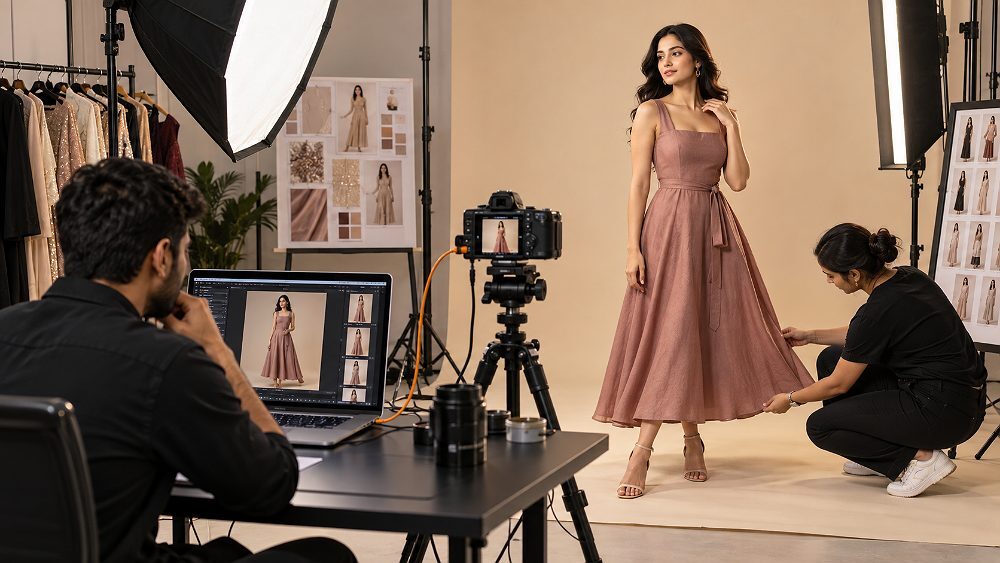 Tethered shooting with live creative-direction review — the difference between catalogue-clean frames and generic ones.
These are the questions we hear most from brands and Myntra sellers planning a model shoot, whether it’s their first or their tenth.
Myntra does not set a fixed height or size for models in seller listings. Brands usually cast women around 5’6″–5’9″ wearing S/M samples and men around 5’11″–6’2″ wearing M/L, and cast plus-size and kids models to the actual sample sizes being sold. The model also needs a clean, groomed look, ecommerce posing experience and a profile that matches the target customer.
Body Shape ID is a Myntra shopper feature that identifies a customer’s body shape from details they enter and uses it to personalise fit and style recommendations. It does not change seller image rules. It does reward brands that cast realistic body types, show the model’s height and size worn, and keep size charts accurate.
Brands write a model brief and shortlist models through an agency, a studio roster or freelancers. They then review unretouched digitals and measurements, run a fit test with the real samples, and confirm rate, hours and usage rights in writing before shoot day.
Pricing depends on garment count, model fees, shoot duration, styling, makeup, studio requirements, image quantity and retouching. High-volume catalogue shoots generally have a different cost structure from premium creative productions.
Casting attracts attention. Fit builds trust. Styling communicates taste. Creative direction creates consistency. Through all of it, the garment must remain the hero, and that is the whole discipline of Myntra Fashion Model Photography in one line. Brands that take this on board stop chasing one-off wins and build fashion catalogues that hold up across seasons. Talk to Ckstudio about planning a Myntra model shoot for your next collection: call +91-8700258773 or email [email protected].
Next step: read the complete Myntra seller guide 2026.