Fashion Photography Services
E-commerce Photography
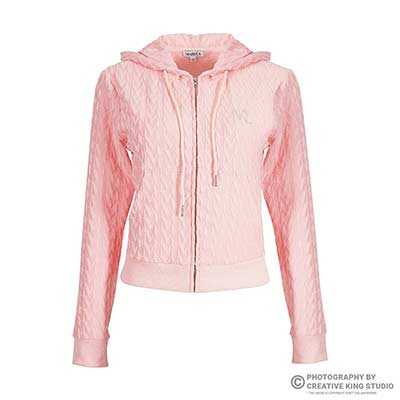
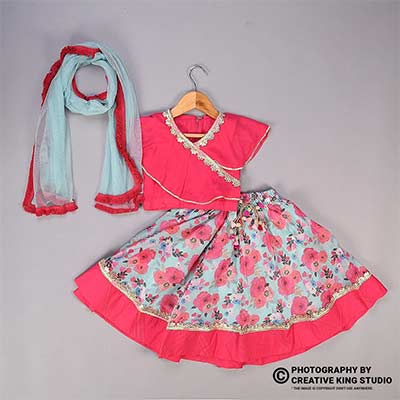
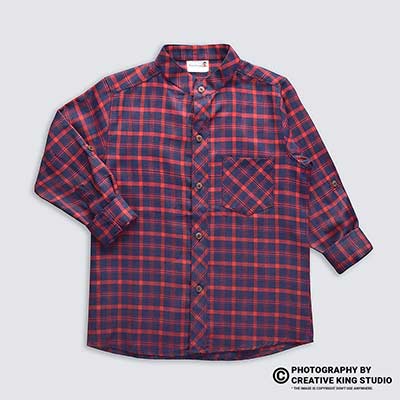
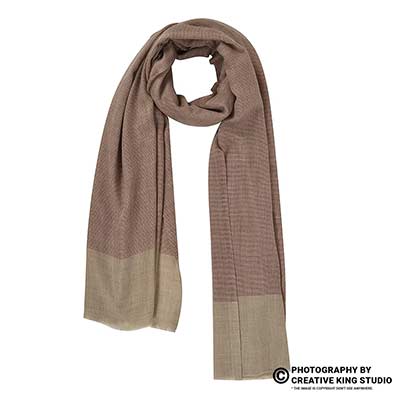
Myntra Clothing Photoshoot planning changes by garment category. Kurtis need clean fit visibility, sarees depend on controlled draping, lehengas need flare and embroidery coverage, menswear requires precise structure, and western wear is judged strongly on silhouette. This guide shows sellers how to plan those differences without losing the catalogue consistency expected from professional Myntra apparel photography.
Use the same quality-control discipline across every SKU, but adapt posing, garment preparation, detail coverage and movement to the product category.
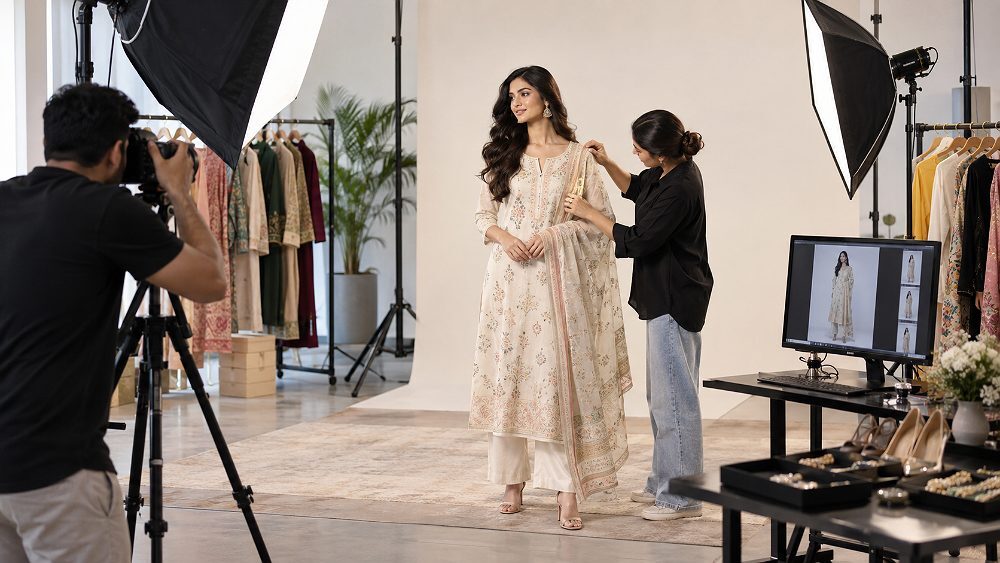
A Myntra Clothing Photoshoot is a catalogue-focused apparel photography process that presents clothing with clear fit, accurate colour, readable fabric texture, useful front, side and back views, category-appropriate model poses and consistent image treatment. The objective is not simply to create attractive fashion photographs; it is to make each garment easy to evaluate while keeping the full apparel catalogue visually coherent.
A Myntra clothing photoshoot is a production workflow built around apparel catalogue clarity. It combines garment preparation, styling, model presentation, multiple product views, detail shots, editing and final quality control so shoppers can understand the product quickly. Strong Myntra clothing photography protects colour accuracy, fit and silhouette, garment details and catalogue consistency rather than relying on a single creative hero image.
For marketplace sellers, the practical difference is important: a campaign image can communicate mood, but a product listing must communicate the garment. Professional Myntra photography services therefore balance fashion presentation with ecommerce utility. The same principle applies across an ecommerce photography workflow, but the exact treatment changes according to category.
A clothing photoshoot for Myntra cannot use one pose library for every product. Sarees depend on garment draping and pallu control, while a kurti must communicate neckline, sleeve, hem and overall fit. A lehenga needs enough room to show flare plus embroidery; menswear photography is sensitive to shoulder structure and trouser fall; western wear photography often depends on a clean outline, length and styling-led movement.
This category-first approach is the centre of effective Myntra fashion photography. It helps the team decide where to place the camera, which model poses are useful, when movement adds information, which accessories are secondary, and how much fabric detail belongs in the shot list. It also prevents a fashion catalogue from becoming visually inconsistent when different garment families are produced on the same shoot day.
Sellers should plan a Myntra Clothing Photoshoot around clean product presentation, correct styling, wrinkle-free garments, consistent studio lighting, accurate colours, complete product visibility, appropriate model selection, size preparation and repeatable image sequencing. The goal is a dependable Myntra catalogue photoshoot workflow rather than a set of unrelated attractive pictures.
Before production, build a SKU sheet that notes category, colour, size, included pieces and priority details. Separate sets such as kurta-bottom-dupatta combinations, record whether accessories are part of the sale, and mark embroidery, prints, closures or back designs that need dedicated coverage. This reduces uncertainty during catalogue production and makes final product listing images easier to sequence.
Marketplace requirements can change. Before publication or delivery, sellers should confirm current listing and partner requirements through official Myntra channels rather than depending on outdated third-party technical specifications. For image discoverability on a brand’s own site, Google Search Central’s image guidance also recommends clear image context, descriptive filenames and useful alt text.
Garment photography succeeds when the image looks attractive without misrepresenting the item. Consistent light placement and colour-managed editing support colour accuracy; careful steaming protects the silhouette; and close detail frames help shoppers judge fabric texture. Retouching should remove distractions while preserving believable material character. Ckstudio’s image editing services can support this stage when a catalogue requires repeatable cleanup across many SKUs.
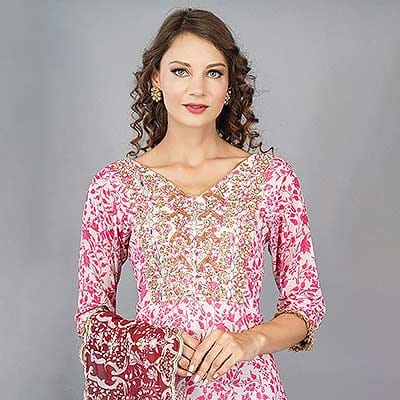
A Myntra kurti photoshoot should make the garment easy to read from neckline to hem. The front silhouette, sleeve length, side shape, back design, print or embroidery and any coordinating bottom or dupatta need deliberate coverage. Kurti catalogue photography works best when the model pose supports the garment instead of becoming the main subject.
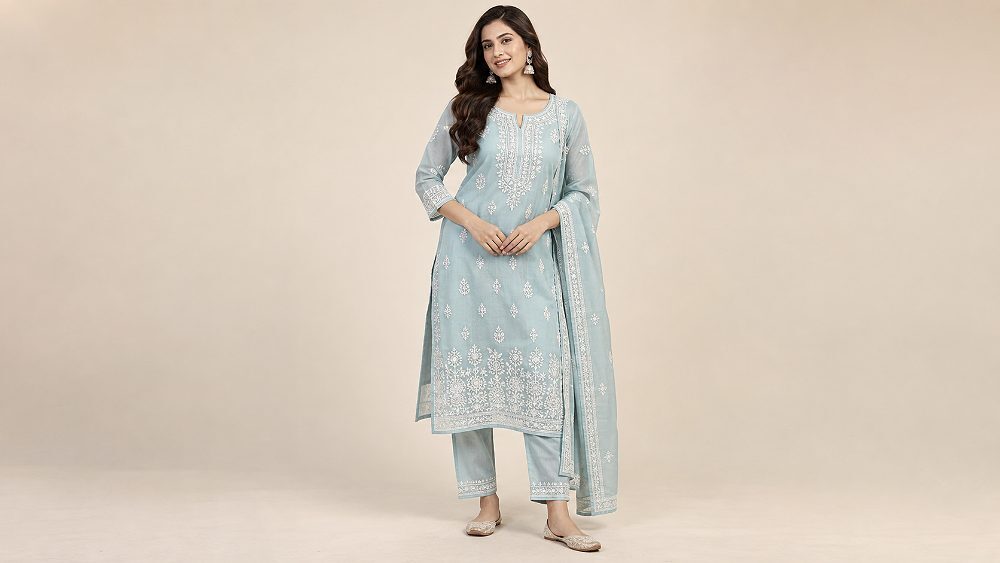
Start with a full front view, then add a back view and a three-quarter or side frame. Capture the neckline and sleeves cleanly, especially when there is piping, embroidery or button detail. A lower detail shot can show the hem, side slit and border. For a Myntra kurta set photoshoot, make the bottom and dupatta visibly identifiable rather than treating them as background styling.
If the kurti includes a dupatta, show at least one frame where it is placed naturally without covering the front construction. For printed garments, maintain a pose that keeps the pattern readable. For structured or panelled garments, a three-quarter view can communicate fit better than movement. Sellers preparing high-volume collections can also use a repeatable garment preparation checklist before the shoot.
Myntra model photography for kurtis usually benefits from an upright catalogue pose, relaxed shoulders and natural hand placement. A slight turn can reveal side shape without twisting the garment. Jewellery should remain secondary, and the stylist should check that hair, hands or the dupatta do not cover the neckline, sleeve pattern or front embroidery. For broader fashion styling references, compare the purpose of model photography services with more editorial lookbook photography.
Do not shoot an unsteamed kurti, allow a loose neckline to collapse, crop the hem unintentionally, or use hand poses that cover key print areas. Another common problem is inconsistent dupatta placement across colour variants. Myntra kurti photography becomes easier to compare when the camera height, crop and core pose remain consistent while the product details change naturally.
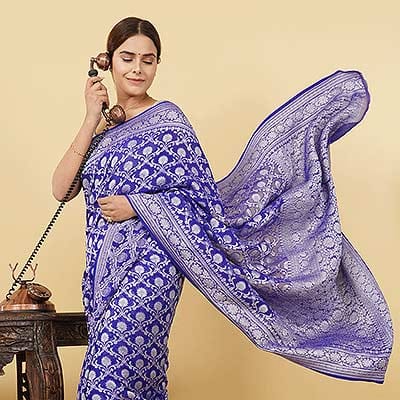
A Myntra saree photoshoot must show how the fabric drapes while preserving visible product information. The full silhouette, pallu, border, pleats, blouse styling, print or embroidery and fabric character should be easy to inspect. Saree catalogue photoshoot planning therefore relies more heavily on drape control than most stitched garments.
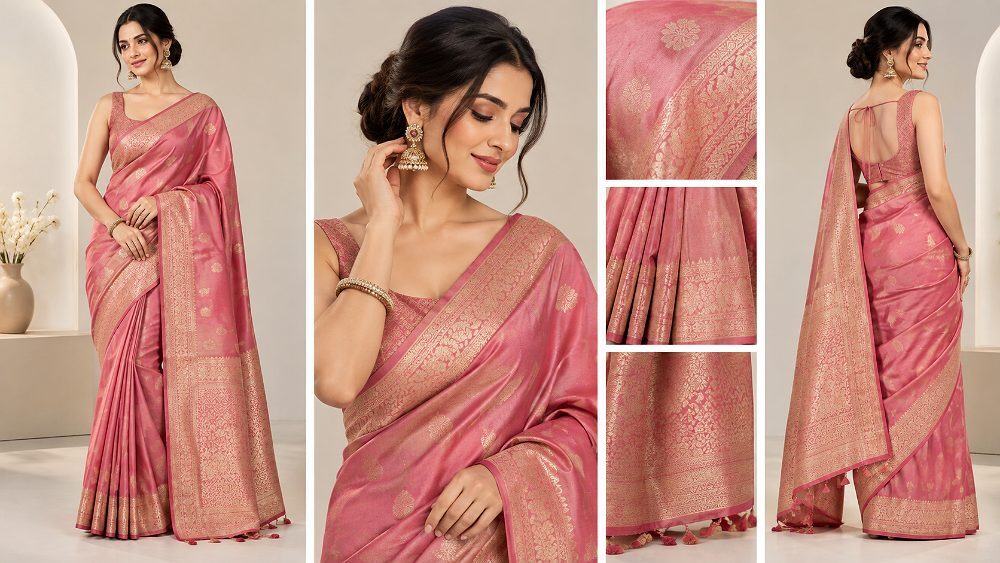
Begin with a full front drape that shows the complete length and fall. Add a pallu view, a border-oriented composition, a closer pleat frame and a fabric detail shot. When the blouse is included or relevant to the listing, capture its front and back styling clearly. Myntra saree photography with model should also include at least one image where the overall silhouette is unobstructed and the viewer can understand the saree as a complete product.
For embellished sarees, detail shots should reveal craftsmanship without changing the perceived colour through aggressive lighting. For printed sarees, the camera and pose should keep the motif scale readable. The same discipline is useful across ethnic wear photography, where product construction and styling conventions vary strongly between garment types.
A saree model photoshoot should use poised, controlled movement. One hand can guide the pallu or lightly define the waist, but the pose should not bunch the pleats or hide the border. Fashion styling can add elegance through restrained jewellery, hair and footwear, yet the saree remains the product. A good fashion model pose creates shape while leaving the drape legible from shoulder to floor.
Too much crossed-arm posing, oversized accessories or dramatic pallu movement can hide the details a shopper needs. Saree product photography should separate beauty frames from catalogue-essential frames. Capture the border, weave, embroidery and blouse treatment directly; then add one or two graceful fashion images after the essential product evidence is secure.
A Myntra lehenga photoshoot needs enough visual space to show the complete skirt flare while also documenting blouse, dupatta, border, back design and embroidery. The main challenge is balancing a dramatic silhouette with ecommerce clarity, especially when reflective thread, sequins or metallic work can create distracting highlights under studio lighting.
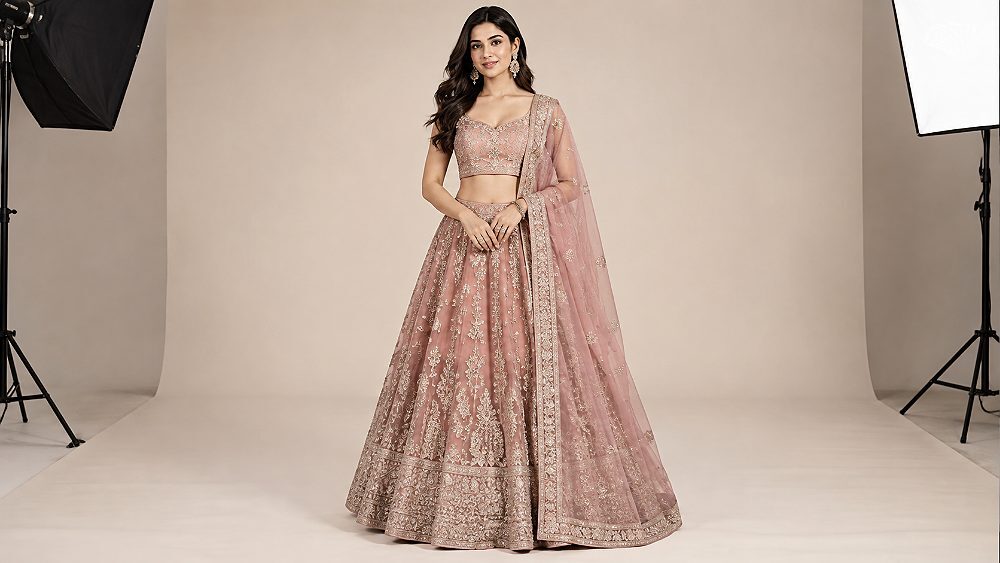
Plan a straight front silhouette, a three-quarter image that reveals volume, a clear blouse frame, a back design image, a controlled dupatta view and multiple detail shots for embroidery, border and fabric. A low or slightly wider crop can help preserve the flare without making the model look distorted. For Myntra lehenga photography with model, every motion frame should still leave the outfit recognisable as a product rather than an abstract fashion image.
Heavier sets often have several distinct selling points, so the shot list should note them before the model steps on set. This is where an organised fashion catalogue shoot plan reduces missed details and reshoots. It also helps the photographer decide when a wider fashion catalogue frame is necessary and when a close crop communicates value better.
Static poses are best for construction, blouse design, waistband, dupatta placement and back details. Controlled movement can then show the lehenga flare and fabric response. The model should turn slowly enough for the skirt to remain shaped rather than blurred. Garment styling assistants should reset the dupatta, border and panels between takes so the final catalogue remains consistent.
Embroidery photography needs soft, directional light that reveals texture without producing harsh specular spots. Reflective sequins may require small changes in light angle, diffusion and model position. The retouching stage should reduce accidental glare but preserve the genuine surface finish. Over-flattening the highlights can make an expensive lehenga look less dimensional.
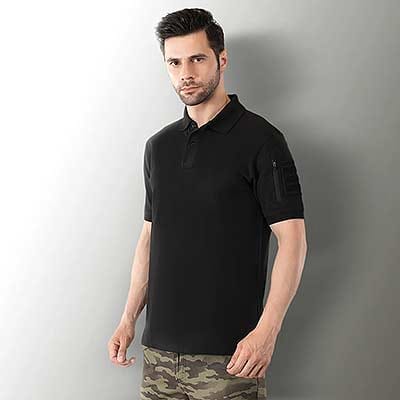
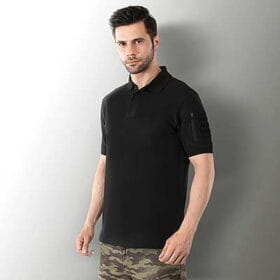
A Myntra menswear photoshoot should emphasise structure, proportion and fit. Shoulder placement, collar shape, sleeve length, shirt length, trouser fall and the relationship between top and bottom are more useful than exaggerated posing. Menswear catalogue photography becomes stronger when the model stance stays natural and the garment remains symmetrical enough to evaluate.
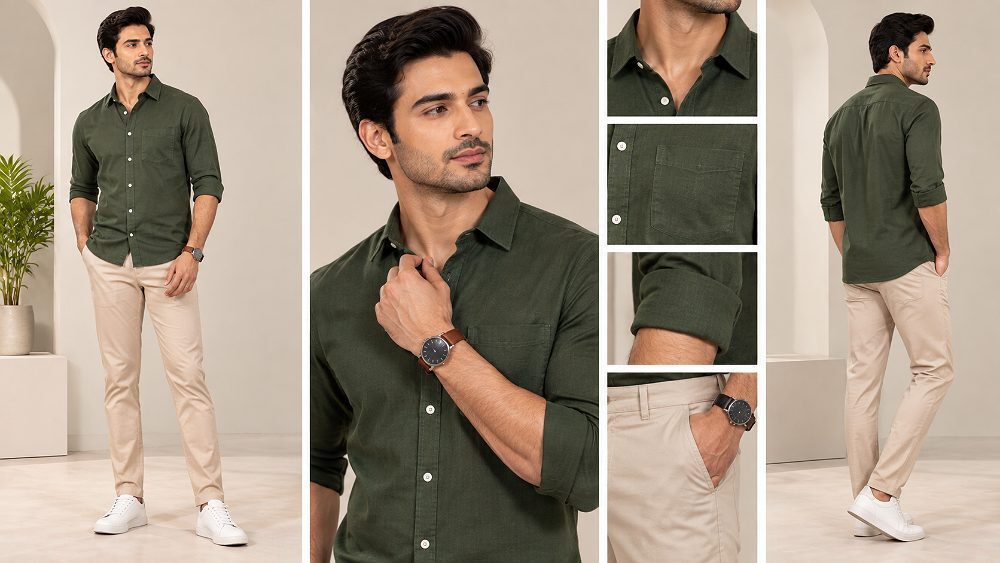
For shirts and T-shirts, use a clear front view, three-quarter view and back view, then add a side image if the silhouette or hem shape benefits from it. Show collar, placket, cuff, pocket, print, logo detail or texture as relevant. For kurtas, preserve full length and side slits. For bottomwear, include front, side and back angles that show waist fit, pocket placement and leg shape.
A Myntra shirt and t-shirt photoshoot should not copy the same crop blindly. Shirts may need closer attention to collar and cuff construction, while T-shirts often need clear fabric fall and print visibility. Sellers can compare this with the broader principles in the clothing product photography guide.
Menswear model photography works best with a relaxed straight stance, slight three-quarter turn and controlled hand placement. Hands in pockets may work for some trousers, but should not distort the waistband or hide garment details. The stylist should check shoulder seams, sleeve breaks, collar alignment and trouser pooling before each set. These small corrections are what make high-volume apparel photography feel consistent.
Do not skip cuff, collar, button, pocket, hem and fabric close-ups when they help identify the product. For co-ordinated menswear sets, show each included piece clearly. A clothing catalogue should make it obvious what is being sold and how the garment is constructed, not leave shoppers guessing from lifestyle poses.
This marketplace apparel example shows how model presentation, fit and movement can support product communication. Video and still photography are different deliverables, but both benefit from controlled styling and clear garment visibility.
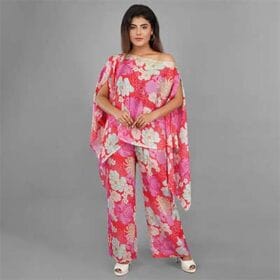
A Myntra western wear photoshoot should show silhouette, garment length, neckline, waist treatment, side shape and back construction with minimal visual interference. Dresses, tops, co-ords and bottoms can use more styling-led poses than some traditional categories, but the product must remain easy to assess in a fashion ecommerce context.
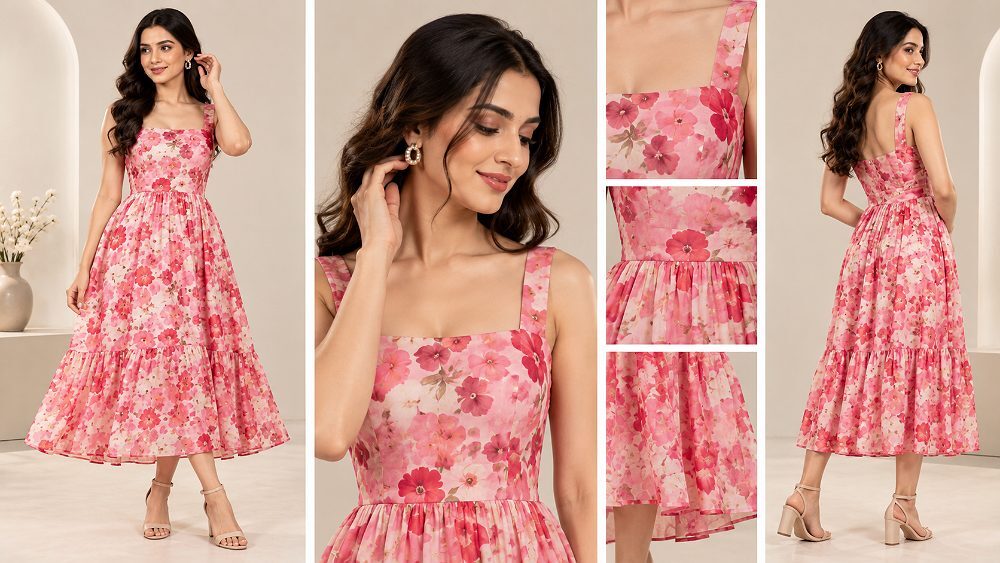
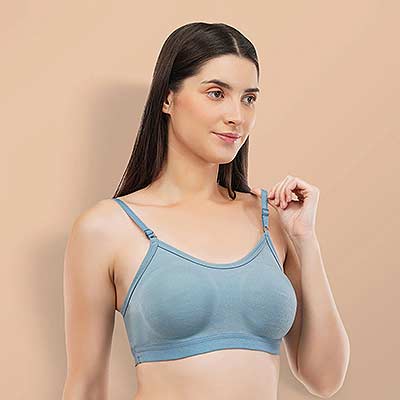
For dresses, capture a full front view, three-quarter angle, side or movement frame where useful, and back view. Add detail shots for neckline, fabric, closures, waist construction and surface design. Tops need clean front and back framing plus sleeve and texture details. Co-ords should show how the pieces work together while still making each included item readable.
For western wear photography, consistency matters especially across colour variants. Keep camera distance and model position stable so shoppers can compare shades and cuts quickly. When a collection needs more editorial storytelling beyond listing images, fashion photography or a dedicated lookbook can be planned separately from the essential catalogue coverage.
A western wear model photoshoot can use a relaxed step, slight hip shift or controlled turn to show movement, but the pose should not distort the waistline or hide side seams. For tops, arm position should leave sleeve shape and torso fit visible. For co-ords, use at least one straightforward image before more expressive fashion photography frames.
Garment fit should be readable without forcing a pose that changes the natural shape. Keep the camera level appropriate to the garment, avoid extreme perspective, and show full length when hem placement is part of the purchase decision. For fitted styles, a clean side view can clarify the silhouette more effectively than a dramatic movement shot.
A Myntra Clothing Photoshoot uses one catalogue standard but different category priorities. This table shows how Myntra apparel photography changes across kurti, saree, lehenga, menswear and western wear production without turning the shoot into a generic marketplace comparison.
| Garment Category | Main Photography Goal | Must-Have Details | Pose Style | Styling Requirement | Production Complexity |
|---|---|---|---|---|---|
| Kurtis / Kurta Sets | Clean fit and garment visibility | Neckline, sleeves, hem, print, bottom/dupatta | Upright, natural, low obstruction | Moderate | Medium |
| Sarees | Complete drape and fabric presentation | Pallu, border, pleats, blouse, weave | Graceful, controlled hand placement | High | High |
| Lehengas | Flare plus embroidery visibility | Blouse, dupatta, back, border, embroidery | Static plus controlled movement | High | High |
| Menswear | Structure and proportion | Collar, cuffs, shoulder, pockets, trouser fall | Relaxed, straight, slight turn | Moderate | Medium |
| Western Wear | Silhouette, length and styling | Neckline, waist, closures, side shape, fabric | Clean plus light movement | Moderate | Medium |
| Shot Type | Kurti | Saree | Lehenga | Menswear | Western Wear |
|---|---|---|---|---|---|
| Front | Essential | Essential | Essential | Essential | Essential |
| Three-Quarter | Recommended | Recommended | Essential | Recommended | Recommended |
| Side | When relevant | Optional | When relevant | Useful | Useful |
| Back | Essential | Useful for blouse/drape | Essential | Essential | Essential |
| Fabric Detail | Recommended | Essential | Essential | Recommended | Recommended |
| Embroidery / Print | When present | When present | Essential for embellished styles | When present | When present |
| Movement | Optional | Controlled | Useful for flare | Optional | Useful for dresses |
| Accessory / Set Detail | Bottom + dupatta | Blouse + pallu | Dupatta + blouse | Set pieces if included | Co-ord pieces if included |
Share the category mix and SKU count to build a category-specific Myntra photoshoot plan before production starts.
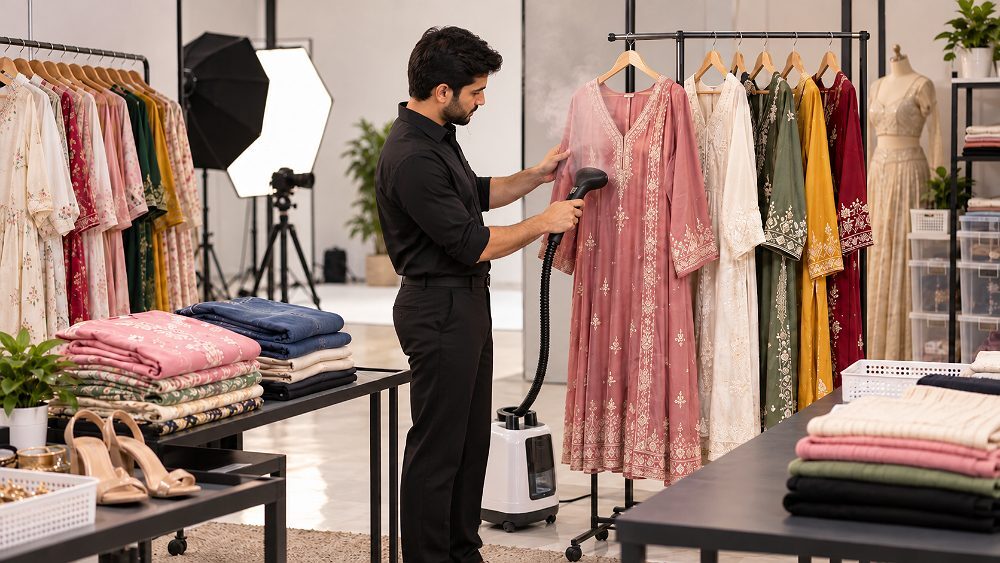
A successful Myntra Clothing Photoshoot is usually won in pre-production. The workflow should move from catalogue brief and product segregation through steaming, model selection, styling, lighting, photography, detail capture, retouching and final QC. Each stage protects consistency and reduces avoidable product-level errors.
Confirm garment categories, SKU count, launch priority, expected image use and delivery structure.
Sort by category, colour, size and set combination so the shooting order is efficient.
Check stains, missing buttons, loose threads, embroidery damage, incorrect pairing and label issues.
Remove wrinkles, align collars and hems, and prepare dupattas, belts or included accessories.
Choose a fashion model whose measurements and presentation suit the intended garment sizes.
Decide hair, makeup, footwear and jewellery rules that support the clothing rather than compete with it.
Set garment draping, sleeve position, tucks, pleats and accessory placement category by category.
Use soft, repeatable studio lighting that protects colour and texture across the collection.
Capture core front, three-quarter, side and back views according to the planned shot matrix.
Photograph fabric, print, embroidery, trims, closures and category-specific selling points.
Choose frames that are sharp, well-shaped, consistent and free from hidden garment problems.
Clean distractions, refine fabric presentation and maintain believable product colour and texture.
Check sequence, naming, crop, product completeness and visual consistency before export.
Organise final files according to the agreed SKU structure so marketplace and catalogue teams can work efficiently.
Brands with larger collections should also decide which SKUs share the same crop, model and styling rules. This makes fashion photography workflow decisions repeatable and supports smoother catalogue consistency at scale.
During capture, the team should review critical frames at useful zoom levels rather than relying only on the camera screen. Check garment fit, lint, loose threads, pallu or dupatta placement, colour balance and unwanted folds before moving to the next SKU. After the shoot, image selection and retouching should preserve a predictable sequence so catalogue teams can match files to products quickly.
This fashion photography example is useful for understanding model direction, garment movement and commercial presentation. For a marketplace catalogue, the creative energy should be retained only where it still supports product clarity.
The most expensive Myntra Clothing Photoshoot mistakes usually come from preventable preparation and consistency problems. Wrinkles, hidden details, incorrect fit, inconsistent colour and under-planned shot lists can turn a smooth Myntra apparel photography day into extra editing or reshoots.
For platform-specific failure patterns and reshoot planning, the related Myntra QC rejection and image errors guide can be used as a deeper checklist. Sellers comparing real capture with synthetic workflows can also review real photography vs AI-generated product images before deciding how product truth should be represented.
Myntra clothing photoshoot price depends on scope rather than one universal per-product figure. SKU volume, garment category, model requirements, styling, makeup, number of final images, production complexity, retouching and turnaround all influence a quote. Sarees and lehengas may need more styling time than simple T-shirts, while bulk catalogues can require stronger production management.
Because no official Ckstudio fixed rate has been supplied for this guide, the most accurate pricing display is a custom quote structure. Sellers who need a broader benchmark can first review product photography pricing in India, then request a Myntra-specific production estimate based on garment type and SKU count.
| Package | Best For | Production Scope | Models / Styling | SKU Volume | Pricing |
|---|---|---|---|---|---|
| Basic | Small test/catalogue shoots | Product preparation + essential catalogue shots | As scoped | Small | ₹ Custom Quote |
| Standard | Growing Myntra sellers | Model + broader shot coverage | Model with planned styling | Medium | ₹ Custom Quote |
| Premium | D2C fashion brands | Detailed category coverage + styling | Model + styling + makeup as required | Medium / Large | ₹ Custom Quote |
| Enterprise | High-volume catalogues | Bulk SKU workflow + dedicated production planning | Custom production team | Large / ongoing | Custom Contract |
The main cost drivers are production time and crew complexity. A simple menswear collection with repeatable poses may move faster than a mixed ethnic catalogue requiring frequent garment draping, jewellery changes and detailed embroidery coverage. Model fees, makeup, styling support, number of images per SKU, retouching depth and delivery speed also matter. For a category-specific estimate, share the SKU sheet rather than asking only for a generic Myntra photoshoot cost.
Call +91-8700258773, WhatsApp +91-8700258773 or email [email protected] with your garment categories and approximate SKU count.
Choose a Myntra clothing photography studio that understands apparel as a production system, not only as a creative shoot. The strongest signs are category-specific portfolio depth, reliable model sourcing, garment styling support, colour consistency, high-SKU workflow, retouching capability, quality control and a clear turnaround process.
Ask how the studio handles category changes during the same production day. A team may need one styling rhythm for sarees, another for kurtis, and a different camera crop for menswear. Also ask how files are named and reviewed, how retouching notes are tracked, and how reshoots are handled if a product detail was missed.
Category experience shortens decision-making on set. A fashion photography studio familiar with apparel knows when a fold is flattering versus misleading, when a pallu needs resetting, when a blazer shoulder looks collapsed, and when movement is hiding a garment detail. That judgement helps Myntra apparel photography remain both attractive and useful to shoppers.
Ckstudio works with clothing brands, manufacturers, D2C labels, marketplace sellers and catalogue teams that need structured Myntra fashion catalogue photography for ethnic wear, menswear and western apparel. The production plan can cover garment preparation, model photography, styling, category-specific shot lists, detail capture, editing and high-SKU file organisation.
The most useful enquiry includes garment categories, approximate SKU count, model requirement, number of desired images and any launch deadline. For the main service overview, visit Myntra photography services. Related production capabilities include garment photography and fashion photography.
These quick answers cover the most common planning questions from Myntra sellers, apparel brands and catalogue teams. Use them as a starting point, then adapt the final shot plan to the garment category and current marketplace requirements.
A Myntra clothing photoshoot is a catalogue-focused apparel photography process designed to present garments clearly, consistently and attractively for ecommerce listings. It typically covers garment styling, model presentation, multiple views, product details, colour accuracy and final image preparation.
Kurtis and kurta sets should clearly show overall fit, neckline, sleeves, hem, side and back design, print or embroidery, plus coordinating bottoms and dupattas where included. Styling should support the garment without hiding important product details.
A saree photoshoot should clearly present the complete drape, pallu, pleats, border, blouse styling, fabric texture and decorative details. The model pose should make the saree easy to evaluate rather than hiding the product behind creative styling.
Myntra clothing photoshoot pricing varies according to SKU volume, garment category, model requirements, styling, makeup, number of required images, retouching and production complexity. Bulk catalogues are usually quoted according to the complete production scope.
Clothing brands and marketplace sellers in Delhi can work with an ecommerce fashion photography studio such as Ckstudio for catalogue shoots covering ethnic wear, menswear, western wear and other apparel categories. A useful first step is to share the SKU count, garment categories and expected image coverage before requesting a production quote.
Contact Ckstudio for a professional Myntra Clothing Photoshoot plan covering ethnic wear, menswear and western-wear collections. Share the category mix, SKU count, model requirement and preferred delivery schedule so the team can recommend the right production scope.