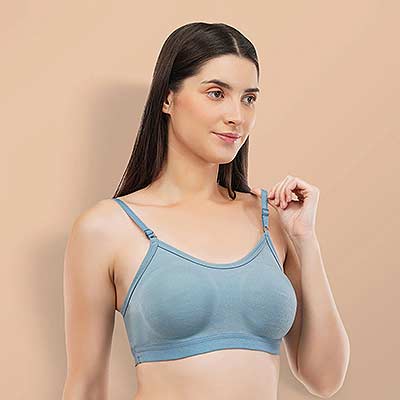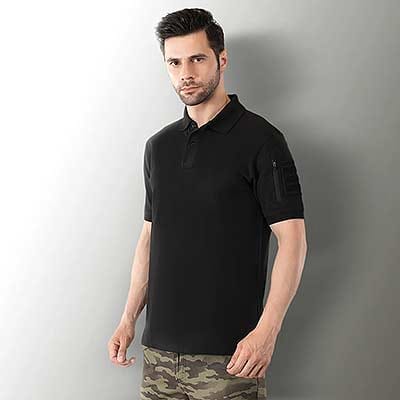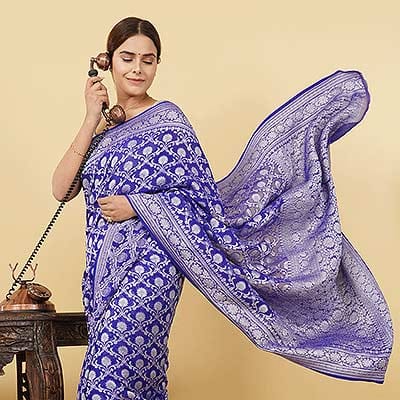
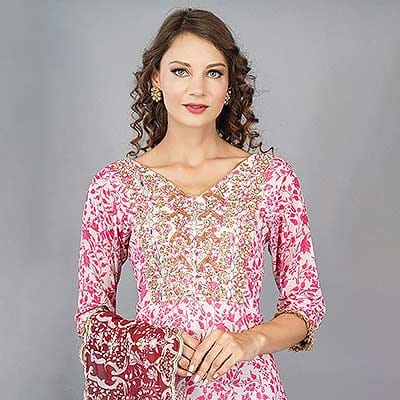
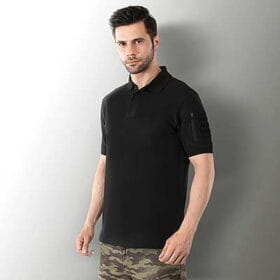
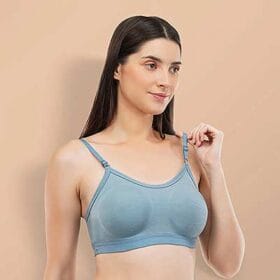
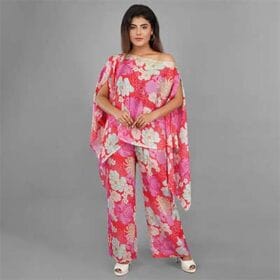
Fashion Photography Services
E-commerce Photography
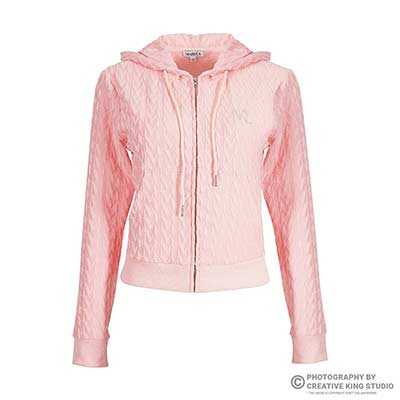
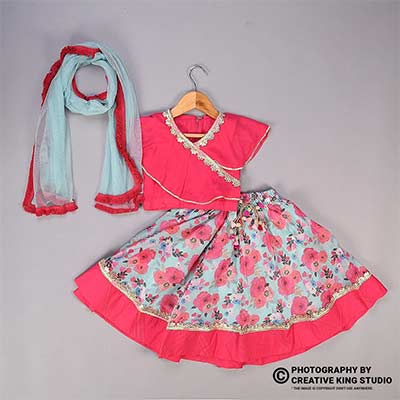
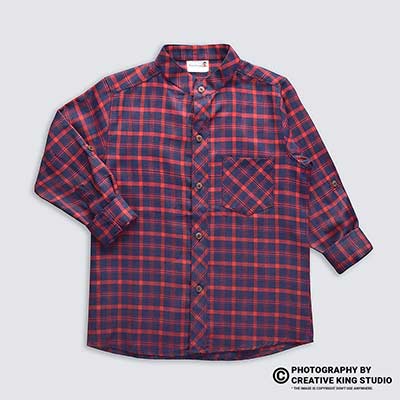
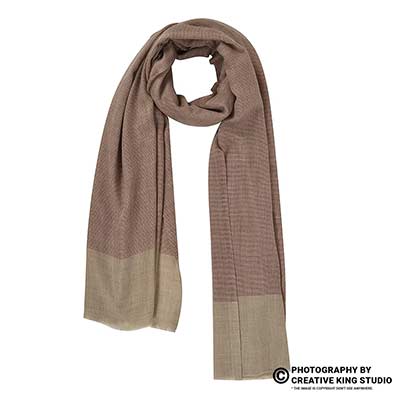
A magazine-grade blueprint from Ckstudio — Delhi NCR’s premium studio for D2C fashion brands, boutiques and marketplace sellers who want editorial imagery that actually converts.
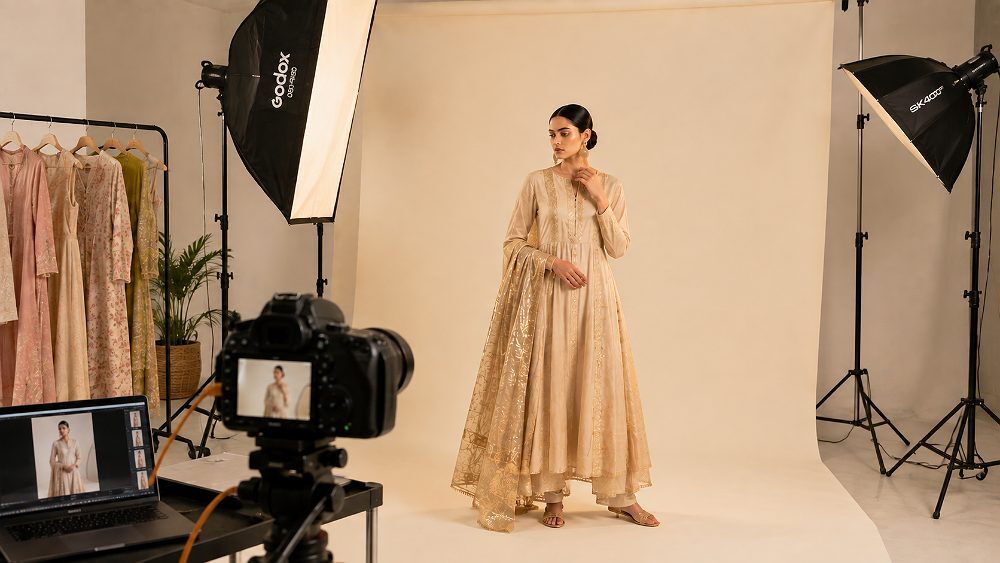
Every quarter, a new fashion brand walks into Ckstudio with the same problem — the collection is beautiful, the ecommerce site is polished, yet the add-to-cart rate refuses to climb. Nine out of ten times, the answer isn’t the product. It’s the imagery. Professional lookbook photography is the single most under-used sales asset in Indian fashion ecommerce, and this guide is Ckstudio’s complete playbook for building one that actually moves inventory.
In the next twelve minutes, Prince walks you through everything the Ckstudio team has learnt across 100+ lookbook productions for D2C labels, boutique designers and marketplace sellers — from mood boarding and model casting to shoppable image tagging and post-shoot deployment on Myntra brand pages and Shopify stores. If you sell fashion online in 2026, this is the roadmap.
Lookbook photography is an editorial, story-driven photoshoot that presents a fashion collection as a curated visual narrative rather than a catalogue of individual products. It borrows the language of magazine editorials — mood, styling, model direction, location — and applies it to a commercial goal: making a customer feel something specific about the brand before they ever click “add to cart”. For any serious fashion brand lookbook, this emotional layer is what separates a forgettable listing from a bookmarked wishlist.
At Ckstudio, the team treats every lookbook as a small campaign. There is a concept, a colour story, a casting arc and a sequencing plan — because a modern D2C label competes on identity as much as it competes on price. When customers can recognise your brand storytelling in three thumbnails on Instagram, the ecommerce conversion follows naturally. That is the entire premise of professional lookbook photography services for the Indian market in 2026.
A catalogue shoot answers “what does this product look like on white?” A lookbook answers “what kind of person wears this, and how does it make them feel?” Catalogue imagery is required by every marketplace listing — Amazon, Flipkart and Ajio all mandate clean, spec-compliant frames — while editorial lookbook photography lives on the brand’s own website, PR kits and social channels where storytelling wins the click.
The technical differences follow from the intent. A fashion catalogue photography deliverable prioritises fabric detail, colour accuracy and consistent framing across 60–200 SKUs. A lookbook prioritises mood, silhouette, movement and location — often shooting far fewer looks but investing significantly more in art direction, hair and makeup, and post-production retouching.
Indian ecommerce fashion has crossed a threshold where product photos alone no longer differentiate. Every D2C fashion lookbook now doubles as a brand identity document — it tells buyers, marketplace category managers and press what your label stands for. A well-produced digital lookbook becomes the anchor asset for the season, feeding Instagram Reels, Meta ads, Nykaa Fashion brand stores and even offline lookbook printouts for wholesale meetings.
Prince has watched boutique brands go from unnoticed to Myntra-onboarded on the back of a single professional lookbook. The math is simple: a ₹80,000 lookbook shoot that lifts your season’s conversion rate by even three percentage points pays for itself in the first fortnight — while continuing to work across every touchpoint your marketing team owns.
See how a Ckstudio lookbook can transform your brand story into shoppable, story-led imagery that lifts conversion across your website and marketplaces.
The commercial case for professional lookbook photography is straightforward — customers buy what they can picture themselves wearing. A model shot on location, styled with intent, wearing the same dress that sits flatly on a product page, changes the buying decision entirely. Every shoppable frame becomes a mini campaign that keeps working long after the launch email is sent.
Ckstudio’s ecommerce lookbook work for Delhi NCR labels has repeatedly shown a 20–35% lift in add-to-cart when brands replace stock hero images with editorial shoppable lookbook imagery on collection pages. The same effect shows up on Flipkart brand stores and Nykaa Fashion pages — story-led hero panels drive higher session duration, which the marketplace algorithm rewards with better organic visibility.
Shoppable imagery works because it collapses two mental steps into one — inspiration and decision. When a customer sees a full outfit styled convincingly, the cognitive load of imagining “how would I wear this?” disappears. Ckstudio structures every lookbook shoot around this principle, layering primary hero shots with detail crops and lifestyle scenes that keep the eye moving through the collection.
Aspiration, belonging, self-expression and occasion — these four triggers underpin nearly every successful clothing lookbook. A festive edit taps occasion, a workwear series taps belonging, a resortwear capsule taps aspiration. Great lookbook photography is essentially trigger-mapping in visual form.
Beyond feel-good numbers, professional lookbook imagery affects three specific ecommerce metrics — bounce rate on collection pages, average scroll depth, and repeat-visit rate before purchase. Cases documented in Ckstudio’s fashion photography case studies show scroll depth improvements of 40% and up when editorial lookbook panels replace generic banners on landing pages.
Prince frequently reminds brand founders that a lookbook is not a one-time expense. Deployed properly, the same shoot fuels a season’s worth of Instagram grid, email hero images, marketplace A+ content and even offline PR — which is why the ROI calculation should span the full quarter, not just launch week. For deeper reading on this, our guide on how product photography improves ecommerce conversions maps the exact touchpoints where imagery moves the needle.
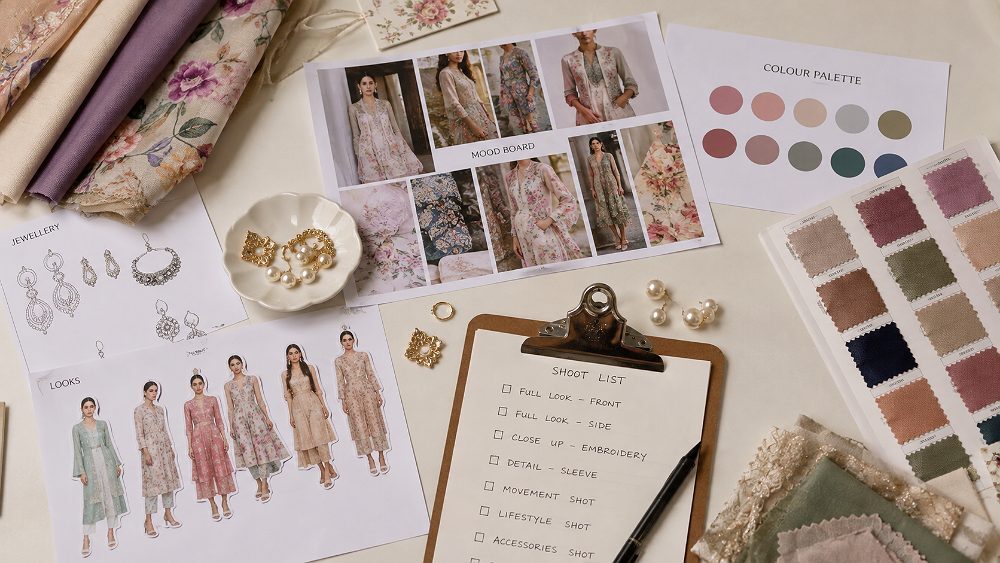
Sixty percent of a lookbook’s outcome is decided before the camera turns on. The Ckstudio team runs every fashion lookbook photography production through a structured pre-production phase — concept lock, mood board, model casting, wardrobe pull, location recce and shot list — because on shoot day, minutes are expensive. Brands that treat planning as an afterthought almost always end up with a technically good shoot that fails to tell a story.
Prince’s team schedules a mandatory 90-minute discovery call before any lookbook photoshoot to align on brand voice, seasonal narrative and deployment plan. That conversation shapes everything downstream — from which model gets cast to whether the shoot goes on Ckstudio’s in-house cyclorama or on an outdoor haveli location.
The concept is the sentence you can say out loud in one breath — “a sun-warmed monsoon capsule for the modern Delhi woman” or “menswear tailoring for the boardroom-to-bar founder”. Every subsequent decision flows from that sentence. Ckstudio builds physical and digital mood boards that pin down colour palette, styling references, model archetype and location temperature before the shot list gets touched.
A disciplined shot list breaks the day into look changes, primary and secondary angles, detail shots and lifestyle inserts. For most seasonal capsules, Ckstudio plans 8–15 looks per shoot day with 4–6 frames per look — which yields roughly 40–90 selectable images post-edit. This structure is the same one covered in our detailed fashion photoshoot preparation guide, which many first-time brands find useful before their kickoff call.
Budgets vary wildly based on number of looks, model day rate, location fees and post-production depth. A tight capsule lookbook can be delivered inside ₹40,000–₹80,000, while a full seasonal campaign with multi-location outdoor work, celebrity casting and 100+ retouched frames comfortably crosses ₹3–5 lakhs. Our detailed fashion photography cost in Delhi breakdown covers the exact line items.
For brands earlier in their journey, Prince recommends allocating 8–12% of the season’s inventory value to photography — split between catalogue shots and lookbook production. This ratio consistently produces the highest content-to-inventory efficiency in Ckstudio’s tracked D2C client set. Compare it against the numbers in our product photography pricing India 2026 reference for a full picture.
The model is the emotional face of your brand for that season. Getting model lookbook photography right is a casting exercise before it is a photography exercise — the wrong archetype can undo months of brand-building even with perfect lighting. Ckstudio maintains an active roster of vetted models across ages, body types and aesthetics, sourced through leading modeling agencies in Delhi and organic scouting.
Casting starts with the customer avatar, not the model portfolio. Ckstudio asks brands to describe their ideal customer in three sentences — age band, lifestyle, style attitude — before pulling comp cards. This upstream filter typically cuts a shortlist of forty candidates down to a workable four to six for callbacks. For menswear labels specifically, our male model photography roster covers everything from clean-shaven corporate archetypes to bearded creative-founder looks.
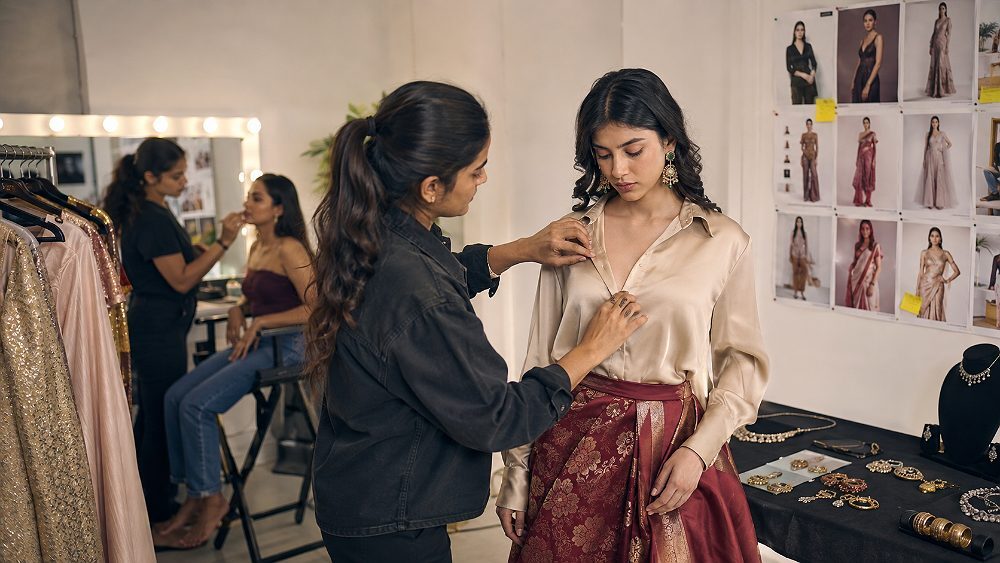
Wardrobe styling for a lookbook is not the same as dressing a mannequin — it is choreography. Which pieces get worn together, in what sequence, with what jewellery and footwear, and how the transitions read across the final image sequence, all get planned in advance. Ckstudio’s stylists routinely pull accessories that were never part of the shoot brief because the right belt or a single statement earring can lift a look from good to editorial. Cross-referencing our fashion photography trends Delhi NCR 2026 post before your styling meeting sharpens the aesthetic direction.
Hair and makeup for lookbooks should read as intentional but not distracting. Overly editorial glam dates fast; a modern fashion editorial beat runs closer to skin-forward, natural-glow makeup with clean hair architecture. On-set, the creative director and photographer share the direction load — one runs mood, the other runs technical execution.
“A lookbook is a promise your brand makes to the customer. Every frame either strengthens that promise or breaks it — there is no neutral image.”
— Prince, Founder, Ckstudio · 9+ years in fashion & ecommerce photography
The setting is a co-star, not a background. A studio shoot lets you control every variable — light, colour, texture, tempo — while a location shoot borrows the character of a place to add narrative weight. Most Ckstudio productions blend both, opening the day on the cyclorama and moving to a location in the afternoon light. The choice depends entirely on the brand’s fashion brand lookbook objective for that season.
Studio shoots suit workwear, ecommerce-first brands, marketplace-focused labels and anyone needing consistent frames across many looks. Ckstudio’s Delhi NCR facility runs a full cyclorama, controlled continuous and strobe lighting, and dedicated hair-and-makeup zones — everything a controlled lookbook photography studio environment needs to deliver 12–15 looks in a single production day.
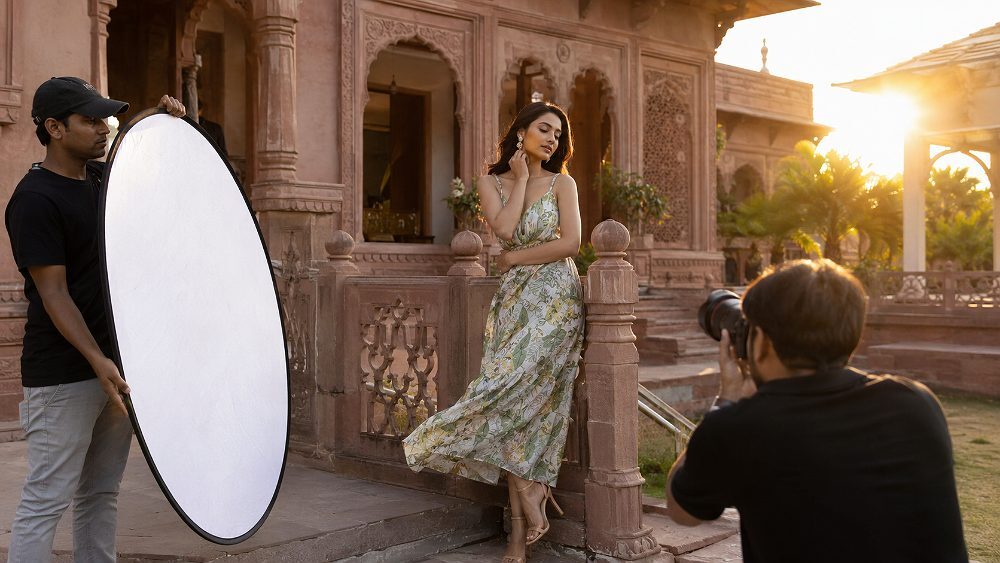
Occasion wear, resortwear, streetwear and lifestyle-heavy capsules benefit disproportionately from outdoor shoots. Sunlight, texture and location context add layers that no studio setup can replicate. The trade-off is variability — weather, permissions and light windows compress the shoot window and demand tighter shot lists.
Ckstudio’s most-requested Delhi NCR locations include the sandstone corridors of Hauz Khas Village for streetwear editorials, the modernist courtyards of Gurgaon’s cyber-hub high-rises for workwear capsules, and the film-city facades of Noida for character-driven lifestyle series. For brands scouting outside the studio, our studio vs outdoor fashion photography guide lays out the full comparison with sample outputs.
| Attribute | Lookbook Photography | Catalogue Photography | Ghost Mannequin |
|---|---|---|---|
| Primary Purpose | Brand storytelling & desire | Marketplace compliance | Website product page |
| Model Required | Yes, always | Optional | No — invisible mannequin |
| Best Location | Studio + outdoor | Studio (white/grey) | Studio only |
| Editing Style | Editorial retouching | Clean, spec-compliant | Neck-join composite |
| Ideal For | D2C brand launches | Amazon, Flipkart listings | Own website apparel |
| Typical Range (INR) | ₹40k – ₹5L | ₹200 – ₹800 / SKU | ₹300 – ₹900 / SKU |
Editorial ecommerce lookbook imagery lives or dies on light. Ckstudio’s studio setup combines four Godox SK 400II strobes with a pair of Elinchrom FRX 400 heads, shaped through strip softboxes, an octabox and a beauty dish for closer beauty and portrait beats. Every frame is captured tethered into Capture One, letting the art director approve exposure, colour and framing in real time — critical for a shoot day that spans 12+ looks.
For most womenswear and menswear lookbooks, Ckstudio deploys a large softbox as key, a strip as rim, and a reflector as fill — a classic loop-lighting foundation that flatters fabric texture and skin tone equally. Colour temperature is locked at 5500K, ISO stays at native, and the workflow mirrors what our how to choose the best fashion photographer in Delhi NCR guide walks through in detail.
Outdoor Delhi light gives roughly 90 minutes of usable golden window in the morning and again before sunset. Ckstudio’s outdoor kit swaps strobes for negative fill and large white reflectors, letting ambient light lead while adding controlled shadow direction. Backlit rim from the setting sun, combined with reflected fill on the face, produces the editorial glow that defines premium fashion editorial imagery.
Ckstudio shoots lookbooks primarily on Sony A7R V bodies for resolution headroom, paired with a Canon R10 as B-camera for behind-the-scenes reels. The lens rotation covers a 35mm for wider environmental frames, a 50mm for classic portrait beats and an 85mm for compressed hero shots — the three-lens setup that handles ninety percent of every editorial shoot Prince has ever run.
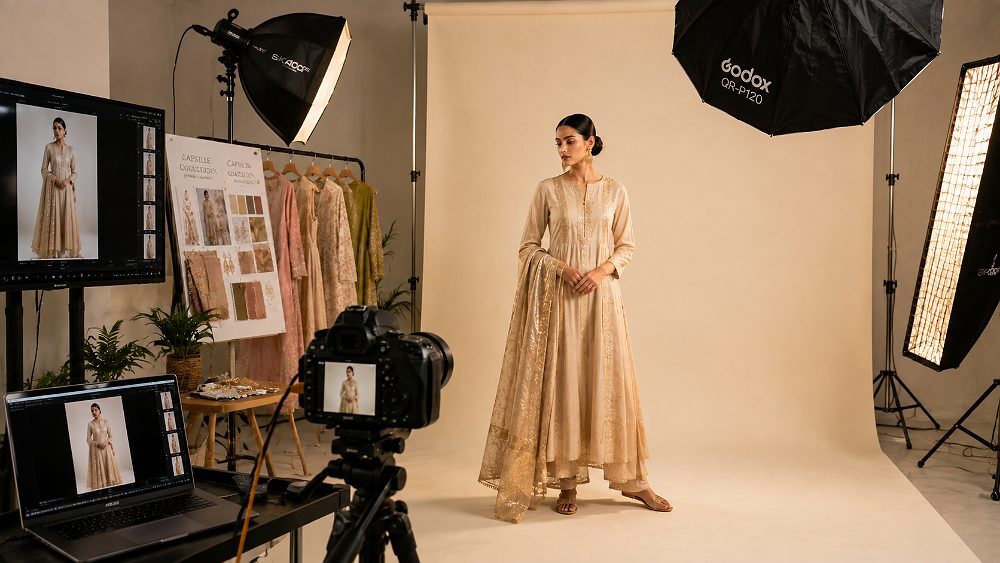
Post-production is where a shoot becomes a story. Ckstudio’s editing workflow starts with a tight selection pass — usually 60–90 frames from a 15-look day — followed by colour grading in Capture One, skin and garment retouching in Photoshop, and final export in web-optimised WebP for the digital lookbook and TIFF for print. Every image gets sequenced against the storyboard before delivery, because a lookbook read in the wrong order tells a different story.
Great sequencing follows a rhythm — a wide establishing frame, a medium editorial hero, a detail crop, a movement shot, then repeat with a beat change. Ckstudio’s art directors sequence lookbooks the way a magazine editor lays out a spread, alternating scale and energy to hold the viewer’s attention through 30–60 frames. For teams new to this, our behind the scenes of product photography deep dive shows this rhythm in real production footage.
Retouching for ecommerce is a discipline of restraint. Skin should look like skin, fabric texture should be preserved, and colour must match the physical sample under a proofing light. Ckstudio’s retouching team follows a documented QC checklist — colour accuracy, blemish cleanup, garment straightening, background continuity — before any frame moves to final export. The full workflow lives in our detailed image editing services in Delhi reference.
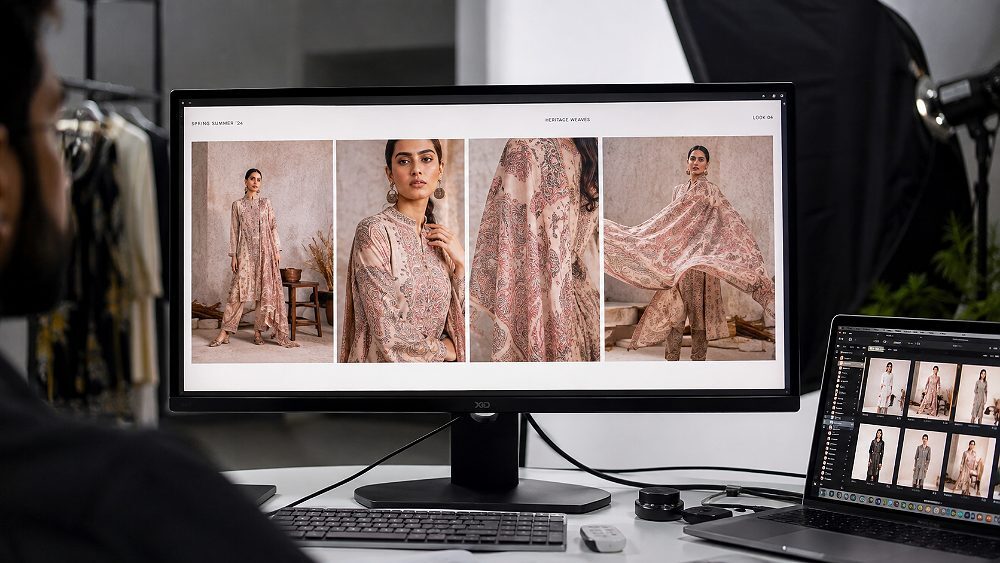
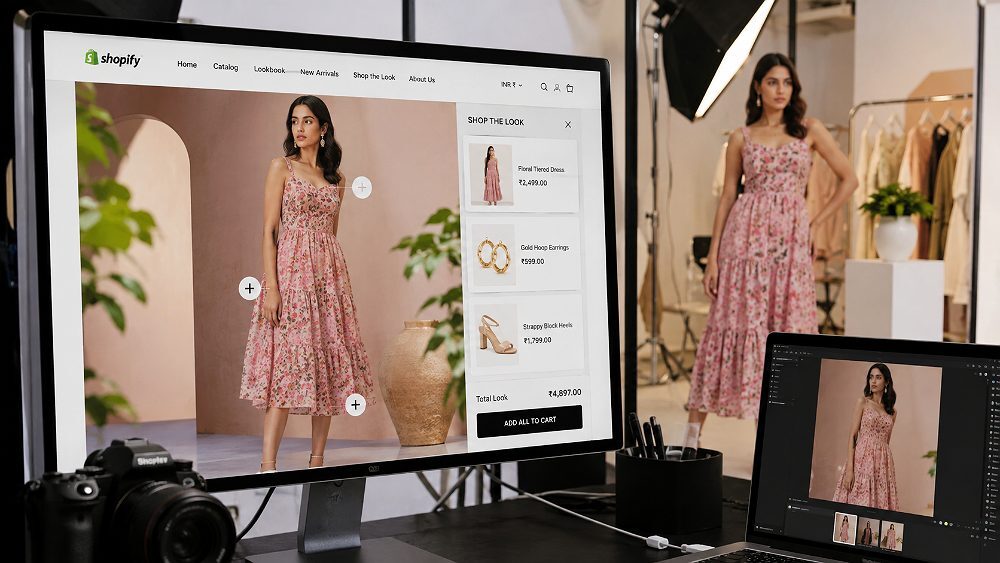
An unshoppable lookbook is a magazine. A shoppable one is a sales channel. The final and most under-appreciated stage of lookbook photography production is deployment — tagging every look with its shop link, embedding it into your ecommerce storefront and syndicating the assets across every marketplace and social touchpoint your brand owns.
Ckstudio delivers every commercial lookbook with a shot-to-SKU mapping document — a simple sheet that connects each final frame to the product IDs featured in it. This gives your Shopify or WooCommerce developer everything they need to build a shop-the-look overlay that turns a scrolling browser into a checkout. For brands still on marketplace-only strategies, our e commerce photography services page covers the tagging integration for Nykaa Fashion and Myntra as well.
PDF lookbooks still matter for press, wholesale meetings and buyer decks — they travel across email without breaking. But the interactive web lookbook is where sales happen. Ckstudio typically delivers both formats: a print-quality PDF for offline use and a web-optimised gallery for the ecommerce site. Our how to choose the best ecommerce photography company post explains why this dual delivery has become standard.
The best-performing D2C brands squeeze five different asset types out of a single lookbook shoot — the primary hero images, cropped 4:5 Instagram frames, 9:16 Reels stills, marketplace A+ content panels and email hero blocks. Ckstudio pre-crops and pre-exports each of these variants during post-production, which is the same approach detailed in our ecommerce photography workflow reference for scaling brands.
Ckstudio’s lookbook photography pricing is transparent because the industry desperately needs it. Every package is built around the same three variables — number of looks, model day rate, and post-production depth. Brands can benchmark our numbers against the wider product photography cost in Delhi landscape or the more comprehensive ecommerce photography pricing guide 2026.
Model tier is the largest single variable — a working commercial model runs ₹8,000–₹20,000 per day, while a celebrity or top-tier fashion model runs several multiples of that. Location fees, hair-and-makeup, wardrobe styling depth, retouching frame count and turnaround urgency stack on top. For brands scaling their catalogue alongside the lookbook, our scaling product photography from 50 to 500 SKUs guide is a useful companion read.
Ckstudio offers four core packages built for different stages of brand maturity. All packages are delivered with a full shot-to-SKU mapping document and dual PDF-plus-web export. Custom scopes for celebrity casting, multi-city shoots and full-campaign production are quoted separately after a discovery call.
After 100+ shoots, the same avoidable mistakes keep showing up. The first is treating a lookbook like a catalogue — shooting for volume rather than mood, and ending up with 200 forgettable frames instead of 40 memorable ones. The second is skipping model direction, letting the model default to Instagram-mirror poses that read amateur next to any competitor’s editorial work.
The third and costliest mistake is relying on AI-generated imagery to cut the shoot budget. AI models still cannot render fabric drape, real fit, brand-specific styling or authentic Indian model archetypes convincingly enough for ecommerce trust. Our detailed comparison of real photography vs AI-generated product images and the follow-up on AI ecommerce photography vs professional 2026 show frame-by-frame why customers instinctively distrust AI-rendered garments and return them at 2–3x the normal rate. Real photography of the actual product on a real model is still the only asset that converts and holds.
Ckstudio is a nine-year-old Delhi NCR studio built for one thing — imagery that sells. Prince and the team have delivered lookbook photography services for over a hundred D2C fashion brands, boutique labels and marketplace sellers across India. The studio runs a full in-house stack: casting, styling, hair and makeup, cyclorama shoot floor, tethered capture and retouching — no external hand-offs, no lost days between production and delivery.
Brands choose Ckstudio because the workflow is engineered around ecommerce outcomes rather than portfolio vanity. Every shoot is briefed for deployment — which frames go on the homepage, which on Instagram, which on Myntra brand pages, which power the email campaign. If you are ready to plan your next lookbook, WhatsApp +91-8700258773 or email [email protected] with your collection notes.
Prince and the Ckstudio team receive the same questions from D2C fashion brands every week. Here are the most useful answers, distilled from a hundred production briefings.
Lookbook photography is an editorial-style photoshoot that showcases a fashion brand’s collection through curated, story-driven imagery designed to inspire customers, communicate brand identity and drive online sales across the brand’s website, marketplace listings and social channels. Unlike catalogue shots, lookbooks focus on mood, styling and narrative.
A professional fashion lookbook shoot in Delhi NCR typically ranges from ₹40,000 to ₹5,00,000+ depending on number of looks, models, locations, styling and post-production depth. Ckstudio offers four transparent tiers — Basic, Standard, Premium and Enterprise — with fixed deliverables and timelines.
A catalogue focuses on clean, product-detail-driven images for marketplace listings, while a lookbook is editorial and story-driven — designed to build brand identity, inspire style and emotionally connect customers to a collection. Most brands need both; the catalogue makes the listing compliant, the lookbook makes the customer want it.
Most fashion lookbooks include 25 to 60 curated images depending on collection size. Shoppable digital lookbooks for D2C brands often extend to 60–100 images including detail shots, flat lays and lifestyle scenes so the same production feeds every marketing channel.
Yes — a well-shot lookbook can be repurposed for Shopify collection pages, Instagram grids, Nykaa Fashion brand stores, Myntra brand pages, email campaigns and PR kits, maximising ROI on a single production. Ckstudio pre-exports every deliverable in the right aspect ratios for each platform.
For a commercial ecommerce lookbook, yes — a professional model or an experienced brand founder-model who can direct on camera. Amateur casting shows in every frame and dilutes the brand’s premium positioning. Ckstudio maintains a vetted roster across body types, ages and aesthetics to match your brand avatar.
End-to-end, a typical Ckstudio lookbook takes 2–3 weeks — 7–10 days of pre-production (mood board, casting, wardrobe pull, location recce), one shoot day for 10–15 looks, and 5–10 days for editing, retouching and sequencing. Rush deliveries are possible with additional fees.
Absolutely. Ckstudio regularly runs combined shoot days where the same collection is captured as both editorial lookbook imagery and marketplace-compliant catalogue frames — a workflow that reduces cost per SKU while keeping brand consistency across every touchpoint.
Talk to Prince and the Ckstudio team about your collection brief, mood board and deployment plan. Delhi NCR studio, PAN-India delivery.