




Fashion Photography Services




E-commerce Photography

A practical, evidence-first workflow for fashion brands, warehouse teams and marketplace managers handling damaged or wrong returns without relying on outdated filing assumptions.
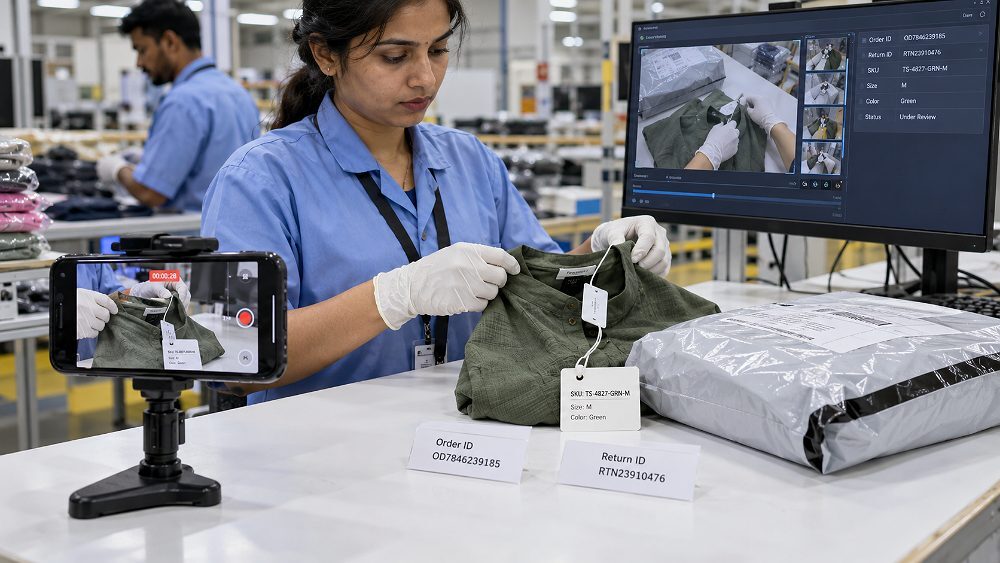
Myntra SPF Claims become operationally important when a returned parcel comes back damaged, altered, substituted or otherwise different from what the seller dispatched. For a fashion brand, the real challenge is rarely just noticing the problem; it is preserving enough Myntra claim evidence to show the return discrepancy clearly, link it to the correct order and follow the currently active Seller Protection Fund process.
This guide is built for sellers, D2C brands, ecommerce operations teams and warehouse managers who need a repeatable system for Myntra damaged returns and Myntra wrong returns. It follows the current workflow supplied for this article—Partner Portal → Services → Seller Protection Fund—while deliberately avoiding a hard-coded legacy deadline. Sellers should check the active SPF policy and the filing window shown in Partner Portal at the time of filing because operational rules can change.
It also connects return handling with the wider Myntra seller guide, so teams can place SPF work alongside eligibility, catalogue preparation, account operations and growth rather than treating every disputed return as an isolated emergency.
Myntra SPF Claims are seller-protection claims for eligible shipment or return disputes covered by the active Seller Protection Fund policy. Sellers should document the return carefully, preserve relevant packaging and identifiers, and submit eligible cases through the SPF section of Myntra Partner Portal using the evidence required for that specific claim scenario.
The strongest intent behind this topic combines Myntra SPF Claims, damaged return evidence, wrong return evidence, VMS and Tag Loop compliance, and claim-rejection prevention. That means the article separates damaged and wrong-return scenarios, gives warehouse teams copyable checklists, makes the Partner Portal route explicit, and distinguishes policy-dependent SPF rules from practical evidence habits that sellers can standardise every day.
Myntra SPF Claims sit within the seller-protection process for eligible shipment and return discrepancies. The Seller Protection Fund is relevant when a normal customer return becomes a seller-side dispute—for example, the merchandise comes back damaged, used, stained, materially altered, substituted with another item, or mismatched against the original SKU. A routine return and a disputed return are not the same operational event: the second requires evidence, reconciliation and policy checks.
A strong Myntra return claim process starts with traceability. The warehouse should be able to connect the physical parcel with the order ID, return ID, SKU, style code, size or variant, product condition and return-delivery details. Where the active policy requires them, VMS, Tag Loop, security seal, serialized poly bag, bag ID, gate pass or proof of delivery records can become part of that evidence chain.
Potential claim scenarios can include Myntra damaged returns, used or stained merchandise, missing components, completely different products, another seller’s merchandise, or the seller’s own brand returned with the wrong SKU, colour or size. These examples describe return discrepancies that may need investigation; they do not mean every case automatically qualifies. Eligibility depends on the active Myntra seller protection fund terms and the claim reason available to that seller.
The person raising a claim should verify the current seller or fulfilment eligibility, applicable reason, filing deadline, required documentation and any VMS or Tag Loop controls shown in Partner Portal. Teams that are still building their selling setup can also review the Myntra seller eligibility guide, seller registration workflow and brand setup process before scaling marketplace operations.
For operational teams, the best Myntra SPF process is a repeatable receiving routine. The objective is to collect evidence before packaging is discarded or the returned item is mixed with normal inventory. Use the following sequence as a warehouse SOP, then compare it with the active Myntra Partner Portal SPF instructions before filing.
Check outer packaging, serialized packaging or seals where applicable, parcel condition, return identifiers and visible tampering. Keep the package intact until the initial evidence is captured. If the parcel itself is damaged at receipt, photograph that condition before opening.
Capture a continuous unpacking video where required by your process or the active policy. Show the package identity, opening sequence, returned product, label, SKU or tag, and the defect or discrepancy. An edited clip can weaken traceability, so preserve the original evidence file.
Compare order ID, Return ID, SKU or style code, brand, size, colour, variant and tag details. Catalogue teams can reduce reconciliation mistakes by maintaining consistent SKU attributes and size information; the Myntra catalogue prep guide covers that upstream discipline.
Create one evidence record containing identifiers, product photos, packaging photos, unpacking video, dispatch-side VMS reference, Tag Loop or security proof, bag or gate-pass details and POD where applicable. This keeps the Myntra claim evidence linked to one return discrepancy.
For Myntra SPF Claims, use the active route supplied for this guide: Partner Portal → Services → Seller Protection Fund. Do not default to an outdated generic support-ticket method when the SPF section is available. The official Myntra Partner portal is the place to check current seller-facing instructions and access.
Policy versions and operational requirements can change. Before submitting, confirm the active filing window, evidence rules, claim reason and any mandatory controls displayed in the portal. Then archive the submitted evidence and claim outcome for future return reconciliation.

A Myntra damaged product claim should document what came back, how it differed from dispatch condition and which identifiers connect the returned merchandise to the order. Damage may appear as tearing, breakage, stains, signs of use, missing components, alteration or another material change. The purpose of the evidence is not to label every defect SPF-eligible; it is to preserve a clear record so the team can check the active policy and file the right claim reason where eligible.
Photographs should be sharp enough to show product condition without hiding context. Start with a complete product image, then move closer to the defect, labels and identifiers. If a damage mark is small, add a close-up rather than cropping away the whole garment. For teams also managing listing-image quality, the Myntra QC rejection checklist is useful for separating catalogue-image problems from return-evidence problems.
For Myntra return claim video evidence, show the package identity, package condition, opening sequence, full product reveal, visible discrepancy and product identifiers in a continuous and understandable flow where required. Keep the original recording. If the active policy or your operating model calls for VMS evidence, link the return record back to the dispatch-side Video Management System record rather than relying only on a post-return clip.
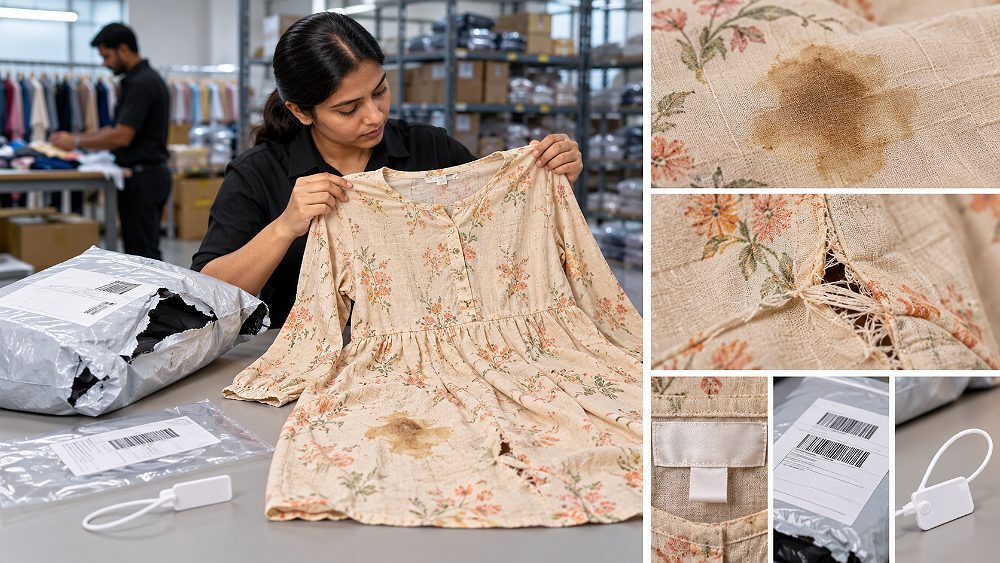
OrderID_ReturnID_Date_EvidenceTypeExample: ORDER123_RETURN456_2026-09-26_DAMAGE-PHOTO-01. A consistent naming rule lets larger teams retrieve evidence quickly during a seller return dispute.
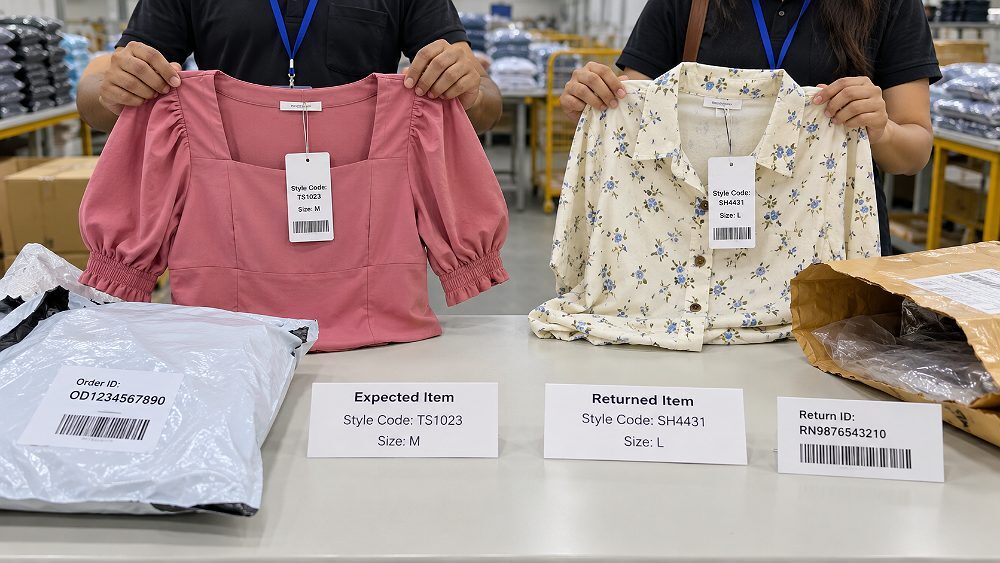
Myntra wrong returns need a different proof story from physical damage. The central question is identity: did the seller receive the same product, SKU, size, colour and variant that was dispatched? When the answer is no, preserve both the returned item and the identifiers that show the mismatch.
Photograph the returned product in full, then record its brand name, label, SKU or style information, packaging, Return ID and order ID. Where possible, keep a clear reference to the originally shipped item so the mismatch can be understood without guessing. Do not discard the wrong merchandise or packaging until the claim process and internal reconciliation are complete.
A wrong SKU can be less visually obvious than a completely different product. Document the original SKU and the received SKU, style code, colour, size, tags and other product identifiers. Side-by-side evidence is helpful where available. A consistent catalogue naming system and accurate product images make this comparison easier, especially when many similar styles are handled in one warehouse.
The differentiating strength in many Myntra SPF Claims is not the quantity of files but the continuity between dispatch and return. VMS, Tag Loop controls, serialized packaging and receiving evidence can help a seller show product identity, packing condition and the point at which a discrepancy became visible. Exactly which records are mandatory remains policy-dependent, so teams should follow the active Myntra requirements for their operating model.
A Video Management System can support dispatch-side traceability by recording the product identity, condition and packing process before the parcel leaves the seller. When the returned item is damaged or substituted, the team can compare return evidence with the relevant dispatch record. The goal is a consistent evidence chain, not simply storing hours of unrelated footage.
Tag Loop and security controls can help identify whether the returned product corresponds with the item that was sent. Teams should scan, record and preserve the identifiers in the manner required by current Myntra policy. Missing or incorrect Tag Loop evidence can create a gap in seller protection where the applicable process expects that control.
Keep packaging long enough to record package identity, seal condition, visible tampering and any serialized poly bag details. Where relevant, note proof of delivery, return-delivery date, bag ID and gate pass information. These records are part of Myntra return evidence because they help reconstruct the handoff around the returned merchandise.

For sellers integrating larger catalogue or inventory systems, Myntra’s official Developer Centre describes tools for inventory, orders, returns and reconciliation. It is not a replacement for the active SPF policy, but it is a useful official reference for understanding the wider seller-operations environment.
Treat Myntra SPF evidence as a structured record rather than a loose folder of images. The exact requirements vary by claim scenario, but the following matrix shows what an operations team should be prepared to capture and why each item matters.
| Evidence | Damaged Return | Wrong Return | Purpose | When to Capture |
|---|---|---|---|---|
| Order ID | Yes | Yes | Links evidence to the sale | At receiving |
| Return ID | Yes | Yes | Links parcel to return event | Before opening |
| SKU/style code | Yes | Essential | Confirms product identity | During item check |
| Full product photo | Yes | Yes | Shows complete returned item | Immediately after opening |
| Damage close-up | Essential | If relevant | Shows defect clearly | Before handling further |
| Brand/label photo | Useful | Essential | Supports identity comparison | During item check |
| Packaging photo | Yes | Yes | Shows parcel and seal condition | Before disposal |
| Unpacking evidence | Where required | Where required | Preserves opening sequence | At parcel opening |
| Dispatch/VMS evidence | Where applicable | Where applicable | Shows dispatch-side condition | Retrieve during reconciliation |
| Tag Loop/security evidence | Where applicable | Where applicable | Supports security traceability | Dispatch and return check |
| Bag/Gate Pass details | Where relevant | Where relevant | Supports logistics trail | At return receipt |
| POD | Where relevant | Where relevant | Supports delivery trail | During claim prep |
| Return delivery date/details | Yes | Yes | Supports timing and reconciliation | At receipt |
A return file becomes easier to audit when everyone uses the same terminology: Return to Seller (RTS), RTO, Partner Portal, VMS or Video Management System, Tag Loop, security seal, product condition, warehouse inspection, packaging video, unpacking video, product images, SKU, return ID, order ID, bag ID, gate pass, proof of delivery (POD), serialized poly bag, return discrepancy, damaged merchandise, wrong merchandise, seller reimbursement, possible marketplace return fraud indicators and return reconciliation. Standard labels reduce confusion when multiple teams touch the same case.
When a Myntra SPF claim is rejected, the issue may be policy eligibility, timing or evidence quality. Sellers cannot control every decision, but they can remove avoidable operational gaps. The table below turns common failure points into preventative actions.
| Mistake | Why It Creates a Problem | Recommended Fix |
|---|---|---|
| Filing after the active claim window | The case may be outside the applicable policy period. | Check the current Partner Portal filing window before submission. |
| Using the wrong claim route | Evidence can be sent through an outdated or irrelevant workflow. | Use Services → Seller Protection Fund when that active route applies. |
| Missing VMS evidence | Dispatch-side traceability may be incomplete where VMS is required. | Link the return file to the relevant VMS record. |
| Missing or incorrect Tag Loop evidence | Security identity cannot be reconciled where that control is required. | Record the correct Tag Loop/security identifier at dispatch and return. |
| Poor-quality damage photographs | The defect or context may be unclear. | Capture full-item and close-up evidence with identifiers. |
| Missing Order ID or Return ID | Files cannot be reliably tied to the case. | Put both IDs in the folder name and evidence record. |
| Product label/SKU not visible | Identity comparison becomes ambiguous. | Photograph labels, style code, size and SKU clearly. |
| Discarding packaging too early | Seal condition or tampering evidence is lost. | Retain packaging until documentation is complete. |
| Edited or incomplete video evidence | The opening sequence may lose continuity. | Preserve the original continuous file where required. |
| Not recording parcel damage at receipt | Later photos may not show when the damage was first visible. | Document the parcel before opening. |
| Wrong claim reason selected | The case may be assessed against the wrong criteria. | Match the discrepancy to the active portal reason. |
| Evidence files not organised | Important proof can be missed during filing. | Use a consistent folder and naming SOP. |
The highest-leverage change is to make evidence capture part of receiving, not an afterthought. Assign responsibility for parcel photography, unpacking capture, SKU verification and evidence storage. If a problem is noticed after the item is mixed back into stock, the team may have to reconstruct what happened from incomplete records. The Myntra growth and returns guide can be used alongside this SOP when return handling becomes a scaling issue.
For image-related operational errors, teams can also use the Myntra photography guidelines as the catalogue-side reference, while keeping SPF evidence capture as a separate returns workflow.
A consistent Myntra seller return protection routine should be simple enough for a receiving team to follow every time. The following 14-point SOP converts return management into a repeatable control system.
Sellers building a wider operations stack may also find the Myntra seller fees guide useful for reconciliation planning, while the Myntra sales growth guide helps connect operational hygiene with listing and commercial performance.
Clear product documentation can make return reconciliation faster because the team has a reliable reference for colour, design, construction, labels and SKU identity. Professional catalogue imagery is not proof of an SPF case by itself, but consistent Myntra product photography gives warehouse and marketplace teams an accurate visual baseline when the returned merchandise is visibly different from the product that was listed and dispatched.
For fashion sellers, the Myntra clothing photoshoot guide and model photography workflow show how product identity and presentation can stay consistent before the order ever reaches return handling.
Ckstudio positions Myntra product photography and ecommerce product photography as supporting product documentation, not as a substitute for active SPF evidence requirements. Accurate fashion product photography, colour consistency and visible garment details can help teams compare returned merchandise with catalogue-quality reference material.

For a practical look at how apparel can be documented under controlled commercial lighting for marketplace use, this approved production example shows a male T-shirt video created for marketplace listings including Myntra. It complements the article’s product-documentation section rather than replacing return-unpacking or SPF evidence.
Ckstudio works with fashion and ecommerce sellers on catalogue-quality product and model photography. For a project discussion, call Prince on +91-8700258773, WhatsApp +91-8700258773 or email [email protected].
Before closing any disputed return, confirm that your Myntra return management record is complete. The checklist below is intentionally practical so a warehouse lead can use it as the final gate before a claim is filed or archived.
For broader seller operations, continue through the Myntra marketplace seller hub. It can connect this SPF workflow with onboarding, catalogue readiness, fees, growth and the rest of the seller journey.