
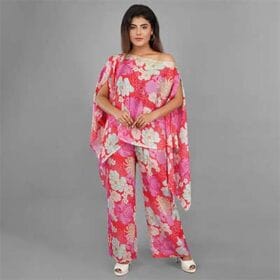
Fashion Photography Services
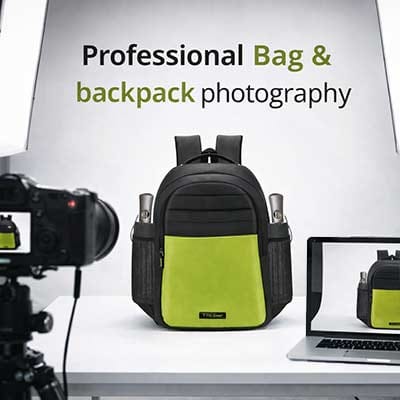

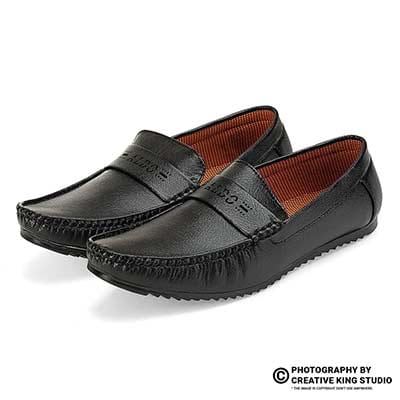
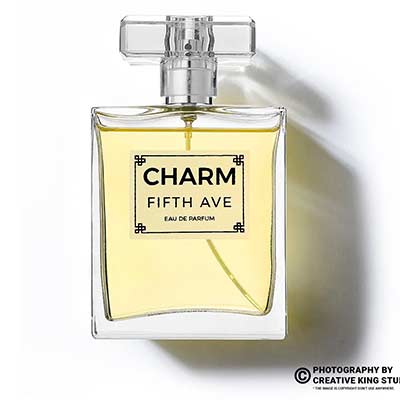
E-commerce Photography
A practical pre-registration guide for Indian fashion, footwear and accessories brands assessing official documents, category fit, catalogue quality and operational readiness before Myntra onboarding.
Check the official prerequisites first, then test your brand, catalogue and operations against the readiness framework below.

Myntra Seller Eligibility is not simply a question of having products and a GST number. A brand should separate the platform’s publicly stated onboarding documents from the broader question of whether its product assortment, catalogue, inventory and marketplace operations are genuinely ready. This guide is designed for D2C founders, apparel manufacturers, boutique owners and ecommerce teams making that decision before registration.
For the wider seller journey, use the complete Myntra seller guide as the next-stage hub. If your immediate concern is visual production, the Myntra product photography service explains the catalogue-production side in more detail.
Myntra Seller Eligibility means having the business, tax, banking and brand-ownership or authorisation prerequisites needed to enter Myntra’s onboarding process, plus products that fit the marketplace. It does not guarantee final brand approval. Brand readiness additionally covers assortment, catalogue compliance, inventory, fulfilment, returns and operating capability.
Myntra seller eligibility is best understood as the set of prerequisites that allow a business to move into marketplace onboarding, while Myntra brand approval is the platform’s own review outcome. The two should not be treated as synonyms. An ecommerce seller can have complete documentation and still need to satisfy marketplace selection, catalogue and operational expectations.
Myntra describes itself as a fashion, beauty and lifestyle destination, so product-category compatibility and brand positioning matter. Its current Partner information also says brands should have a sizeable catalogue width, quality products and a unique value proposition; it does not publish a universal fixed SKU minimum on the page reviewed for this article. A new D2C brand should therefore prepare evidence of clear positioning and a coherent product assortment rather than chase an unsupported numerical threshold.
The practical sell on Myntra eligibility review has four layers: business and tax documentation, brand ownership or authorisation, product/category readiness, and catalogue/listing readiness. Use the checklist below before starting the Myntra seller registration process.
Prepare the seller identity, tax and banking records requested through current onboarding. The official list includes PAN, a GSTN/GST certificate, a cancelled cheque and an authorised signatory signature copy. Use the official GST portal to verify GSTIN information rather than relying on third-party summaries.
Myntra’s current Partner FAQ lists an original trademark certificate or a brand authorisation letter / NOC on the brand owner’s letterhead. If your IP process is still at the trademark application stage, do not assume that alone replaces the stated onboarding document; confirm the latest position through the official portal and use IP India for trademark records.
A strong Myntra marketplace fit starts with a clear category, consistent product assortment, commercially sensible pricing and enough depth to present a meaningful collection. Fashion ecommerce teams should know the target customer, price band, key differentiators and variant strategy before application. For fashion products, merchandising coherence matters more than simply accumulating random SKUs.
Myntra’s Partner information says cataloguing requires brand-tag details, accurate sizing information and article images that meet current specifications. Build the product catalogue so each product listing has consistent imagery, reliable colour, complete size information, clean product attributes and disciplined SKU naming. The Myntra catalogue-prep guide can be used alongside this readiness review.

As checked in September 2026, the official Myntra Partner Portal lists the following onboarding documents. Requirements and processes can change, so treat this table as a preparation aid and verify the live portal before submitting a Myntra seller application.
| Requirement | Purpose | Status | Action Needed |
|---|---|---|---|
| PAN Card | Business/tax identity | Officially listed | Keep a clear current copy ready |
| GSTN / GST Certificate | GST registration details | Officially listed | Confirm GSTIN matches seller records |
| Cancelled Cheque | Bank-account verification | Officially listed | Use the seller entity’s banking details |
| Authorised Signatory Signature Copy | Authorised seller representation | Officially listed | Prepare the current authorised signatory copy |
| Original Trademark Certificate | Brand ownership evidence | Officially listed | Prepare the brand document requested |
| Brand Authorisation Letter / NOC | Authority to sell another owner’s brand | Officially listed alternative | Use when applicable and confirm current format |
The document pack is only one part of Myntra seller registration requirements. If you are still organising brand setup, the Myntra brand setup and approval guide provides a useful next-stage reference.

Myntra marketplace fit is a commercial decision, not an official approval score. A brand may have the paperwork to apply yet still need work on positioning, margins, catalogue consistency or marketplace operations. The scorecard below is therefore labelled as a Ckstudio Brand-Readiness Scorecard, not a Myntra scoring system.
| Readiness Factor | Strong Fit | Needs Improvement | Action |
|---|---|---|---|
| Fashion/lifestyle positioning | Defined proposition and customer | Broad or unclear positioning | Clarify brand positioning |
| Product assortment | Coherent collection and variants | Random or shallow SKUs | Build assortment logic |
| Pricing & margins | Marketplace economics modelled | No margin planning | Review fees, discounts and contribution margin |
| Professional catalogue | Consistent imagery and data | Inconsistent product photography | Audit catalogue photography |
| Size & product data | Complete and accurate | Missing size information | Standardise attributes and size charts |
| Inventory planning | Replenishment process defined | Frequent stock uncertainty | Create inventory ownership |
| Marketplace operations | Owner/process assigned | No dedicated workflow | Define listing, fulfilment and returns SOPs |
| Brand documents | Trademark/authorisation ready | Incomplete evidence | Close document gaps first |
Myntra’s public Partner pages position the platform around fashion, lifestyle, beauty and related categories. That makes category relevance an important part of Myntra Seller Eligibility research, but no category should be treated as guaranteed acceptance. Confirm current category availability before onboarding.
| Category | Marketplace Relevance | Catalogue Priority | Preparation Focus |
|---|---|---|---|
| Men’s Apparel | Strong fashion relevance | High | Fit, size, styling, imagery |
| Women’s Apparel | Strong fashion relevance | High | Styling, detail, colour accuracy |
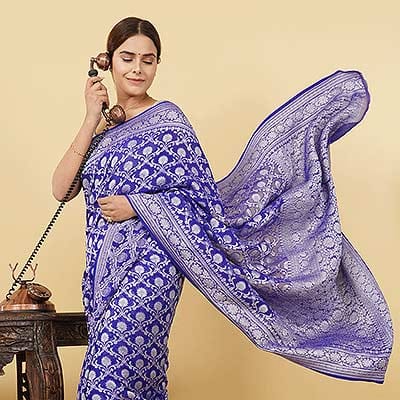
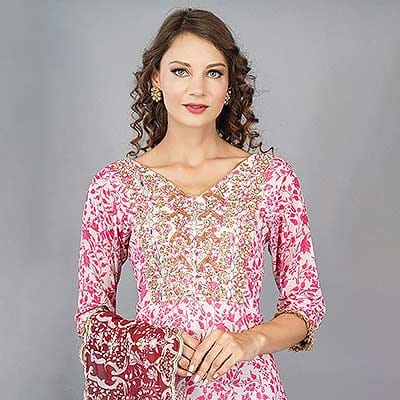
| Ethnic Wear | Strong fashion relevance | High | Fabric, drape and detail presentation |
| Footwear | Strong fashion relevance | High | Side, top, heel and outsole coverage |
| Fashion Accessories | Relevant | High | Scale, hardware, texture and detail |
| Jewellery | Relevant lifestyle category | High | Macro detail and controlled reflections |
| Beauty & Personal Care | Relevant where accepted | High | Packaging, label and data compliance |
| Lifestyle Products | Category dependent | Verify first | Confirm current category availability |
For production planning, category-specific services such as garment photoshoot production, footwear photography and jewellery photography help translate the product category into the right catalogue shot list.

This framework turns Myntra brand readiness into six practical checks. It is not an official marketplace scoring model; it is a preparation framework based on ecommerce catalogue production, fashion merchandising and launch workflow.
Define the target customer, price band, visual identity and competitive proposition. A fashion marketplace works better when shoppers can quickly understand who the collection is for and why it is different.
Organise PAN, GST certificate, banking details, authorised signatory records and trademark or brand-authorisation evidence. Keep entity names consistent across documents before marketplace onboarding.
Map category, variants, price ladders and hero products. A strong product assortment should look intentional, not like unrelated SKUs grouped only to increase catalogue width.
Prepare product photography, SKU naming, accurate colour, size information and complete product attributes. Every product listing should be traceable back to the physical sample and inventory record.
Assign ownership for inventory, fulfilment, pricing updates, returns, listing issues and customer-service workflows. Marketplace operations need a process that continues after the launch date.
Plan replenishment, new launches and repeat catalogue photography. If 50 SKUs become 100 or 300, the ecommerce readiness system should preserve file naming, styling and catalogue compliance rather than restart from scratch.
Brands preparing a larger launch can also review the 50-to-500 SKU product photography scaling guide to structure production capacity before assortment expands.
Myntra may be worth deeper evaluation when your D2C brand has a defined fashion or lifestyle customer, organised documentation and the operational capacity to maintain marketplace standards. These are practical fit indicators, not guarantees of Myntra fashion brand approval.
Registration should not be the starting line if core readiness areas are still unstable. Fixing gaps first can reduce rework during catalogue production and seller onboarding.
If visual consistency is a major gap, compare the current catalogue with the Myntra photography guidelines and the Myntra QC rejection image-error checklist before booking a bulk reshoot.
A fashion-focused online marketplace can support brand discovery, but the channel also adds operating requirements. Evaluate the potential advantages against the practical work your team must sustain.
| Potential Advantage | Practical Consideration | Brand Preparation Needed |
|---|---|---|
| Fashion-focused shopper environment | Presentation quality carries high importance | Consistent catalogue and merchandising |
| Brand discovery opportunity | Strong marketplace competition | Differentiated product and positioning |
| Established ecommerce ecosystem | Marketplace-specific operations | Dedicated owner and SOPs |
| Large catalogue environment | Products must be easy to compare | Accurate attributes, sizing and imagery |
| Fashion/lifestyle positioning | Discounts, pricing and margins need control | Commercial model and fee awareness |
| Growth tools and promotional options | Ongoing inventory and campaign work | Replenishment and growth planning |
The Myntra growth, ads, returns and scaling guide is useful once the eligibility decision moves into channel operations. If your brand is comparing marketplaces rather than committing to one, the Amazon photography services guide and Flipkart product photography guide provide adjacent visual-commerce context.
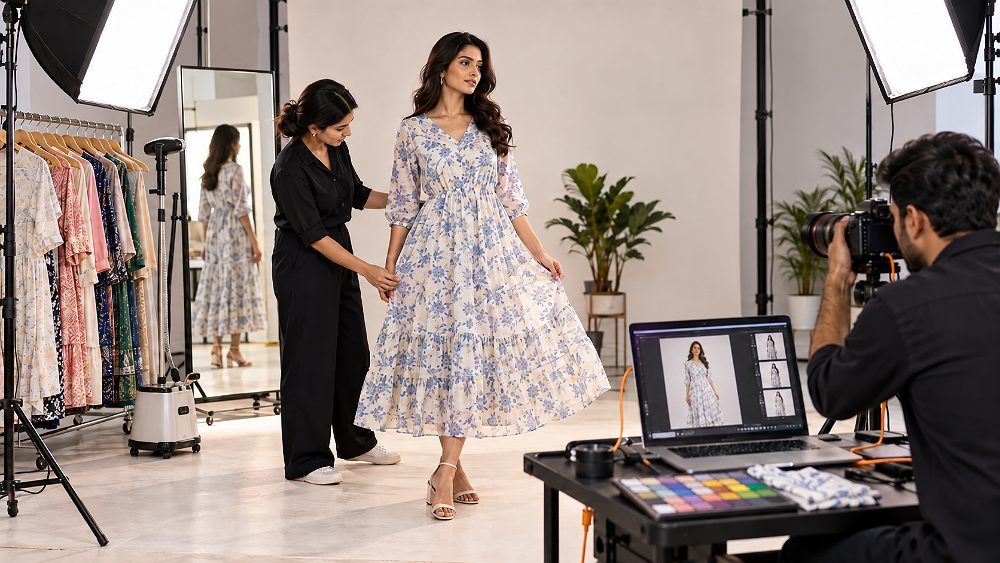
Myntra catalogue requirements sit at the intersection of product data and visual presentation. Marketplace readiness is not only paperwork: fashion buying depends on accurate colour, texture, fit, construction and category-appropriate views. The product catalogue should therefore be organised at SKU level before a launch deadline compresses production time.
From Ckstudio’s catalogue-production perspective, brands often spend weeks on marketplace registration and leave product imagery, SKU organisation and colour consistency until the final stage. For an apparel brand preparing 50–100 SKUs, an earlier asset map makes it easier to group similar garments, plan model versus product-only shots, keep file names aligned with variants and catch missing images before upload. That reduces avoidable launch-stage rework.
Use real, professionally photographed merchandise as the core reference when accurate product representation matters. AI-generated visuals can be useful for ideation, but they can change garment construction, colour or fit. The real photography vs AI-generated product images guide explains the trade-off in more detail.
For clothing-specific planning, see the Myntra clothing photoshoot guide and the Myntra model photography workflow. If you need a category-wide shoot, ecommerce product photography and fashion photography provide the broader production options.
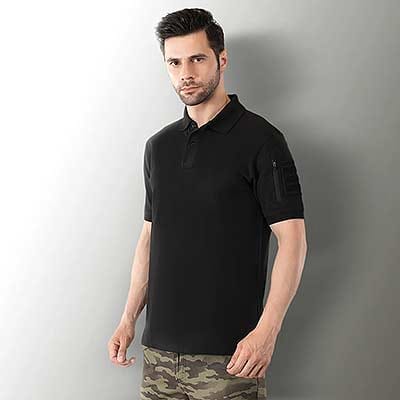
For a practical visual example, this approved Ckstudio video shows a male T-shirt commercial created for marketplace use, demonstrating how apparel can be presented with model-led movement and clear product visibility.

Myntra seller eligibility refers to the prerequisites needed to begin the onboarding process, while brand readiness refers to whether products, catalogue, inventory and operations are prepared to work effectively on the marketplace.
| Area | Seller Eligibility | Brand Readiness |
|---|---|---|
| Business | Required seller information | Clear commercial ownership |
| Documentation | Tax, bank and brand documents | Organised, consistent records |
| Products | Category compatibility | Strong positioning and assortment |
| Catalogue | Inputs needed for listing/cataloguing | Consistent images, data and compliance |
| Inventory | Not an eligibility score by itself | Replenishment and stock planning |
| Operations | Enables onboarding workflow | Supports fulfilment, returns and maintenance |
Use this seven-point decision sequence after the basic Myntra Seller Eligibility check. It keeps the decision grounded in current requirements and practical operating capacity.
If documents are missing: organise documentation first.
If products or catalogue are weak: improve positioning and assets before onboarding.
If operations are weak: build inventory, fulfilment and returns processes.
If the major areas are ready: proceed to the live Myntra Partner information and registration workflow.
This behind-the-scenes marketplace video shows a controlled sunglasses shoot for Amazon, Flipkart, Myntra and Meesho. It is relevant to accessories brands assessing whether their team can consistently produce product-detail media at marketplace scale.
Ckstudio helps apparel, footwear and accessories brands in Delhi build consistent ecommerce catalogue photography for marketplace launches. For shoot planning, compare the Myntra model photoshoot shot-list guide and Myntra photoshoot charges guide before finalising scope.
These answers separate current public onboarding information from practical readiness advice. Always verify process changes on Myntra’s official Partner Portal.
Businesses considering Myntra should prepare the required business, tax, banking and brand-ownership or authorisation documents and offer products suitable for the marketplace. Final onboarding or brand approval remains subject to Myntra’s current review and selection process.
Myntra’s current Partner information lists PAN Card, GSTN Certificate, Cancelled Cheque, Authorised Signatory Signature Copy and an Original Trademark Certificate or Brand Authorisation Letter/NOC. Sellers should confirm the live portal before applying because onboarding requirements can change.
Brand size alone should not be treated as a guaranteed approval or rejection rule. New brands should focus on complete documents, clear positioning, suitable products, professional catalogue assets and the operational capability to manage an online marketplace.
Myntra’s current Partner FAQ lists an Original Trademark Certificate or, where relevant, an Authorisation Letter/NOC on the brand owner’s letterhead among the documents required to start selling. Confirm the latest documentation format before submission.
Assess category fit, customer positioning, product assortment, pricing, documentation, catalogue quality, inventory and marketplace operations. A brand that is strong across these areas is better prepared to evaluate Myntra as a sales channel, but readiness is not an approval guarantee.
Use the complete Myntra seller guide for registration, catalogue preparation and marketplace operations. For visual production, the Myntra catalogue model photography workflow and fashion model casting and styling guide can help your team brief a shoot.
If the eligibility and readiness checks are largely complete, the next job is execution: consistent product photography, clean SKU mapping and a catalogue that your ecommerce team can manage at scale. Prince can help scope a marketplace-ready shoot for apparel, footwear or accessories.