Fashion Photography Services

E-commerce Photography
A practical decision guide for Indian sellers comparing cost, speed, product fidelity, marketplace risk, model imagery, video and large-catalogue economics.

AI Flipkart photography is becoming a practical option for sellers trying to scale ecommerce catalogue production, but the safest decision is rarely “AI for everything” or “studio for everything.” The real commercial choice is how to balance product accuracy, speed, budget and listing risk across different SKUs. Sellers who already invest in Flipkart product photography can often use accurate masters as the foundation for controlled AI variations instead of asking generative AI to invent the product from scratch.
This guide uses a Product Fidelity + Marketplace Risk + SKU Economics lens. That topic analysis matters because AI ecommerce photography can lower production friction for high-volume catalogues, yet a visual mismatch in colour, construction, garment fit or product proportions can increase return-risk and weaken buyer trust. Ckstudio therefore treats AI as a production tool around the product—not as permission to redefine what the buyer will receive.
AI Flipkart photography is generally better for speed, catalogue scalability and creative variations. A real photoshoot is stronger for exact colour, texture, fit, reflective surfaces and physical product fidelity. For many established Flipkart sellers, a hybrid workflow is the best overall choice: capture an accurate real master, use AI selectively, then complete human-in-the-loop review before publishing.
Useful for background replacement, lifestyle imagery, virtual models, catalogue automation and controlled creative production when the source product is already trustworthy.
Best when colour accuracy, fabric texture, construction, reflective materials, packaging text, dimensions or product detail images influence the purchase decision.
Real master capture + product retouching + controlled image generation workflow + catalogue QC gives many sellers the strongest balance of speed and accuracy.
No universal winner exists because the correct method changes with the SKU. A simple home accessory with a strong reference image may be AI-friendly, while premium jewellery or shade-sensitive cosmetics may remain real-first. Sellers planning a broader marketplace workflow can compare this decision with Ckstudio’s AI Amazon photography vs studio photography guide and the dedicated Flipkart product photography guide for 2026–27.
| Factor | AI Photography | Real Photoshoot | Recommended Winner |
|---|---|---|---|
| Cost at scale | Low friction after approved masters | Higher recurring production inputs | AI / Hybrid |
| Production speed | Fast for variants and backgrounds | Depends on logistics, sets and reshoots | AI |
| Product fidelity | Depends on reference quality and QC | Direct physical capture | Real |
| Colour accuracy | Can drift during generation | Controllable with colour management | Real |
| Texture accuracy | May simplify or invent detail | Records genuine surface detail | Real |
| Model availability | Virtual models and synthetic models scale quickly | Casting and scheduling required | AI |
| Catalogue consistency | Strong with locked templates | Strong with disciplined studio setup | Hybrid |
| Marketplace risk | Higher if AI changes the SKU | Lower when accurately photographed | Real |
| Product video | Can support concepts, not every physical demonstration | Shows authentic movement and function | Real / Hybrid |
| Bulk SKU production | Excellent after master standardisation | Operationally heavier | Hybrid |
AI Flipkart photography is the use of generative AI or AI-assisted editing to create, adapt or scale product imagery intended for a Flipkart ecommerce catalogue. It can include background replacement, virtual lifestyle scenes, AI model generation, digital product models, controlled retouching, visual variations and secondary campaign assets. The safest version starts from a verified photograph of the real product so product representation remains anchored to physical truth.
AI-assisted photography keeps a real product source image as the visual foundation. The workflow may change context, model, crop or background while preserving the approved SKU. Fully synthetic generation asks generative AI to recreate some or all of the product, which raises a greater risk of AI hallucination—such as invented seams, changed buttons, altered logos or inaccurate packaging. For marketplace listing quality, a product-reference-led image generation workflow is usually the lower-risk route.
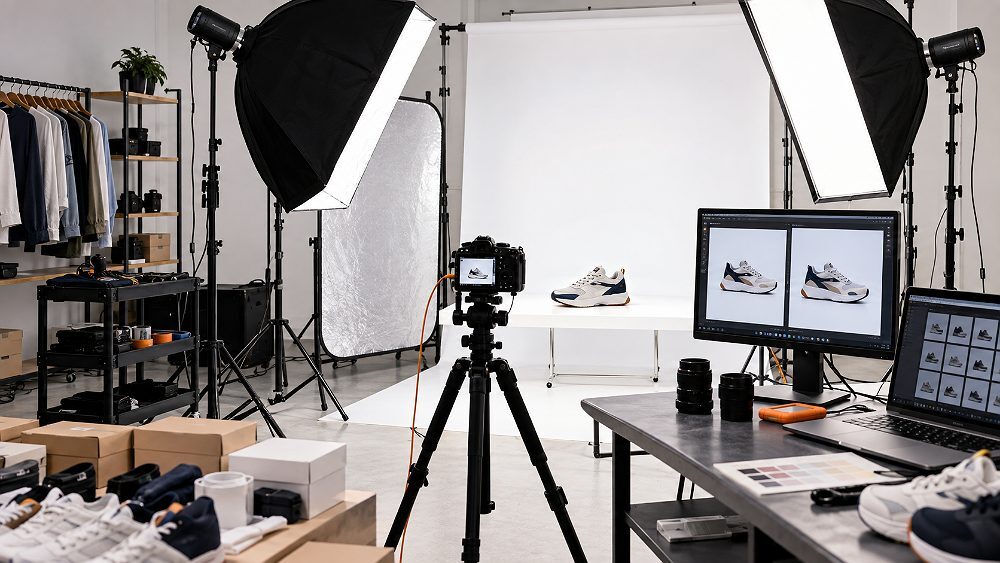
That distinction is important for brands that already use structured ecommerce photography services. A real master can support white background photography, product retouching and later creative variations without forcing AI to guess the product. For Amazon sellers evaluating similar workflows, the Amazon photography services guide explains how platform-ready assets fit into a wider production plan.
The useful comparison is not just price per image. AI Flipkart photography cost in India depends on source-image quality, number of variants, human revision time, retouching, AI generation cycles and catalogue QC. Real Flipkart product photography cost includes studio time, product logistics, model fees where relevant, product styling, lighting, capture, image retouching, reshoots and marketplace-ready exports.
| Cost Factor | AI | Real | Hybrid |
|---|---|---|---|
| Studio capture | May be reduced if masters exist | Required for each physical SKU/set | Required for approved masters |
| Models | Virtual models can reduce repeat casting | Real casting, usage and schedule costs | Real hero fit + AI variants where safe |
| Logistics | Lower for later variations | Products must reach the studio | One master-capture cycle |
| Retouching | Generation still needs review | Standard image retouching | Master retouch + variation QC |
| Revisions | Can expand if visual mismatch repeats | Reshoot if capture is wrong | Use the cheaper fix by issue type |
| High-volume SKU cost | Can fall sharply after standardisation | More linear with shoot volume | Best balance for repeatable catalogues |
| Human QC | Essential | Essential | Essential |
AI product photography is strongest economically when approved source photography already exists. Background replacement, lifestyle imagery, model variations and creative testing can then be produced without rebuilding every physical set. Large sellers using bulk photography can also standardise crops and compositions, making catalogue automation practical across hundreds of SKUs while a human reviewer protects catalogue consistency.
A real photoshoot can become cheaper when AI needs repeated correction. Reflective objects, transparent products, complex jewellery, detailed embroidery, cosmetics with purchase-critical shades and products with intricate construction may consume many revision cycles. When corrections keep chasing shape, texture or colour, direct professional product photography often reaches an accurate answer faster. For a local benchmark, see the current Flipkart photoshoot charges guide.

Sharpness alone is not product quality. Ckstudio evaluates AI Flipkart photography against a five-layer product fidelity test: shape, colour, texture, construction and scale. An AI product image can look polished yet still fail if product proportions shift, a fabric texture becomes smoother than reality, or a small hardware detail changes. Product accuracy must be judged against the physical SKU, not against how convincing the image looks on screen.
Colour accuracy becomes critical for apparel, cosmetics, furniture finishes and metallic products. Real capture allows controlled studio lighting, calibrated colour management and reference cards. AI can introduce colour drift during image generation, especially when a new scene changes ambient light. A strong workflow locks the approved product colour before creative production begins and rejects variants that create a misleading visual mismatch.
Fabric weave, stitching, embroidery, print placement, jewellery settings, shoe outsole patterns, labels and packaging typography are frequent failure points. These details directly affect product fidelity and buyer expectations. High-resolution product detail images created from real capture remain particularly valuable when the customer needs to inspect construction. Sellers can also reduce returns by pairing accurate imagery with the practices in Ckstudio’s guide to reducing returns with better product images.
AI hallucination is not limited to obvious fantasy details. It can add a pocket, remove a button, reshape a neckline, change a jewellery stone, invent a zipper pull, alter packaging text or smooth away important texture. If the AI output changes what the customer will physically receive, the image has failed the product-fidelity test. That rule should govern every human-in-the-loop review.
There is no responsible basis for claiming one permanent image specification applies to every Flipkart category. Official Flipkart Commerce Cloud catalogue documentation describes image validations such as format, resolution, aspect ratio and minimum image count as vertical-aware controls, while QC can include image guideline checks. Sellers should therefore verify the live requirement shown in their current Flipkart Seller Hub or catalogue workflow before upload.
For AI Flipkart photography, marketplace compliance is less about whether a tool was used and more about whether the final product representation is accurate, complete and appropriate for the category. Primary image requirements and secondary marketing assets can serve different purposes. Sellers should also keep the official Flipkart seller portal available when checking current onboarding and seller resources rather than relying on an old universal checklist.
AI model photography can create model diversity, faster campaign variations and new backgrounds without repeated casting. Virtual models and synthetic models are particularly useful for approved secondary creative assets. But AI fashion photography becomes higher-risk when garment fit, sleeve length, neckline, hem, transparency, pleats or pattern alignment influence the sale. The digital model must not force the garment to behave differently from the physical product.
Garment drape is a physical interaction between fabric, gravity, body shape and styling. AI may make a dress appear more structured, change the fall of a soft fabric or move embroidery to create a cleaner visual. Real model photography keeps these interactions observable. For fit-sensitive apparel, accurate reference photography should remain the truth source before AI model generation. Ckstudio’s garment photoshoot and model photoshoot services are relevant when construction and fit must be demonstrated authentically.
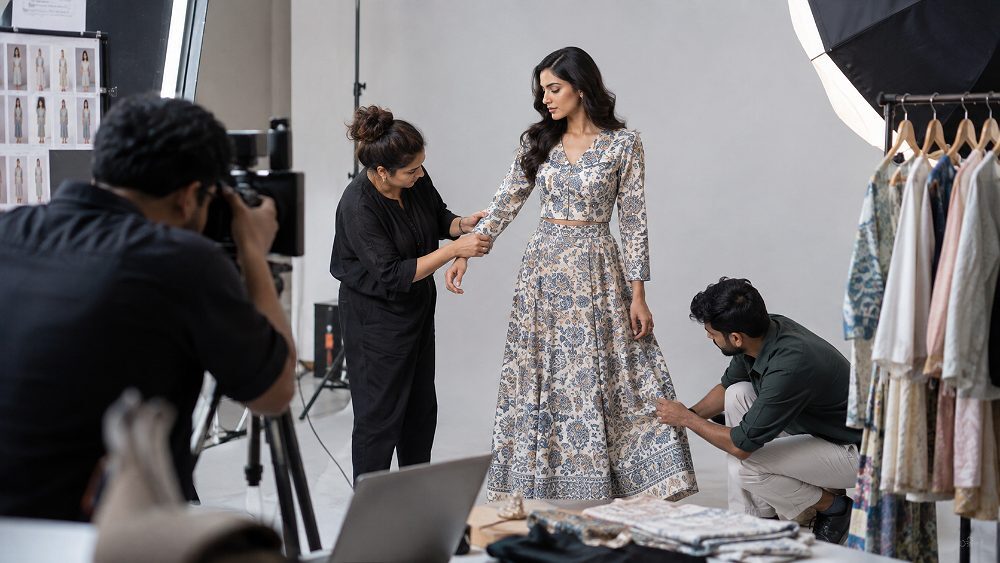
AI Flipkart photography works best when product truth is already secured and the remaining task is controlled scale. That can mean new scenes, secondary listing images, creative testing or catalogue expansion. The highest-value AI use cases are operational rather than magical: they reduce repetitive production work without weakening the approved SKU.
For a 500- or 1,000-SKU ecommerce catalogue, repeated background setups and creative variants can become the bottleneck. AI catalogue photography can help after standardised SKU photography creates reliable masters. With fixed crop rules, locked colour references and human QC, large catalogue sellers can gain speed without sacrificing catalogue consistency.
AI ecommerce photography is well suited to controlled lifestyle imagery, background replacement and campaign variations. These assets can support brand storytelling after the primary product truth is established. The strongest use is usually secondary creative production rather than letting AI reinvent the hero product. This is also where Flipkart A+ content planning can benefit from richer scene variety.
Once a product master is approved, teams can test multiple compositions, props and backgrounds without rebuilding physical sets. This supports conversion imagery for ads, D2C pages and social campaigns. The important boundary is simple: experimentation can change the scene, but it should not change product identity, construction or promised features.
Real Flipkart product photography remains the safer option when exact physical details are purchase-critical or AI corrections become unpredictable. Reflective surfaces, transparent materials, miniature components, colour-sensitive shades and complex construction can all make direct capture more efficient. Professional product photography also gives the team a defensible master reference for later AI work.
Macro photography and controlled highlights reveal stone settings, metal finish and surface condition. For detailed pieces, jewellery photography is usually real-first because tiny changes are easy for AI to invent.
Shade accuracy, cap geometry, label legibility and packaging typography are difficult to approximate safely. Real capture with colour management supports accurate ecommerce product photography. See beauty and cosmetic photography for category-specific production.
Real models show authentic garment interaction and scale. Hybrid AI fashion photography can follow, but fit-sensitive hero images should come from reliable physical reference.
Technical products, textured accessories and items with multiple small parts are strong candidates for real capture because a single invented component can create a misleading listing.

Category complexity changes the decision. The table below treats AI suitability as a production recommendation, not as a permanent Flipkart policy statement.
| Product Category | AI Suitability | Real Shoot Need | Recommended Workflow |
|---|---|---|---|
| Basic apparel | High for secondary variations | Master fit reference recommended | Hybrid |
| Premium fashion | Medium | High | Real / Hybrid |
| Jewellery | Low for primary truth | Very high | Real-first |
| Footwear | Medium | High for sole and material detail | Hybrid |
| Bags | Medium-high | Needed for compartments and hardware | Hybrid |
| Beauty & cosmetics | Medium | Very high for shade-critical products | Real-first |
| Home furnishing | High for scenes | Needed for texture and scale | Hybrid |
| Furniture | High for room staging | Needed for material and dimensions | Hybrid |
| Electronics | Medium | High for ports, controls and screens | Real / Hybrid |
| Packaged products | Medium-high | Needed for label truth | Hybrid |
| Industrial products | Medium | High for technical geometry | Real-first |
This article’s topic analysis comes down to one decision system: product fidelity, marketplace risk and SKU economics. Ckstudio calls the operational version the FIDELITY Framework. It is designed to stop teams from choosing AI because it looks modern or choosing a studio because it feels traditional. The right method is the one that preserves product truth at an economical production scale.
Choose AI when source images are strong, product geometry is simple, high SKU count creates repetitive work, multiple controlled variations are required and human QC is available. This is where AI product photography, AI catalogue photography and bulk ecommerce photography can create measurable operational efficiency.
Choose real photography when colour is purchase-critical, fine physical details matter, garment fit changes buying decisions, the product is reflective or transparent, or AI revisions become unpredictable. Real studio capture remains the strongest reference for product identity and accurate product representation.
For many established sellers, hybrid is the strongest scalable workflow: photograph the real product accurately, retouch the approved master, create controlled AI variations, compare each result against the SKU, then prepare marketplace-ready exports. This pattern also aligns with Ckstudio’s broader discussion of Amazon product photography workflows where accurate masters support multiple downstream listing assets.
Sellers building a wider marketplace asset system can also compare the recommendations with the Amazon product photography guide, while teams testing marketplace content formats can review the Amazon A+ guide and the Amazon product video guide. These comparisons help keep one product-truth standard across channels.
Flipkart A+ content is where AI-assisted creative production can add more value because the objective expands from primary catalogue truth to explanation and brand storytelling. Approved product assets can be placed into lifestyle scenes, feature-focused compositions and campaign variations while the core SKU remains visually accurate. The rule is to separate catalogue truth from creative storytelling so the listing never confuses a generated environment with a changed product.
For planning rich content modules, use the Flipkart A+ content guide. Brands operating across marketplaces can also compare the structure with the Amazon A+ content guide for 2026, especially when reusing approved product masters across different merchandising systems.
Static AI product images and Flipkart product video solve different buyer questions. Images can compare details quickly; video can demonstrate movement, dimensions, garment fall, opening mechanisms and functionality. For products where motion or scale matters, product video production should complement rather than be replaced by static AI imagery. Ckstudio’s video production services cover this physical demonstration layer.
For a wider marketplace perspective, the Amazon product video guide explains what motion assets can communicate that a still image cannot. The same production logic applies when a seller is deciding whether a Flipkart listing needs only product photos or a richer product-media set.
This behind-the-scenes sunglasses shoot shows the physical studio workflow, controlled lighting and product handling that can create accurate source assets before any AI-assisted scaling.
The best hybrid AI product photography workflow is deliberately boring: it creates a trustworthy master, controls each transformation and checks the result. That discipline matters more than the AI model itself.
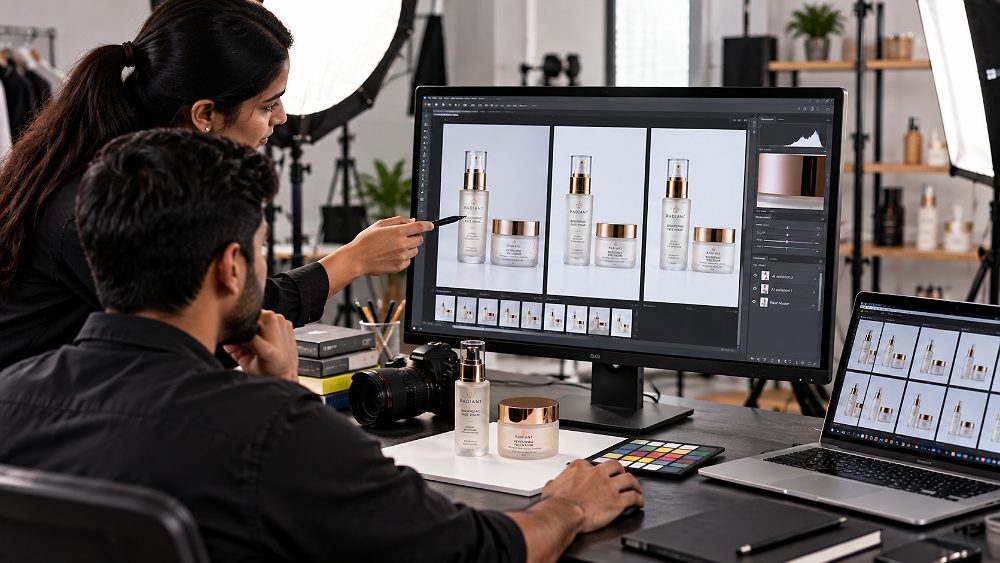
These ranges are a recommended package architecture, not universal market prices. Final pricing depends on SKU quantity, product complexity, source-image quality, styling, number of final assets, model requirements, retouching and product video needs.
| Plan | Best For | Production Approach | Suggested Starting Range | CTA |
|---|---|---|---|---|
| Basic | Small sellers / simple SKUs | Real source + basic AI background/catalogue processing | ₹99–₹199 per final image | Get a sample |
| Standard | D2C and growing catalogues | AI-assisted product + model/lifestyle variants + human QC | ₹199–₹499 per final image | Request quote |
| Premium | Fashion and brand-led catalogues | Real master + AI creative variations + advanced retouching + exports | ₹499–₹1,499+ per SKU | Plan your shoot |
| Enterprise | 500–10,000+ SKUs | Custom AI + real production pipeline, batch QC and catalogue management | Custom volume quotation | Talk to Ckstudio |
Do not make “AI vs photography” the primary decision. Make product truth vs production efficiency the decision. Real photography should establish accurate product truth. AI should then scale controlled backgrounds, lifestyle variations, creative testing and selected model assets. Human QC should remain the final checkpoint before marketplace publishing.
This approach is especially useful for teams that also sell on Amazon or build multi-marketplace catalogues. The Amazon photography services guide and AI vs studio photography comparison for Amazon can help teams build one master-asset philosophy instead of separate, inconsistent image pipelines.
At Ckstudio, we would first compare the AI output with the physical SKU, not with another generated image. We would check colour, texture, shape, product construction, model fit, branding, SKU consistency and final marketplace exports. The practical test is whether a buyer could inspect the image and form an expectation that the delivered product can actually meet.
Imagine a fashion catalogue containing 300 SKUs. Photographing accurate master assets first and using AI only for controlled secondary variations can save production time without allowing AI to redefine the garment. Prince’s studio experience is most useful at this boundary: deciding which details must be physically captured, which edits are safe, and which variations should be rejected before they become listing assets.
Ckstudio can help separate real-shoot requirements from AI-friendly production tasks for fashion, jewellery, beauty, accessories and high-SKU catalogues.
AI-assisted imagery may be usable when the final image accurately represents the product and meets the current requirements for the relevant Flipkart category. Sellers should verify live Seller Hub specifications before uploading AI-produced assets. The key risks are misleading product representation, inaccurate colour or detail, and category-specific format requirements.
AI Flipkart photography can reduce production cost for large catalogues, background variations and repeated creative assets. However, products requiring extensive corrections may be more economical and accurate to photograph traditionally. The right comparison includes revision time, source photography, human QC and return-risk—not just the first per-image quote.
Not for every product. AI product photography can replace or accelerate selected catalogue tasks, but real photography remains valuable when exact colour, texture, dimensions, construction, fit or reflective materials must be reproduced accurately. Hybrid production is usually safer for complex or high-value SKUs.
AI model photography can work for controlled fashion applications, but garment fit, garment drape, pattern placement and construction must be checked against the real product. For fit-sensitive hero imagery, a real-model reference remains the stronger truth source.
A hybrid workflow is often strongest: create accurate real product masters, use AI for selected variations and scaling, then complete human quality control before marketplace-ready exports. This structure supports bulk photography and catalogue automation without giving up product fidelity.
AI can assist storyboards, backgrounds and selected motion concepts, but a real product video remains more trustworthy when buyers need to see genuine movement, dimensions, opening mechanisms, garment fall or function. Static AI images and product video should be treated as complementary assets.
For most serious sellers, AI Flipkart photography should not replace the product truth layer. Use real photography to establish the SKU accurately, then use AI selectively for scale, background variations, lifestyle scenes and controlled campaign production. Before publishing, compare every asset against the real product and the current Flipkart requirements.
To plan that workflow with a team that understands capture, retouching, ecommerce catalogue production and marketplace delivery, use Ckstudio’s Flipkart photography services. You can also call +91-8700258773, message +91-8700258773 on WhatsApp, or email [email protected].
Next step: read the complete Flipkart seller guide 2026.