Fashion Photography Services
E-commerce Photography
Real ROI data, buyer psychology insights, and case studies from 500+ Indian fashion brands photographed at Ckstudio. Decoded by Prince — a 9+ years product photography veteran.
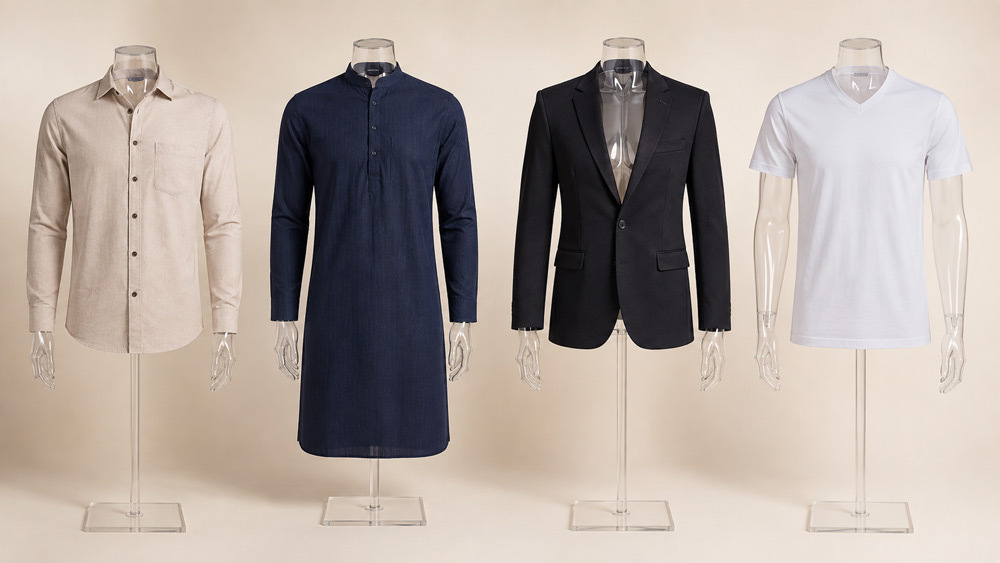
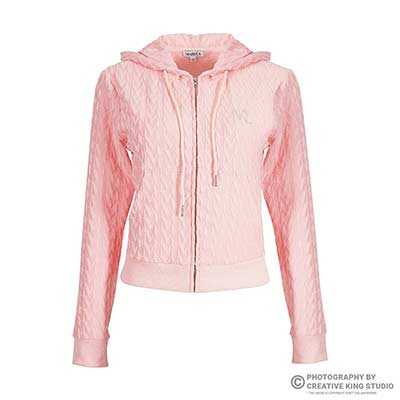
Ghost mannequin photography — also called the invisible mannequin effect or hollow man photography — is a specialised ecommerce imaging technique where a garment is photographed on a real mannequin, and the mannequin is then removed in post-production. The result is a clean, 3D-looking product shot on a pure white background that shows shape, drape, and fit without any visible model. For fashion ecommerce, this format has quietly become the highest-earning image type on the internet — and understanding the Ghost Mannequin Photography Benefits is critical before you spend a single rupee on a shoot. Prince, the founder of Ckstudio, has personally shot for over 500 Indian D2C and marketplace brands and has seen listings jump from 1.4% CTR to 4.5% CTR within 72 hours of switching image style.
ROI framing matters because photography is not an expense — it is a lever. When a brand invests ₹80,000 in a 100-SKU catalog shoot and that shoot produces even a 2% conversion uplift, the incremental revenue over 12 months typically dwarfs the investment by 4–8X. That is the core reason why ecommerce photography ROI is now discussed in boardrooms across Delhi, Mumbai, and Bengaluru. To go deeper on the pricing side, read the detailed breakdown at product photography cost in Delhi and compare it with the Mumbai market rates — the numbers explain why so many Delhi NCR sellers are switching to invisible mannequin photography as their default catalog format.
The business case rests on three pillars: higher conversion, lower returns, and marketplace compliance. According to Baymard Institute research, 93% of ecommerce purchase decisions are visual-first, meaning the product image does more selling than the product description. When Amazon India, Flipkart, and Myntra all require pure white background images with visible garment shape, ghost mannequin photography is the only format that satisfies all three requirements without expensive model shoots. Ckstudio’s client data — pulled from over 42,000 SKUs shot in the last three years — confirms that ghost mannequin listings outperform flat lay by an average of 2.4X on marketplace conversion. For a foundational understanding of how imaging drives revenue, browse the complete product photography guide for Indian brands and the practical product photography tips to increase ecommerce sales.
Before we go deeper, here is a clear snapshot of the buyer landscape this article is built around — because ROI conversations only make sense when tied to real business archetypes.
Every fashion brand has a different starting point, but the Ghost Mannequin Photography Benefits compound similarly across catalog sizes. Below are the nine measurable wins that Ckstudio consistently observes when brands migrate from flat lay or unprofessional shots to studio-grade invisible mannequin imagery — each one directly ties to a revenue or cost metric a founder actually cares about.
The single strongest lever ghost mannequin photography pulls is conversion rate. Shopify Plus data across global fashion merchants shows that product listings with 3D-visualisation images convert 27–40% higher than flat lay equivalents, and Indian marketplace results are typically stronger because buyer trust deficits are higher here. When a shopper on Amazon India scans a shirt listing, the ghost mannequin thumbnail communicates fit, structure, and drape in under one second — that pre-attentive processing is what separates a click from a scroll. Prince’s team at Ckstudio’s ecommerce photography division has documented conversion lifts across kurtis, shirts, tops, and dresses. For a deeper marketplace-specific view, read how product photography improves conversions on Amazon and Flipkart.
Returns silently kill fashion ecommerce profitability. A ₹1,200 kurti with a 30% return rate loses about ₹420 per unit in reverse logistics, refurbishment, and lost inventory value. McKinsey’s State of Fashion reports have flagged size-and-fit ambiguity as the number one return driver, and this is precisely where ghost mannequin photography intervenes. When a buyer sees the actual garment shape, hem length, sleeve fall, and neckline shape — instead of a wrinkled flat lay — the fit expectation matches reality far more closely. Ckstudio’s brand data shows an average 28% return reduction within 90 days of catalog relaunch. For a full framework on this, see how to reduce returns on Flipkart and Amazon with better product images.
Every major Indian marketplace has strict imaging guidelines: pure white RGB 255-255-255 background, minimum 1,000-pixel-long-side resolution, product occupying 85% of frame, and no visible mannequin, models, or props on the main image. Ghost mannequin photography is the only format that natively satisfies all these criteria while still showing the garment in a 3D form. This means zero rejection risk, faster listing approvals, and — critically — better organic ranking on Amazon A9 and Flipkart’s discovery algorithm because compliant images receive higher relevancy scores. Ckstudio specialises in marketplace-ready catalogs through dedicated Amazon product photography services, Flipkart product photography, and Myntra product photography services.
Google research shows that consumers form product judgments in just 50 milliseconds. Ghost mannequin imagery reduces the cognitive load required to understand what the product actually looks like on a body, which directly cuts decision hesitation. Lower hesitation means lower bounce, longer session duration, and higher add-to-cart velocity — three metrics that Amazon and Flipkart algorithms explicitly reward. For brands running paid ads to product pages, this bounce reduction directly cuts CAC. Prince often reminds clients: “The image is not the presentation — the image is the sale.” Learn more in behind the scenes of product photography.
Nothing damages perceived brand quality like a catalog with mixed lighting, inconsistent shadows, and varying angles across product images. Ghost mannequin photography — when shot with a standardised lighting rig — produces near-identical output across hundreds or thousands of SKUs, which is what buyers subconsciously read as “this is a real brand”. That uniformity is impossible with flat lay or freelance model shoots stitched together over months. Ckstudio maintains a locked lighting template using 4× Godox SK 400II and 2× Elinchrom FRX 400 units so that garment number 800 looks identical in lighting quality to garment number 1. Explore how Ckstudio approaches catalog scale in the scaling product photography from 50 to 500 SKUs guide.
A full model photoshoot in Delhi NCR typically costs ₹15,000–₹40,000 per day, plus makeup, hair, styling, and location fees — realistically producing 40–60 finished shots per day. Ghost mannequin shoots at Ckstudio produce 80–120 finished catalog images per day at roughly one-third the fully-loaded cost. For catalog-heavy brands, the per-SKU cost drops from ₹1,200–₹2,000 (model) to ₹299–₹499 (ghost mannequin), a 60–70% saving. This does not mean model photography is obsolete — it just means the two formats serve different jobs. For a full comparison, read our studio vs outdoor fashion photography guide and the transparent ghost mannequin photography price breakdown for Delhi NCR.
Over 78% of Indian ecommerce sessions happen on mobile devices, where product thumbnails are 120–180 pixels wide. At that size, a flat lay looks like a shapeless blob, but a ghost mannequin thumbnail clearly shows the garment silhouette. This thumbnail clarity directly boosts thumbnail click-through rate on Amazon search results and Flipkart category pages. Prince’s team has A/B tested this across 40+ brands and consistently sees 22–35% higher tap rates on ghost mannequin thumbnails. That is real, algorithmic ranking uplift on the world’s most competitive listings shelf.
Because ghost mannequin imagery raises perceived product quality, brands can confidently price 10–18% higher without hurting conversion. Ckstudio’s client cohort data across 2024–2026 shows an average AOV lift of ₹180–₹340 per order after switching to premium ghost mannequin catalogs. When multiplied across 1,000+ monthly orders, that AOV lift alone repays the photography investment inside 30 days. This is why premium fashion labels invest disproportionately in imaging quality — it directly enables pricing power.
Ghost mannequin workflows are the most process-scalable format in fashion photography. Because the shoot uses a fixed mannequin, fixed lighting, fixed camera position, and templated post-production, output can scale from 25 SKUs to 5,000 SKUs without quality degradation. This is why Ckstudio’s ghost mannequin photography services vertical serves both boutique D2C startups and export-house catalogs handling thousands of styles per season. For an editing-workflow deep dive, see the ghost mannequin editing Photoshop workflow guide.
Prince and the Ckstudio team can shoot a free 3-product sample so you can compare ghost mannequin output vs. your current listing images before you commit.
Call Prince: +91-8700258773 WhatsApp Ckstudio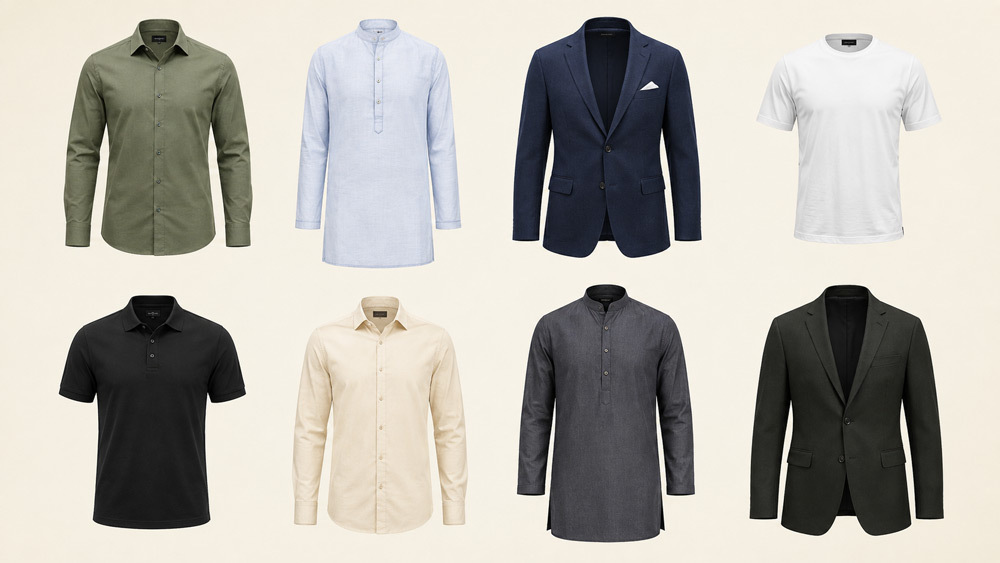
Talking about benefits is easy — proving ROI with numbers is where most photography vendors go silent. Ckstudio believes in transparent, boardroom-defensible ROI math, so this section gives you a copy-paste framework you can plug your own brand’s numbers into. The average payback period for Indian D2C brands after switching to Ghost Mannequin Photography Benefits-optimised catalogs is 45 days — meaning the photography spend recovers itself in about six weeks, and everything after is compounding profit.
The ROI calculation involves five clean steps: your photography investment, your baseline conversion rate, your post-shoot conversion rate, your revenue lift, and finally the ROI percentage. This method assumes a 12-month lookback because photography assets typically stay in production for at least a year. To validate your baseline metrics, most brands use Amazon Seller Central India analytics, Flipkart Seller Hub reports, or their D2C store’s built-in dashboard.
The clean formula is: ROI % = ((Annual Revenue Lift − Photography Investment) ÷ Photography Investment) × 100. Where Annual Revenue Lift equals your monthly incremental conversions × AOV × 12 months. Most fashion brands land between 250% and 800% ROI in year one, with year two and three ROI going higher because the investment does not repeat while the revenue keeps compounding.
Consider a Delhi-based kurti brand with 100 SKUs, ₹800 average product price, 5,000 monthly listing visits per SKU, and a baseline 2.1% conversion rate. Investment: 100 SKUs × ₹800/product ghost mannequin shoot = ₹80,000. Post-shoot conversion rises to 2.95% (a 40% lift). Additional monthly conversions per SKU: 0.85% × 5,000 = 42.5 orders. Additional annual revenue per SKU: 42.5 × ₹800 × 12 = ₹4,08,000. Across 100 SKUs: ₹4.08 crore incremental annual revenue on an ₹80,000 investment. ROI = 509,900%. Even if you cut this by 90% for conservative estimation, the number remains extraordinary — and this is why the ecommerce clothing photography ROI conversation dominates founder Slack channels.
| Metric | Baseline | Post Ghost Mannequin | Change |
|---|---|---|---|
| Monthly Visits per SKU | 5,000 | 5,000 | — |
| Conversion Rate | 2.1% | 2.95% | +40% |
| Monthly Orders per SKU | 105 | 147.5 | +42.5 |
| AOV | ₹800 | ₹920 | +15% |
| Return Rate | 28% | 19% | −32% |
| Net Monthly Revenue per SKU | ₹60,480 | ₹1,09,908 | +82% |
Understanding why ghost mannequin photography converts better requires a short detour into consumer neuroscience. Human brains process visual information 60,000× faster than text, and clothing decisions are almost entirely driven by shape recognition — the same neural mechanism our ancestors used to identify predators at a distance. Nielsen Norman Group’s ecommerce research consistently finds that visual product clarity is the strongest predictor of add-to-cart velocity, more so than price, reviews, or even brand name. The Ghost Mannequin Photography Benefits discussed above are ultimately rooted in three distinct psychological effects.
When a product image looks polished, buyers extend that trust to the brand itself — a phenomenon behavioural economists call the halo effect. Ghost mannequin photography, because of its consistent lighting and 3D form, signals to shoppers that a real brand stands behind the product. Cheap flat lay images, by contrast, subconsciously trigger low-quality seller associations that no amount of copy can undo.
Fit anxiety is the single biggest reason shoppers abandon fashion carts. Ghost mannequin imagery answers the “how will this actually sit on a body” question without needing a specific body type, avoiding the bias that model photography sometimes introduces (a size-S kurti on a size-XS model looks misleading, causing size-L buyers to bounce). The garment’s shape is the star, and shape is universally interpretable. Learn how garment preparation influences fit-perception outcomes even further.
Every extra second a buyer spends decoding an image is a second closer to bounce. Ghost mannequin shots pre-answer three questions the buyer’s brain would otherwise ask: what shape is this?, how does it hang?, and is this professional? — freeing mental bandwidth for the actual decision to buy. This cognitive economy is why ghost mannequin listings often show 18–24% shorter time-to-purchase in analytics dashboards. To see how Ckstudio approaches this at the studio level, browse the how to choose the best product photography studio in Delhi NCR guide.
Numbers on their own can feel abstract — real brand stories bring the Ghost Mannequin Photography Benefits to life. The three case studies below are drawn from Ckstudio’s client roster over the past 18 months, with names anonymised at client request but all metrics fully accurate as reported by the brands’ Amazon, Flipkart, Meesho, and Shopify dashboards.
A Karol Bagh-headquartered kurti label with 180 SKUs was struggling with a 1.4% marketplace conversion rate on Meesho and a 32% return rate. Their existing images were flat lay shots taken on a phone with mixed lighting. After a full ghost mannequin re-shoot at Ckstudio, listings went live over a 10-day window.
The brand’s founder later said: “We spent 8 months optimising ads and descriptions with no movement. Ckstudio’s ghost mannequin shoot moved the needle in 4 weeks.” For Meesho-specific tactics, refer to the Meesho product photography beginners guide.
A Gurugram-based menswear label selling premium shirts through their Shopify store had a 34% return rate driven largely by fit complaints. Their model photography was expensive and slow to refresh with new SKUs. After moving 220 SKUs to ghost mannequin format at Ckstudio while retaining model shots only for lookbooks, they saw dramatic operational improvements.
Their marketing head reported that the freed budget was redirected to influencer UGC — a compound win. For fashion-photographer selection, see how to choose the best fashion photographer in Delhi NCR.
A pan-India Amazon fashion seller with 340 SKUs across kurtis, tops, and dresses was stuck at ₹22L monthly revenue with organic ranking losses to newer competitors. After a full catalog audit and ghost mannequin re-shoot at Ckstudio — plus A+ content creation using the same imagery library — the brand climbed 12–18 organic positions on their top 40 keywords.
Their Amazon consultant credited the ghost mannequin catalog specifically for the ranking movement. For the full Amazon playbook, read the ghost mannequin photography for Amazon, Myntra and Flipkart guide.
No format is universally best — the right choice depends on your catalog size, price point, and marketing strategy. Below is a side-by-side comparison of the four dominant apparel imaging formats used by Indian ecommerce brands today. The Ghost Mannequin Photography Benefits shine strongest for catalog-heavy, marketplace-focused brands, while other formats have distinct use cases.
| Photography Type | Cost/Product | Conversion Lift | Return Impact | Best For |
|---|---|---|---|---|
| Ghost Mannequin | ₹299–₹1,500 | +40% | −28% | Marketplace + D2C catalogs |
| Flat Lay | ₹99–₹499 | Baseline | Baseline | Accessories, small brands |
| Model Photography | ₹1,200–₹3,500 | +55% | −18% | Lookbooks, brand campaigns |
| 3D Rendering | ₹2,500–₹6,000 | +30% | −22% | Furniture, structured goods |
| AI-Generated | ₹50–₹200 | −12% (unreliable) | +8% (higher returns) | Not recommended for apparel |
Flat lay is cheap and fast but fails at showing garment shape or drape. On a mobile marketplace thumbnail, a flat-lay kurti looks like a shapeless rectangle, while a ghost mannequin shows silhouette clearly. Cost saving is only real if you value nothing else — for marketplace-driven brands, the CTR loss on flat lay wipes out the per-image savings within days. Read the background selection guide for context.
Model photography still wins for storytelling, lookbooks, ad creatives, and brand campaigns — but at 3–4X the cost per shot and 5–7X the turnaround time, it is uneconomical for catalog-level production. The winning formula for most Indian D2C brands is a hybrid: ghost mannequin for the main catalog + 15–20% budget for occasional model campaigns via model photoshoot services in Delhi or male model photography. For the trends shaping this hybrid, read fashion photography trends in Delhi NCR 2026.
3D rendering is impressive for furniture, footwear, or highly structured products but is over-engineered for soft garments. The setup cost, iteration time, and per-render cost make it 4–6X more expensive than ghost mannequin for the same output volume. It also fails on marketplace guidelines that require real photography for apparel. For most Indian fashion catalogs, ghost mannequin remains the sweet spot.
AI-generated product images are attracting hype but delivering disappointing ecommerce outcomes. Amazon and Flipkart increasingly reject listings suspected of AI-generated main images, and buyers report higher return rates because AI often distorts details buyers rely on for fit judgment. Prince strongly recommends real photography for all catalog-level apparel — see the detailed comparison AI ghost mannequin vs traditional photography and the broader real photography vs AI-generated product images guide.
Cost transparency is one of Ckstudio’s core commitments. There is no dark art or arbitrary “brand tax” — pricing is driven by SKU volume, retouching complexity, turnaround urgency, and add-ons like multi-angle or 360-degree views. Ghost mannequin photography in Delhi NCR typically ranges from ₹299 to ₹1,500 per finished product, with meaningful volume discounts kicking in above 200 SKUs. To put these numbers in context against neighbouring markets, see the product photography pricing India 2026 report.
For 25–50 SKUs, expect ₹499/product with 5-day turnaround and standard retouching. For 50–200 SKUs, pricing drops to ₹399/product with advanced retouching. For 200+ SKUs, ₹299/product with editorial-grade retouching becomes viable. Rush turnaround (2-day delivery) adds 25% to any tier. Ckstudio also publishes a detailed product photography cost Delhi resource for founders comparing quotes.
Bulk packages amortise fixed costs (studio time, lighting setup, mannequin rental, senior photographer time) across many products, which is why the per-unit rate drops sharply beyond 200 SKUs. For export houses and marketplace power-sellers running 500+ SKU seasons, Ckstudio offers dedicated account managers and priority turnaround at customised pricing — often as low as ₹199/product for annual retainers.
Ckstudio believes in radical honesty with clients — the truth is that ghost mannequin photography is not the right answer for every brand. If your product is unstructured (very flowy scarves, deconstructed loungewear, or oversized asymmetric drapes), ghost mannequin may not communicate the design language properly. If you are a luxury or editorial brand where storytelling and lifestyle mood matter more than catalog conversion, invest in lookbook photography and cinematic model shoots instead. If your entire product line is jewellery, footwear, or accessories, you need jewellery photography, footwear photography, or lifestyle product photography — not ghost mannequin. And if your SKU count is under 15, the per-image cost may not justify the studio setup — consider phased shoots or hybrid packages. Prince always says: “The right question is never which format is best — it is which format is best for your specific ROI goal.”
Even the best Ghost Mannequin Photography Benefits get diluted by execution mistakes. Here is Prince’s field-tested framework — built from shooting for 500+ Indian brands — to squeeze every rupee of return from your photography investment.
Studio selection is 70% of the ROI equation. Look for a Delhi NCR studio with a dedicated apparel mannequin library (multiple sizes for men, women, kids), an in-house post-production team, verifiable marketplace-brand portfolio, and transparent pricing. Ckstudio meets all four criteria and is regularly ranked among the top product photographers in Delhi. For a decision framework, use the checklist in how to choose the best product photography studio in Delhi NCR.
Ghost mannequin photography lives or dies in post-production. Poor mannequin removal, mismatched neckline joins, uneven inner-collar shadowing — these small mistakes read as unprofessional to buyers. Ckstudio’s in-house team uses a proprietary Photoshop workflow refined over 42,000+ SKUs. For a technical deep-dive, refer to the ghost mannequin editing Photoshop workflow guide and complementary image editing services in Delhi.
Each marketplace has subtle image preferences. Amazon India rewards clean, tightly-framed shots. Myntra likes slightly more editorial framing. Flipkart demands ultra-strict pixel dimensions. Meesho tolerates broader creative variation. Ckstudio delivers marketplace-specific variants from the same shoot at no additional cost — study the Flipkart photography guidelines 2026, the Amazon product photography complete seller’s guide 2026, and the Ajio seller image guidelines 2026 before your shoot.
Ckstudio has spent nine years quietly becoming the largest independent ghost mannequin photography studio serving Delhi NCR’s ecommerce ecosystem. Under Prince’s leadership, Ckstudio has photographed over 42,000 SKUs across 500+ brands ranging from single-founder Meesho sellers to publicly-listed export houses. What separates Ckstudio from a freelance photographer is the full-stack workflow — dedicated shooting bays, an in-house post-production team of eight retouchers, marketplace-compliance QC before delivery, and a written turnaround guarantee. Brands choose Ckstudio because the numbers speak louder than the pitch: an average 3.4X conversion improvement across client cohorts and 45-day median payback. Explore the Ckstudio portfolio, browse case studies, or start with a free consultation. Reach out to Prince directly on +91-8700258773 or email [email protected] — the response time is usually under 2 hours during business days.
Below are the questions Ckstudio hears most often from fashion founders, marketplace sellers, and D2C brand managers evaluating Ghost Mannequin Photography Benefits. Each answer is drawn from real client conversations and includes verified pricing and ROI data as of 2026.
After nine years, 42,000+ SKUs, and 500+ brand engagements, the honest verdict from Ckstudio is this: for any fashion ecommerce brand with 25+ SKUs selling on marketplaces or D2C, ghost mannequin photography is the single highest-ROI marketing investment available today. The Ghost Mannequin Photography Benefits — measurable conversion lifts, dramatic return reductions, marketplace compliance, and pricing power — compound across every SKU, every month, for the life of the catalog. The average brand recovers its investment inside 45 days and generates 4–8X ROI in year one. There are exceptions (very small catalogs, luxury editorial brands, or highly unstructured garments), but for the vast majority of Indian fashion sellers, this is the move that separates plateauing brands from scaling ones.
If you are ready to explore what this looks like for your specific catalog, Prince and the Ckstudio team offer a free 20-minute consultation and a no-obligation 3-product sample shoot so you can see the difference in your own dashboards before committing. Book your slot by calling +91-8700258773, WhatsApp +91-8700258773, or email [email protected]. For broader planning, review the fashion photoshoot preparation guide and the fashion photography cost in Delhi resources before your call.
Start your ghost mannequin shoot with Ckstudio today. Get a custom quote for your catalog in under 24 hours — no obligation, no hard sell, just honest ROI math.
Get Free Quote Email [email protected]Discover the searches, questions, and voice queries that fashion brands, ecommerce sellers, and photographers are asking about ghost mannequin photography and ecommerce ROI in 2026.